
About this Event
Over the last two decades, historians and museum critics have argued that disability has been ‘buried in the footnotes’ or ‘unglamourous backwaters’ of the historical record (Delin, 2004; Kudlick, 2003). Whilst subsequent research has revealed a wealth of source material in many collections, discussion has increasingly centred on how researchers can ethically uncover and represent the histories embodied to public audiences. From emphasising the need for museums to challenge harmful stereotypes, to the need to involve people with lived experience of disability in decision-making, these recommendations have the potential to fundamentally shape museum practice.
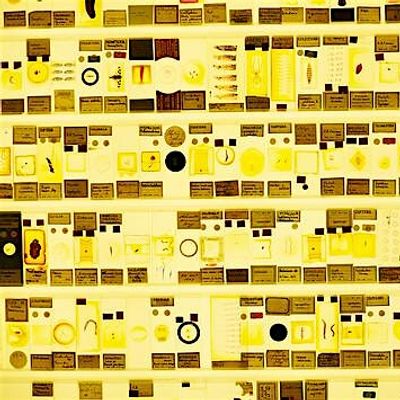
In this talk, Dr Isabelle Lawrence will draw upon several findings from her PhD research at the British Museum to consider the implications that such ethical considerations might have for UCL’s Science and Pathology Collections. Framing these collections as ‘cultural locations of disability’ (Mitchell and Snyder, 2004), moreover, she considers how they might be approached in future.
Content warnings: references to racist, ableist and elitist historical discourses, and also to human remains.
This Research in Focus talk is part of a series of events across UCL Museums and Cultural Programmes for UK Disability History Month, an annual celebration of diversity and inclusion, reflecting on the achievements and contributions of disabled people throughout history, raising awareness about disability rights, and highlight the ongoing challenges faced by the disabled community.
About the Speaker
Dr Isabelle Lawrence is the Curatorial and Collections Assistant for the Science Collections at UCL, working regularly with the Pathology and Eugenics collections. She recently completed her AHRC- funded Collaborative Doctoral Partnership with the University of Leicester and the British Museum. Focussing upon the British Museum collection, she explored the ethical implications of utilising collaborative methodologies to construct new disability history narratives during the collaborative research project ‘Hidden, Revealed’. With lived experience of neurodivergence, Isabelle strongly believes in the importance of not only improving disability representation, but of encouraging visitors (and students) to engage critically with the disability histories embodied in museum collections. This belief fundamentally shapes her practice at UCL.
Audience
This panel event is suitable for ages 18+
Access
This event will have a BSL interpreter and live subtitles.
The Object Based Learning Laboratory (OBLL) is accessible to wheelchair users and those with limited mobility from street level upon entering UCL Main Campus from Gower Street.
The OBLL is located on the ground floor of the
The entrance to the OBLL is located inside the .
Finding us
We are located in Bloomsbury, in the heart of central London. The nearest tube stations are Euston Square (Metropolitan, Circle, Hammersmith & City), Goodge Street (Northern Line), Warren Street (Victoria Line), and buses 18, 30, 73, 134 and 205 stop 3-5 minutes away on Euston Road.
About Research in Focus
The Research in Focus series platforms current research into UCL’s Museums and Collections through a programme of regularly researcher-led public talks.
UCL’s museums and collections encompass artefacts, specimens, artist works and more telling the history of living species in global contexts spanning thousands of years. The collections are used for teaching, public engagement and research, all of which contribute to our understanding of the world around us.
The Research in Focus talk series provides a platform for researchers to share their investigative enquiries through public engagement. We are proud to showcase how knowledge production is supported across varied collections.
The museums and collections are:
- Grant Museum of Zoology
- Petrie Museum of Egyptian and Sudanese Archaeology
- UCL Art Museum
- Science Collection in the Object Based Learning Lab
- Pathology Museum at the Royal Free Hospital
The collections allow for interdisciplinary approaches as well as singular focus, reflected in the talks in this series. Criticality and recognition of local knowledge sources are encouraged, especially when working with contested histories and knowledge production through epistemological violence.
Event venue & nearby stays
UCL Object-Based Learning Laboratory, Gower Street, London, United Kingdom
 Concerts, fests, parties, meetups — all the happenings, one place.