

About this Event
We Mind the Gap: Representation of Disability and Neurodivergence in Democracy
A conference bringing the University of Southampton into dialogue with the themes of UK Disability History Month 2026
Date: Monday 23rd November: Registrations and refreshments, 9:00-9:30am, with a welcome address from Professor Pascal Matthias, Associate Vice-President of EDI and Social Justice, followed by parallel sessions with lunch and networking until 14:30pm.
Please join the group for the annual flag raising event commencing at 14:30pm, Jubilee Plaza.
Venue: Garden Court and Hartley Suite, University of Southampton, Highfield Campus
Refreshments and Lunch provided.
Join in-person. Booking is essential.
Please note that the event may be live streamed.
The theme for this year’s UK Disability History Month, ‘Disability, Politics and Democracy,’ is extremely timely. Current research reveals a ‘disability democracy deficit’ in the UK, referring to the systematic exclusion of disabled people from political life (Disability Policy Centre, 2024). Despite disabled people making up roughly a quarter of the UK population, they are severely underrepresented in elected offices at different levels of government. Only a tiny fraction of UK Members of Parliament (MPs) identifies as having a disability or long-term health condition (Office for Equality and Opportunity, 2025). Those who do are likely to encounter multiple barriers to representation, from the accessibility of venues, facilities and materials to cultural barriers, including a lack of awareness, knowledge and interest (Evans and Reher, 2021).
Yet disability is not only a matter of political participation or representation. It is also a legal, social and political category through which institutions determine their responses to human difference. Decisions about welfare, education, healthcare, employment, housing and transport are shaped by how disability is understood, defined and administered. Disability politics therefore concerns not only access to democratic life, but also the systems through which disability is governed. As disability scholar and activist Michael Oliver (2009) observed, disabled people have held positions of considerable political power without necessarily engaging disability as a political issue. While disabled identities may be downplayed in public life, disability remains part of how people encounter institutions, public services and state authority.
At the same time, democracy in the UK is under strain. Debates surrounding contemporary threats to democracy have focused on disinformation and attacks on media freedoms, the erosion of minority rights, and the resurgence of political extremism. These developments show how questions of disability intersect with other forms of political marginalisation as well as wider concerns around power, citizenship and belonging. Democracy also extends beyond elections and political institutions; it is reflected in everyday civic life and is shaped by cultural narratives and representations. What does it mean to participate in democracy as a disabled or neurodivergent person? What difference does disability and its representation make to political life? How can we protect our democracy and improve accessibility within and beyond democratic institutions?
Conference OverviewJoin students, researchers, professional services colleagues and wider partners for a programme of group sessions, individual talks and shared discussion exploring disability and neurodivergence in democracy and everyday life. Speakers will address inclusive participation and representation, accessible healthcare and workplaces, digital transformation, education, researcher wellbeing, cultural participation and live music. Contributors are Martyn Leroy, Elly R Drew, Jane Vennik and contributors, Hannah Bowers, Elizabeth Evans, Hanna Reichelt, Matthew Deeprose, Ben Whitburn, Joshie Christian, Annabelle Duxbury, Mark Kirby, Kai Syng Tan, Katie Read, Lisa Ballard, Marsha Dearlove, Peta Coulson-Smith, Elinor Williams, Luca Whittle, Piers Wilkinson, Neelam Wright, Abigail Parkes, Louise Coysh, Val Drayton, Jessica Santer, Clare Canning and Jessica Price.
The conference will include a networking lunch followed by a flag-raising ceremony at 14:30pm taking place at Jubilee Plaza, Highfield Campus, The flag raising is supported by the Staff and PGR Disability and Neurodivergence Network and Champion, Wendy Appleby, Vice-President, Operations.
This event is supported by the University of Southampton UK Disability History Month Working Group, led by conference convenors: Dr Ben Whitburn, University of Southampton Education School, Dr Ronda Gowland-Pryde, Public Engagement with Research unit with additional support by Public Policy Southampton. With special thanks to all colleagues in the central EDI team and conference support volunteers.
Accessibility Information
Physical Access
Step-Free Access
· Highfield Campus has accessible routes connecting major buildings and facilities. [southampton.ac.uk]
· Garden Court is in the Students’ Union complex (Building 40), which has lift access to the upper floors and is covered by an AccessAble accessibility guide [accessable.co.uk]. The Hartley Suite is at the rear of the Staff Social Centre (Building 38).
· Event signposting will be present on the day and in event materials.
Accessible Parking
· Blue Badge parking bays are available across Highfield Campus. [accessable.co.uk], [accessable.co.uk]
· Nearest accessible parking locations and any permit requirements.
Public Transport
· The Highfield Campus bus interchange is served by multiple Uni-link and local bus routes and is located approximately 300 metres from the central campus area. [accessable.co.uk]Internal Accessibility
Accessible Toilets
· Accessible toilet facilities are available within nearby campus buildings and the Students' Union complex. [accessable.co.uk], [accessable.co.uk]
· Organisers should clearly signpost the nearest accessible toilet locations at the start of the event.
Lifts
· Lift access is available within the Students' Union building serving the Garden Court Function Suite. [accessable.co.uk]
· Attendees should be informed of lift locations on arrival.
Assistance Animals
Assistance dogs should be welcomed throughout the venue, with access to water and suitable relief areas identified where possible.
Catering and Dietary Access
If you have any dietary requirements, please let us know via the booking form.
The University of Southampton is committed to creating an inclusive and accessible environment. If you have any further access requirements, adjustments, communication needs, dietary requirements, or would like information about venue accessibility, please contact the event organisers in advance so that appropriate arrangements can be made.
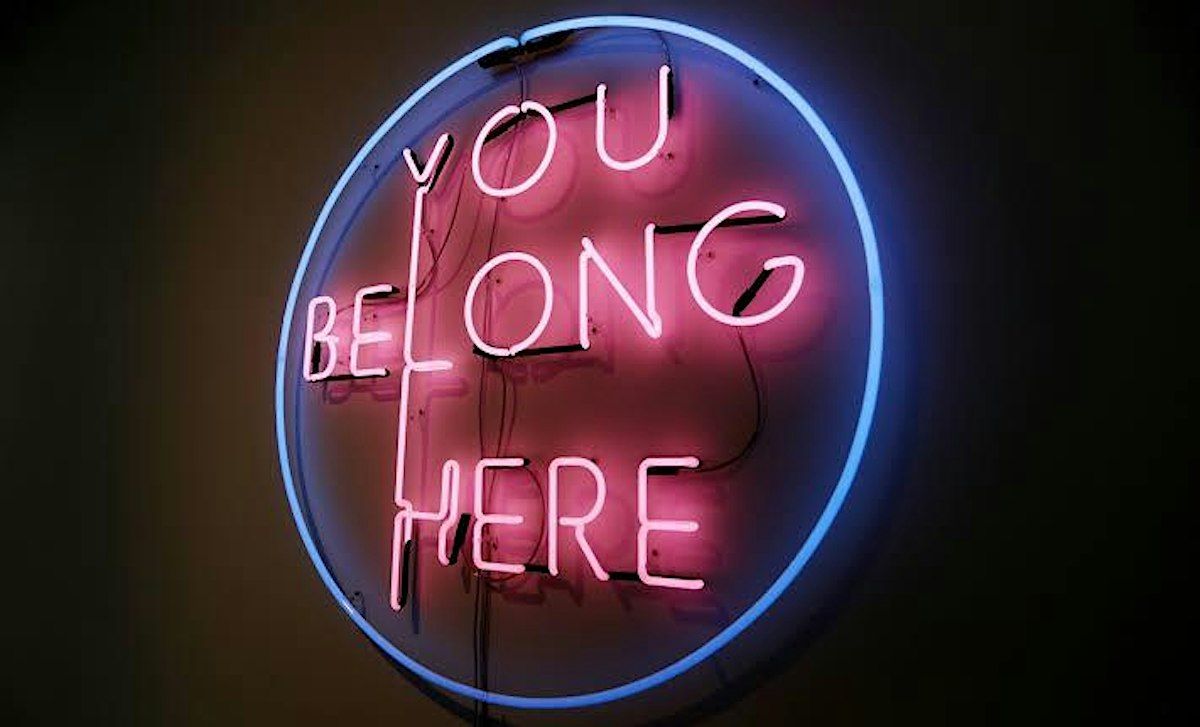
You belong here image credits: Asten Holmes-Elliott and Breakout Youth, YOU BELONG HERE, (2017–18). Neon sign, 4ft x 4ft. Commissioned by John Hansard Gallery and supported by Tate ARTIST ROOMS
Event venue & nearby stays
Hartley Suite, University Road, Southampton, United Kingdom
 Concerts, fests, parties, meetups — all the happenings, one place.