
About this Event
WAGNER FREE INSTITUTE OF SCIENCE – WINTER 2025 COURSE: CHEMISTRY SERIES
Revolutionary Science, Revolutionary Scientist: Benjamin Franklin's Scientific Innovations with Professor Thomas Twardowski
6 Wednesdays from March 4 - April 8, 2026; 6 - 7:30pm
Location: at the Parkway Central Library, Free Library of Philadelphia, 1901 Vine Street (between 19th and 20th streets), Philadelphia. This course meets in the Science and Wellness department (room 202).
This course requires pre-registration. Separate registration is required for each student. Sign up here or call 215-763-6529 x14 for assistance.
Course Description
This course will explore the groundbreaking scientific discoveries of the mid- to late-1700s, focusing on key principles of chemistry, optics, heat, fluids, electricity, and time. Against the backdrop of the Late Enlightenment—a period of profound political and intellectual change—students will examine how these scientific advancements not only shaped the emerging United States but also revolutionized the way we understand the natural world.
Benjamin Franklin, a central figure in both the political and scientific spheres, will serve as a guiding figure throughout the course. Each week will delve into his contributions, using his work as a lens to understand the evolution of key scientific concepts and their lasting impact on modern science. By examining Franklin's innovations, students will gain a deeper appreciation for how scientific discoveries continue to shape our world.
Course Schedule
1. Wednesday, March 4, 2026 – A Clean Start: Chemical Innovation
Did you know that Benjamin Franklin was born into a family whose livelihood depended on chemistry—mixing lye and oil to manufacture soap?
While chemistry was a routine practice in the early 18th century, scientific discoveries would soon transform how chemical reactions were understood. This class will explore types of chemical reactions and the conservation of mass to understand the decline of Phlogiston theory and the emergence of atomic chemistry.
2. Wednesday, March 11, 2026 – Asea in Times of Change: Aquatic Innovation
Did you know that Benjamin Franklin invented a type of swim fins?
Before satellites and modern instruments, navigation depended on observation and experience. This class explores fluid flow, ocean currents, and navigational innovations to understand how scientific knowledge transformed human movement above and below the waves.
3. Wednesday, March 18, 2026 – Clockwork Marvels: Timely Innovation
Did you know that Benjamin Franklin invented daylight savings time?
As travel, commerce, and scientific experimentation expanded in the 18th century, precise timekeeping became increasingly important. This class will explore the mechanical aspects of time keeping to understand how time can be subdivided and reckoned.
4. Wednesday, March 25, 2026 – Hot Time in the Old Town: Thermodynamic Innovation
Did you know that Benjamin Franklin invented an improved stove to heat homes more efficiently?
James Watt’s 1769 patent for the steam engine, launched “the age of steam.” This class explores the science of heat and work to understand how energy was harnessed to power industry and invention.
5. Wednesday, April 1, 2026 – Simply Shocking: Electrical Innovation
Did you know that Benjamin Franklin reportedly electrocuted a turkey at a dinner party?
Franklin’s work with Leyden jars, conductivity, and lightning experiments helped redefine electricity as a natural phenomenon. This class will explore electricity to understand the discoveries that paved the way for the transformative inventions of the 19th century.
6. Wednesday, April 8, 2026 – Sensing the Future: Optical and Sonic Innovation
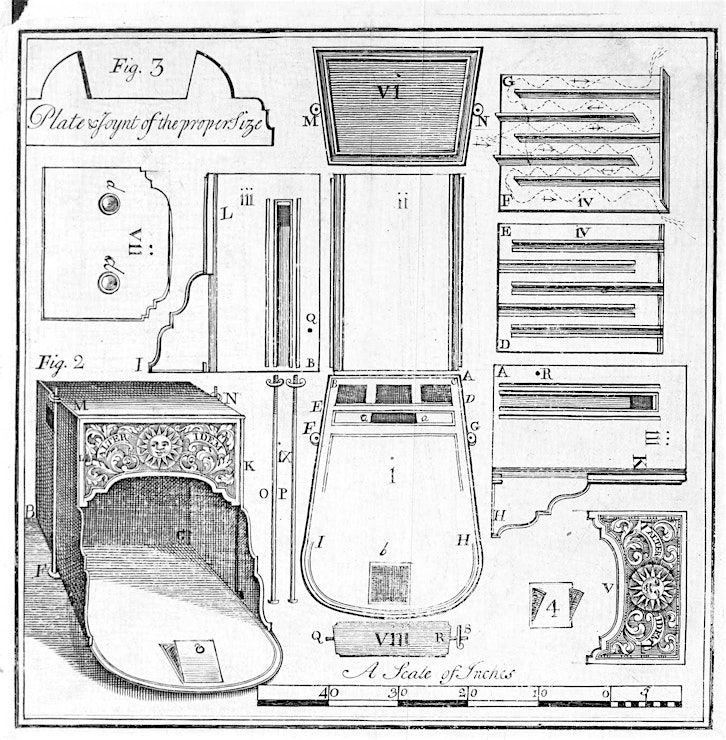
Did you know that Benjamin Franklin invented a musical instrument—the glass armonica?
As telescopes and microscopes expanded human vision and music entered the classical period, scientists and artists alike explored the physics of sound and light. This class investigates waves, optics, and acoustics to understand how Enlightenment science extended—and delighted—the human senses.
Suggested Reading
There is no textbook for this course. The following books are suggested. Additional readings will be provided during the course.
The Autobiography of Benjamin Franklin (available online and at the library)
Ingenious: A Biography of Benjamin Franklin, Scientist by Richard Munson. W.W. Norton, 2024
Benjamin Franklin’s Science by I. Bernard Cohen. Harvard University Press. 1990.
About the Professor
Dr. Thomas Twardowski, Ph.D. is a Teaching Professor at Thomas Jefferson University for the Physics and Mathematics programs. His research focuses on synthetic analogs to complex biological fluids and surfaces. He is also actively developing a language-centered approach to teaching physics and math, exploring deliberately teaching the ways scientists quantify meaning from real-world situations and constructing meaning in science communication. He has been teaching for the Wagner since 2023.
FAQs
What is the cost?
Wagner courses are free; donations are encouraged!
Are there minimum age requirements to enter the course?
The adult lecture courses are offered on an introductory college level. They are open to anyone seeking an introduction to various areas of the sciences as well as those familiar with the subjects who wish to broaden and update their knowledge. The courses also provide an excellent opportunity for motivated junior high and high school students to supplement their current science courses and to help prepare them for further study in these fields at a college level. The courses are appropriate as well for teachers seeking to expand their knowledge.
What are my transportation/parking options for getting to and from the course?
The Free Library of Philadelphia Parkway Central Branch is located between 19th and 20th Streets on the Parkway. It is close to many SEPTA lines, including buses, Regional Rail, and the Broad Street Line Race/Vine station. Most parking near the library is metered street parking. There is also a Philadelphia Parking Authority lot behind the library on Callowhill Street between 19th and 20th Streets.
Is the building wheelchair accessible?
Yes. The Wood Street entrance (at the back of the building) is wheelchair accessible and there are elevators in the building. Enter Wood Street by going south on 19th Street and drive west towards 20th Street. If the gate is down press the buzzer and security will open the gate. There are handicapped parking places right next to the building.
How can I contact the organizer with any questions?
Click the "Contact the Organizer" link, email [email protected], or call 215-763-6529 x14.
Images:
Currier & Ives, New York, Public domain, via Wikimedia Commons
Metropolitan Museum of Art, CC0, via Wikimedia Commons
Benjamin Franklin, Public domain, via Wikimedia Commons
Benjamin Franklin, Public domain, via Wikimedia Commons
About the Wagner
The Wagner Free Institute of Science is a National Historic Landmark natural history museum and educational institution. It was founded in 1855 by William Wagner, a Philadelphian who had a dream of providing free science education to anyone who wanted to learn, regardless of background or ability to pay. Today, the Wagner offers more programs to more people than ever before! Your support helps us provide free education through its museum and a wide range of courses, lectures, field trips, and children’s science programs.
In keeping with its original charter, admission to the museum is FREE—donations are suggested to ensure the future and quality of Wagner's free education programs and to preserve its National Landmark building and collections.
Event Venue & Nearby Stays
Parkway Central Library, 1901 Vine Street, Philadelphia, United States
USD 0.00





![[In-Person] Building Trust, Breaking Barriers: Health Equity in Neurology](https://cdn-ip.allevents.in/s/rs:fill:500:250/g:sm/sh:100/aHR0cHM6Ly9jZG4tYXouYWxsZXZlbnRzLmluL2V2ZW50czkvYmFubmVycy9kNDQ0ZDEzNDEwNjFkN2M4MjA4YTAzZjBjNGRhZWIxYTYzODliN2NhZTZhNDczMDczMzEwZTA0ZjM3ZWE4NDE3LXJpbWctdzEyMDAtaDYwMC1kYzE2NWM4Zi1nbWlyLmpwZz92PTE3NzAzNjE3MzY.avif)
