

About this Event
Join us for our Sir Anthony Epstein Annual lecture, for 2026 we are pleased to announce we have invited , Wellcome Trust Principal Research Fellow, University of Dundee.
A note the lecture is followed by a drinks reception for all booked guests.
Talk title: 'A lifetime with Killers'
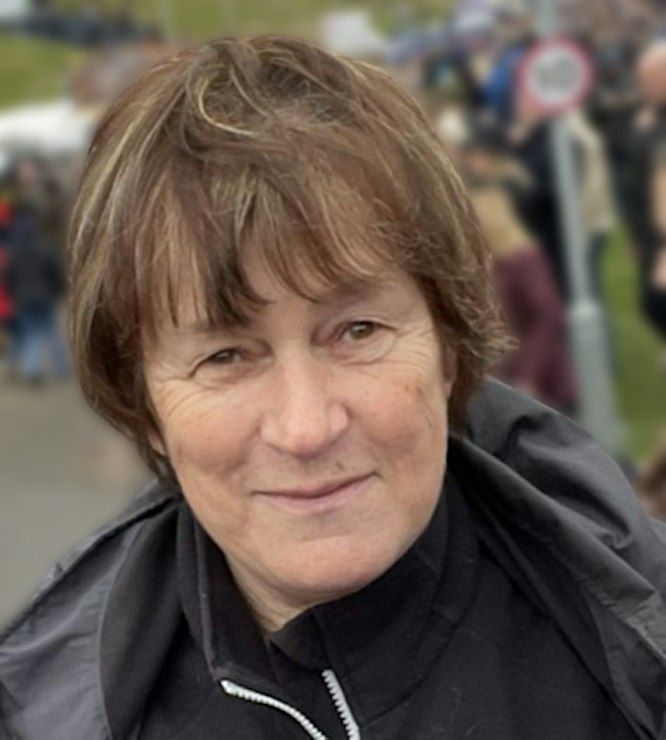
Biography: Professor Doreen Cantrell CBE, FRS, FRSE, F.Med.Sci.
Doreen Cantrell is currently Professor of Cellular Immunology at the University of Dundee.
She studied Zoology at University College of Wales Aberystwyth and then did a PhD in Cellular Immunology in the Cancer Research Campaign Laboratories at Nottingham University. From 1984-2002 she led the Lymphocyte Activation Laboratory at the Imperial Cancer Research Fund Laboratories (now Cancer Research UK) in London.
In 2002 she was awarded a Wellcome Trust Principal Research Fellow at the School of Life Sciences at the University of Dundee. She was Head of the College of Life Sciences and Vice Principal of the University of Dundee from 2010-2016.
Professor Cantrell’s work explores the immune and environmental mechanisms that control the development and immune activation of T lymphocytes, key cells in the adaptive immune system. Her laboratory has defined how signal transduction pathways controlled by antigen receptors and cytokines control T cell metabolism, T cell migration, T cell growth, proliferation and differentiation.
Professor Cantrell’s other roles include being Chair of the Medical Research Council Immunity and Infection Board (2010- 2014), Chair of the Royal Society/Wellcome Trust Sir Henry Dale Fellowship Committee (2016-2020) and Chair of Biological Sciences SubPanel, UK Research Excellence Framework 2021 (2017-2022). She is currently a Trustee of Cancer Research UK and Chair of the Leverhulme Trust Senior Fellowship Committee.
Further details about Professor Cantrell's research:
Analysis of signal transduction pathways that control T lymphocyte metabolism, migration and differentiation
The laboratory explores how antigen receptors and cytokines control the development and immune activation of T lymphocytes; key cells in the adaptive immune system. The strategy is to rigorously interrogate T cell biology at the fundamental level of biochemical signal transduction. The integration of mouse molecular genetics, cell biology and microscopy is then used to define the contribution of a particular biochemical pathway to T cell activation. This work has defined how thymocytes and T lymphocytes use networks of guanine nucleotide binding proteins and serine kinases to interpret information from antigens and cytokines to make appropriate responses that control T cell development and peripheral T cell function. The laboratory has made considerable progress mapping serine/threonine kinase mediated signaling pathways in thymocytes and peripheral T cells and has identified essential regulators of T cell metabolism, cytotoxic T cell effector function and CD8 T cell migration/trafficking.
The future research program will adopt a multidisciplinary approach and combine biochemistry, cell biology and in vivo mouse immunology to explore the how protein phosphorylation controls T cell function. A key focus is the regulation of the metabolism of normal and malignant lymphocytes. One important component of the work is a discovery based program to use high resolution mass spectrometry to systematically define the phosphoproteome of naïve and effector CD4 and CD8 T lymphocyte subpopulations. Phosphoproteomic analysis of cytotoxic T cells has already identified links between serine/threonine kinases and chromatin regulators; the future program will address how phosphorylation of these chromatin regulators controls CTL transcriptional programs and explore the role of key cytokines on the CD8 T cell phosphoproteome. This work will generate a molecular understanding of how signal transduction pathways control T cell function. In particular, the studies will provide new insights about pharmacological strategies that might manipulate immune responses to ensure effective vaccination and/or restrain the T cell pathology caused by effector T cells.
Further details about the lecture series:
The Sir Anthony Epstein lecture was inaugurated at the University of Bristol in 2009 to recognise the achievements of outstanding scientists in the fields of cancer biology, infection and immunology. It celebrates the achievements of Sir Anthony Epstein who was Professor of Pathology at Bristol University (1968-85) and one of the discoverers of the Epstein-Barr virus. Earlier in the year we were sad to hear that Professor Sir Anthony Epstein CBE FRS passed away aged 102. You can read our rememberance of Sir Anthony in the university website.
Useful information and contact details:
Photography:
Please note there may be photographs taken at the event to be published online or on social media. Please let a member of staff know if you do not wish to be photographed.
Accessibility and dietary requirements:
We will endeavour to assist guests with any accessibility requests, please use the contact details below. For the drinks reception, we endevour to make all our events nut-free and will cater where possible for other key dietary requirements.
Contact us:
If you have any queries regarding accessibility or otherwise please email the Executive Support Team at [email protected].
Event venue & nearby stays
Pugsley Lecture Theatre, Engineering Building, University of Bristol, Bristol, United Kingdom
 Concerts, fests, parties, meetups — all the happenings, one place.