

About this Event
Our Autumn Gifford Seminar unpacks key themes and questions from Professor Steven Shapin's Gifford Lecture at the University of Edinburgh, looking into dietary expertise and its troubles.
Esteemed historian of science Professor Steven Shapin joins us for the RSE’s Gifford Seminar. Together, with questions from other expert panellists and the audience, we’ll dive deeper into the relationship between food, society, and ethics.
The advance of well-intended dietary expertise has seemingly marched in lock-step with the advance of bad eating. That is to say, there are problems of credibility and efficacy attached to expertise about what people should eat. Why might this be the case? And what can be done about it?
One response has been efforts to circulate expert advice more widely and clearly— informative labels, educational publicity, well-designed graphics, suggestions for preparing economic and nutritious meals. Another has been to identify bad influences – advertising, commercial foods designed to addict – or bad circumstances – for example, “food deserts”. A less-explored approach would be systematic efforts to find out why people decide to eat as they do, and what role foods play in the everyday fabric of their lives.
Please note: You do not need to have attended Professor Shapins's lecture at the University of Edinburgh before coming along to this event. You can find a helpful summary of Professor Shapin’s lecture below, which we'll discuss in detail in this talk at the RSE.
Abstract of Professor Shapin's
The dietary order has always been part of the moral order, but the idioms linking them have historically changed.
In the distant past, secular sentiments told you to “eat to live, not live to eat”, and Christian morality counted gluttony among the Deadly Sins. In traditional dietetic medicine, moderation in eating and drinking was the path to both virtue and health, and the cosmology of elements and qualities (hot, cold, moist, and dry) told you what sorts of foods were good for your temperament, while also helping to make your temperament, what you were like as a civic and moral being.
That idiom is largely absent in present-day nutritional sensibilities: what is good for you is largely disengaged from what is good, health from personal virtue. Qualities have been replaced by constituents, proteins, fats, carbohydrates; eating too much is not a sin but a risk factor.
Yet the moral order still has its place on our dinner tables, while the elements of that morality have changed. What is good for us may not be part of virtue, but our eating choices now bear upon what is good for the planet, good for the social and economic order, and good for the plants and animals that we either eat or refrain from eating.
How have these changes marked out culture and our sense of who we are?
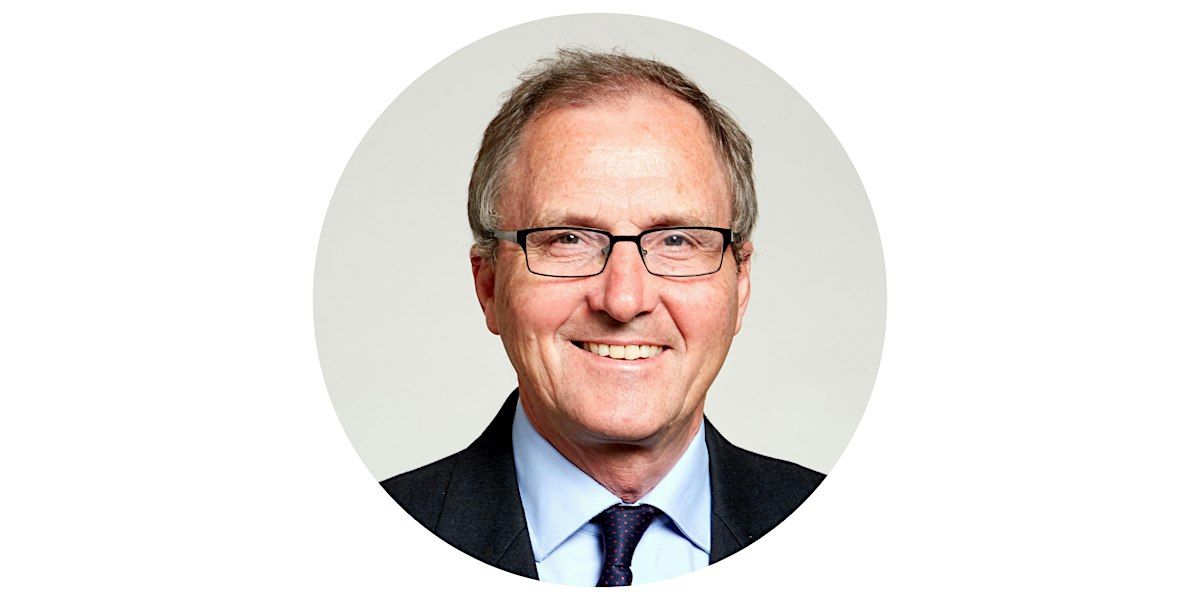
CHAIR
Professor Sir Ian Boyd FRSE, FRSB, FRS
University of St Andrews
Professor Sir Ian Boyd is currently a professor at the University of St Andrews. He was Chief Scientific Adviser to the UK Government on Food and the Environment (2012-2019). He is a marine and polar scientist and previously served as the first Director of the Scottish Oceans Institute at St Andrews. He has been a director and chair of a number of trusts and companies, and was also Chair of the First Minister’s Environment Council. He was the President of the Royal Society of Biology and is a Fellow of the Royal Society.
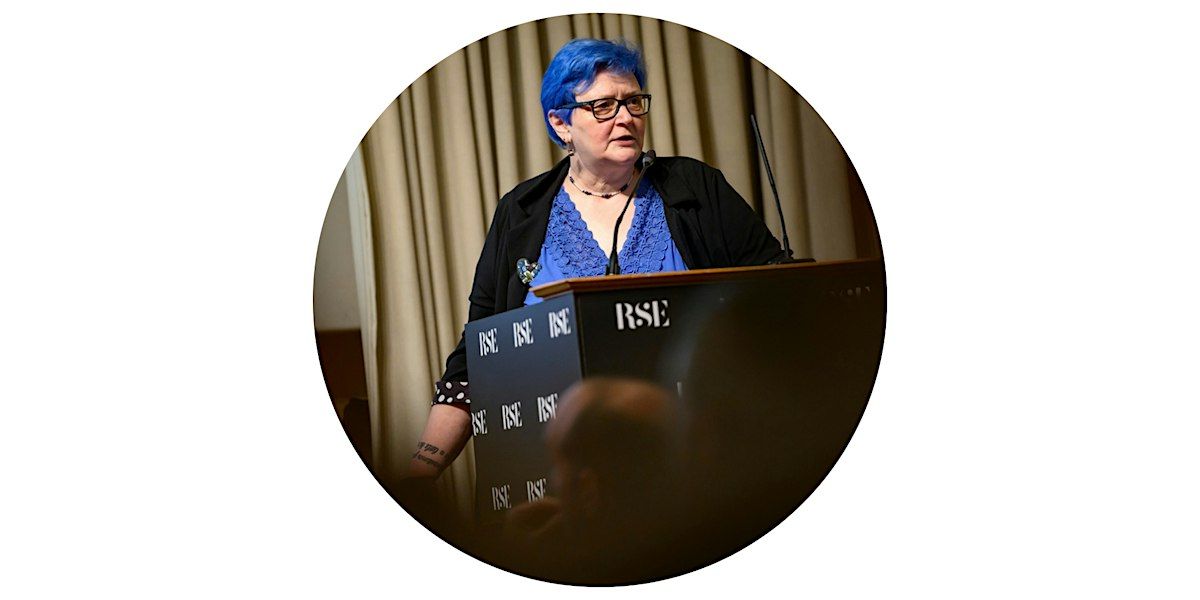
PANELLIST
Professor Rachel Norman FRSE
Chair of Food Security and Sustainability, Institutional Dean for Research Engagement and Performance, University of Stirling
Rachel Norman received a BSc Hons in Mathematics from the University of Liverpool in 1991 and then did a PhD in mathematical biology there, graduating in 1995. She spent a year as a postdoc in the zoology department in Oxford before coming to the University of Stirling in 1996 as a lecturer in the department of Computing Science and Mathematics. Her research focuses on mathematical models of infectious disease dynamics and control. Most of her work has been in animal disease, with specific expertise in tick-borne infections. In 2013, she was promoted to the position of Professor of Food Security and Sustainability. Her more recent focus has been interdisciplinary approaches to food security, including community growing systems. From a mathematical point of view she is working on trade-offs in the food system. Rachel was made a Fellow of the RSE in 2023.

PANELLIST
Mrs Lucinda Bruce-Gardyne FRSE
CEO and Founder, Genius Foods
Since graduating with a Physiology degree, Lucinda has spent her career working with food. After training at Leiths School of Food and Wine and the Michelin-starred Bibendum Restaurant, in London, she ran a successful catering company before returning to Leiths to teach. There, she co-authored the award winning Leiths Techniques Bible, focusing on the functionality of mainstream ingredients and cooking techniques.
After her sons were diagnosed with a severe dairy allergy and gluten intolerance, she published How to Cook for Food Allergies, demonstrating how to successfully substitute mainstream ingredients in allergy-free home cooking. Gluten free bread was the hardest recipe to perfect, but Lucinda was determined to crack it for her gluten intolerant son and others like him. In 2009, Lucinda founded Genius Foods, launching the first soft, fresh gluten free bread and 26 other bakery staples across the UK and globally. Lucinda stepped down from her company in August 2022 to pursue other interests and Chair Scotland Food and Drink.
Appointed as Royal Society Entrepreneur in Residence at Edinburgh University in 2018 to 2021, Lucinda continues to support the School of Physics and Astronomy as industry advisor, stimulating industry and academic collaboration and pioneering scale up activity. In May 2025, Lucinda raised capital and became Executive Chair of the Edinburgh New Town Cookery School. Her vision is to train the next generation of leading chefs and food and drink entrepreneurs, to use the school to support food and beverage product launches, promote Scotland’s larder and engage the community in the joys of cooking and eating together. In addition to her new role, Lucinda mentors and invests in innovative new food and well-being businesses. She is an NED of The Scale Up Institute, Interface and two pioneering start-ups, Libereat and Ava Innes.
In 2012 Lucinda won EY Emerging Entrepreneur of the Year and was elected as a Fellow of the Royal Society of Edinburgh in 2017. In 2018 Lucinda was nominated as one of the Maserati Top 100 Innovators and was named in the top 100 Women to Watch, in the annual Cranfield University Female FTSE Board report. In July, 2025 Lucinda was awarded an Honorary Doctorate for Business Administration from Queen Margaret University, Edinburgh.
Important points to note
- This event is suitable for age 16+
- Privacy policy: Please note that any personal data that is submitted to the RSE will be stored and processed in accordance with the RSE’s Privacy Policy. We will only use mobile numbers provided to contact you in the event of a cancellation.
- Filming: Livestreaming and photography may take place at this event. Please let a member of the RSE Public Engagement team know if you do not want to be photographed. Recorded events will be made available on the RSE YouTube channel.
- Covid-19: If you would like to wear a face mask, please feel comfortable to do so at our events. Please be mindful of other participants and stay at home if you have Covid symptoms or have tested positive for Covid-19.
Accessibility
We aim to make events as accessible as possible. If you have any accessibility requirements or have any questions related to how we can support this event, please contact [email protected]. Accessibility information for the RSE building can be found on our website: Accessibility - Royal Society of Edinburgh (RSE) : Royal Society of Edinburgh
Wheelchair spaces: If you would like to book a space as a wheelchair user, please select the ticket type 'wheelchair space ticket' during the booking process. If this is sold out, please contact the Public Engagement team on [email protected]
Newsletter
If you would like to receive information from the RSE on forthcoming events and activities, including our Newsletter, please subscribe here: https://rse.org.uk/subscribe/
Please visit the RSE FAQs page for further details about venue and events.
Event venue & nearby stays
The Royal Society Of Edinburgh, 22-26 George Street, Edinburgh, United Kingdom
 Concerts, fests, parties, meetups — all the happenings, one place.