

About this Event
About the Lecture
This presentation examines translanguaging from the perspective of vulnerable minority languages such as Basque and Irish. Translanguaging is now widely used in bilingual and multilingual education. Originating in the bilingual education context of Wales, translanguaging was initially conceived as a pedagogical strategy for developing linguistic and academic skills in Welsh and English. Over time, however, the concept has been expanded and reinterpreted along diverse conceptual, pedagogical, and social lines.
The presentation explores the implications of translanguaging for minority language sustainability, focusing on language identity and the potential opportunities and risks for languages such as Basque and Irish. It argues for the importance of naming languages and of maintaining processes of standardization and the development of academic language in extending minority languages into domains traditionally dominated by majority languages.
A central issue is how to balance multilingual pedagogies with the need for “breathing spaces” for minority languages: spaces where these languages can be used freely and are not displaced by other languages. The presentation considers how pedagogical translanguaging can contribute to achieving this balance. Understood as the planned use of different strategies that activate learners’ resources across their linguistic repertoires, pedagogical translanguaging can support learning while contributing to multilingual development. A sustainable approach to translanguaging should therefore promote multilingual skills without weakening the functions and visibility of minority languages.
The presentation concludes by emphasizing the need to consider the specific historical, sociolinguistic, and pedagogical conditions in which translanguaging takes place.
A light lunch and tea/coffee are provided for attendees.
About the Speaker
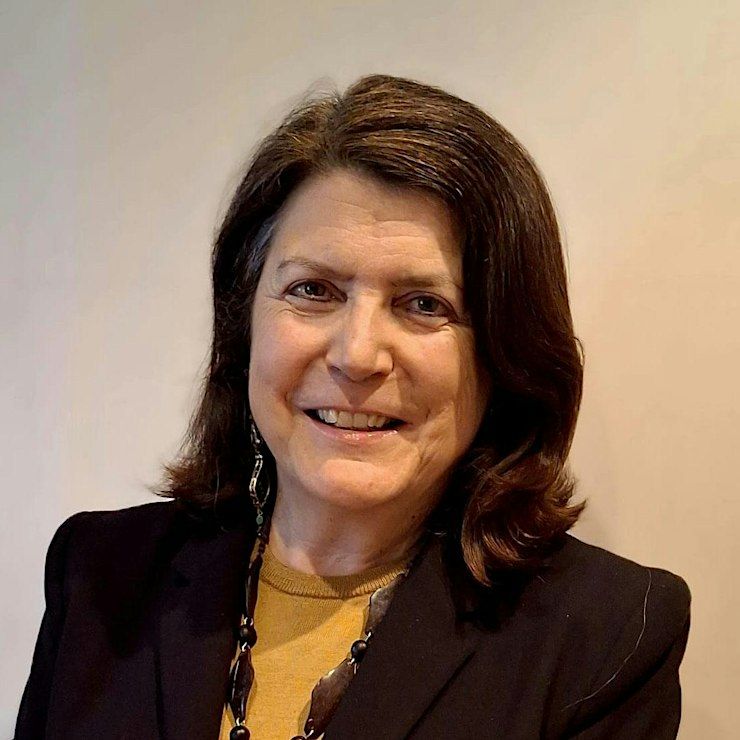
Professor Jasone Cenoz, Ph.D., University of the Basque Country, EHU
Jasone Cenoz is an expert in multilingual education, minority languages, linguistic landscape, and second and third language acquisition. She has been the President of the International Association of Multilingualism and Professor of Education at the University of the Basque Country. She was awarded an Honorary Doctorate by the University Jaume I in 2024 and Honorary membership of the International Association of Multilingualism in 2026. She has published numerous articles and several books and has presented her research results at numerous international conferences and seminars in different parts of the world. Jasone Cenoz collaborates with several international research agencies. She has been a visiting professor and researcher at the University of Chicago and the GC CUNY, and has conducted research stays at several universities. She received the Spanish Association of Applied Linguistics Award for her book "Towards Multilingual Education" (2009) and the Ikerbasque Research Award (2022). She is among the 2% most cited scientists in the world. She is a member of the Advisory Council of the Organization of Ibero-American States (OEI).
About the LIFELANGS Living Observatory
LIFELANGS – A Living Observatory of Shared Languages and Identities – is a Strand II Emerging Hubs of Excellence project (2025 – 2029) funded under the North South Research Programme (NSRP). The NSRP is a collaborative scheme funded through the Government’s Shared Island Fund. It is being administered by the Higher Education Authority (HEA) on behalf of the Department of Further and Higher Education, Research Innovation and Science.
LIFELANGS is led by two Principal Investigators, Dr Aisling O’Boyle and Professor Lorna Carson and by a multidisciplinary team of researchers from the Centre for Language Education Researchat Queen’s University Belfast and the School of Linguistic, Speech and Communication Sciences at Trinity College Dublin.
Subscribe at www.lifelangs.com
Event venue & nearby stays
Trinity Long Room Hub Arts and Humanities Research Institute, Trinity College Dublin, Dublin 2, Ireland
 Concerts, fests, parties, meetups — all the happenings, one place.