About this Event
with much more detail about this event.
On Monday, November 10th, at 7:00pm we will be hosting our monthly Climate Science and Energy Engineering Dinner, which will usually occur on the 2nd Monday of every month.
The event will be at the , by 9th Ave & 34th St in Manhattan, within easy reach of the A/C/E & 7 subways, and one block from Penn / Moynihan station. The diner has a large menu with affordable prices, generous portions, and is willing to do separate checks for a large group, with everybody using their own credit card.
The topics of conversation will be
- Climate Science: you have to be able to debate climate science in order to reach out to conservatives, and also, even if you don't talk with conservatives, there is a lot of controversy over just how bad things will get, and how fast.
- Energy Engineering: We have to decarbonize the economy, but there are many unresolved / controversial issues to discuss -- which zero carbon sources of energy are preferable, how to decarbonize transportation, particularly aviation. To get public cooperation, we have to figure out a path to decarbonize that won't involve too much negative impact on per capita GDP, or too much disruption to our way of life.
Optional Reading (there will be a 30-60 minute presentation on this at the event, where it will be assumed that most people didn't do the reading):
Climate Sketpic of the Month: Bjorn Lomborg
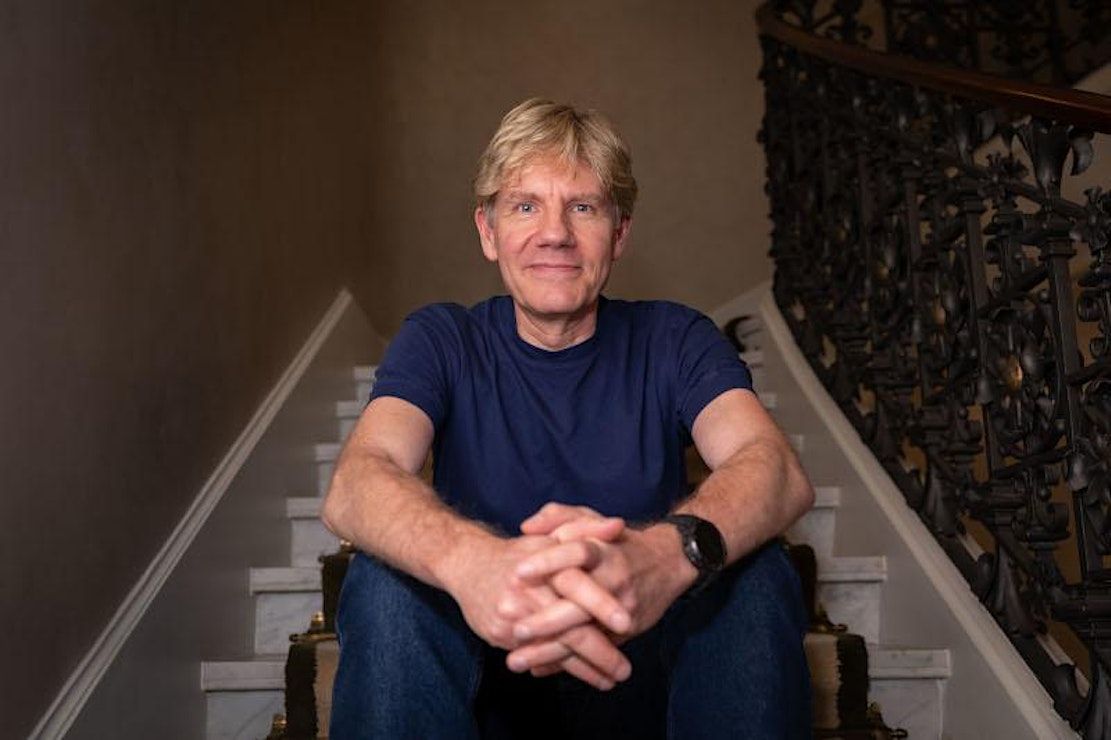
The first thing Bjorn Lomborg will tell you is that he's not a "climate denier" because he believes the Reports of the Intergovernmental Panel on Climate Change (IPCC). But most of the time that his lips are moving, he is making a case against aggressive climate action.
Accurate Criticisms of the Climate Movement:
He frequently criticizes the climate movement, and there is much to criticize. He points out how many of the most famous climate activists have made wildly inaccurate predictions that have failed to pass, and that the solutions they advocated were often unwise.
Consistent Bias in Message:
Lomborg’s analysis tends to move in the direction opposed to climate action. While he accepts IPCC Reports, he emphasizes central or “average” outcomes and places relatively little weight on low-probability, high-impact risks—the “fat tails” of the distribution. These include scenarios involving severe sea-level rise, large-scale crop failures, and geopolitical instability. Even if such outcomes have only a modest probability, they are central to rational risk management. By downplaying them, Lomborg presents climate change as a more moderate and manageable problem than many analysts would.
This is an important -- Jerry Taylor quit his post as a professional climate denier for the CATO Institute over this point -- while the negative impacts of climate change are likely to be manageable, the low-probability worst-case outcomes would be so severe that they pose unacceptable risk -- Taylor made the point that no investment manager worth his salt would ignore a catastrophic possibility with a 5% outcome when managing a portfolio.
Lomborg loves to push misleading examples. Three of his most common—whale oil, horse manure, and the “$75 billion” allocation exercise—each push the audience toward the conclusion that little needs to be done in the near term. While each contains a kernel of truth, all three are misleading in important ways.
The Whale Oil Example
In the 19th century, whales were hunted for oil used in lighting. The development of kerosene made whale oil obsolete, reducing demand and easing pressure on whale populations. The implied lesson is that innovation solved the problem without deliberate intervention.
What’s misleading is the implication that such outcomes happen automatically or in time. The story describes what happens after a superior substitute exists, not how it is developed or how long it takes. It also omits the role of later regulation, including actions by the International Whaling Commission. As an analogy for climate change, it skips over the central issue: whether the necessary breakthroughs will arrive soon enough without deliberate effort.
The Horse Manure Example
In the late 1800s, cities like New York City faced sanitation problems from horse manure. The automobile eventually replaced horses and eliminated the problem.
Again, the implication is that technological change naturally resolves environmental issues. But the transition introduced new problems—air pollution, accidents, and ultimately greenhouse gas emissions. The story highlights the disappearance of one problem while ignoring the costs and uncertainties of the transition, as well as the new externalities it created.
The $75 Billion Exercise
Lomborg also asks how a fixed sum—often $75 billion globally—should be spent to do the most good. The conclusion is that investments in health and nutrition in the developing world yield far higher immediate returns than climate mitigation.
This analysis is misleading because of its framing. The $75 billion (~$10 per human being) constraint is artificial in a world with roughly $100 trillion in annual output. It forces a false choice between immediate, measurable benefits and long-term, uncertain risks. It also assumes a single global decision-maker, ignoring the reality that different societies fund multiple priorities simultaneously. By construction, this framework makes climate mitigation look like a poor investment, regardless of its long-term importance.
A Pattern in Framing
Taken together, these examples reveal a consistent pattern. Lomborg highlights cases where problems were resolved without aggressive intervention, compares climate action to short-term alternatives in ways that disadvantage it, and focuses on central outcomes while downplaying tail risks. The cumulative effect is to make delay or minimal action seem reasonable.
At the same time, there is an important counterpoint that receives less emphasis. Lomborg has argued for substantially increased public-sector investment in research and development, particularly in low-carbon energy technologies. In some contexts, he has been quite forceful about this.
I went to a conservative convention (put on by National Review) in Washington D.C. a few years ago. I knew Lomborg would be speaking, so I watched many hours of his YouTube videos before going to the conference. In the "whale oil" and "horse manure" analogies he's so fond of, he keeps talking vaguely about "innovation" solving problems. In a conservative context, "innovation" has multiple meanings:
- get the government out of the way and let the private sector "innovate", or
- fund public-sector R&D
He went on stage (clad in a T-shirt, as always, while all the other fellows in the room were in suits) and spent his whole time promoting various flavors of "Do nothing for the time being.".
I managed to speak to him in the lobby afterward, and for a few minutes. At one point, I asked him "Should we be fundiing public-sector R&D into next-generation nuclear?". And his answer was "Yes, it's criminal that we're not doing more of that.". It was such a sharp contrast to what he'd just been saying for 45 minutes on stage!
According to ChatGPT, his books also push public-sector R&D pretty hard, but that isn't really what conservative audiences want to hear, so it's not encouraged by most of the people who invite him to conferences or the interviewers who talk with him when he's onstage.
It's really, really hard to get ChatGPT to agree that any intellectual is acting in "bad faith" without actual statements from them admitting to dishonesty, but I feel that it is just not an accurate perception of reality to be saying that Lomborg is a good-faith actor whose message is distorted by others when he consistently runs around telling multiple misleading stories that are always warped in the direction of "Do nothing for the time being.".
Event Venue & Nearby Stays
Skylight Diner, 402 West 34th Street, New York, United States
USD 0.00