
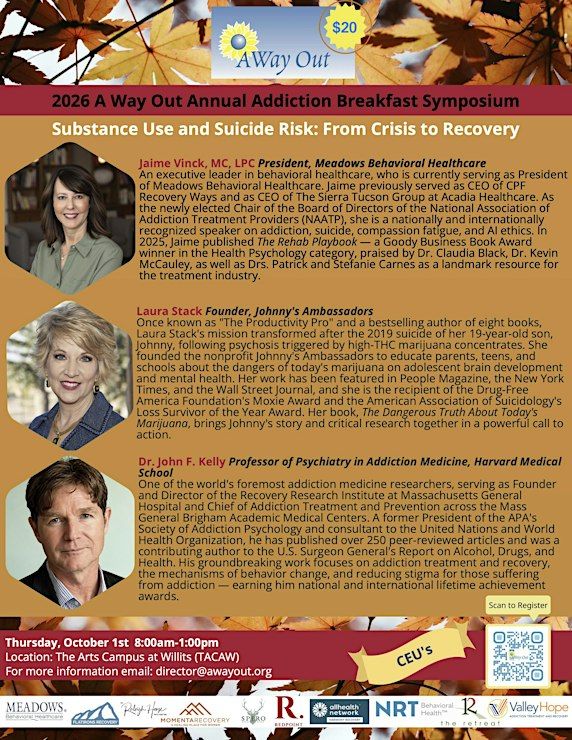
 Join us for a morning of engaging discussions and informative sessions at the 2026 Annual Addiction Breakfast Symposium!
About this Event
2026 Annual Addiction Breakfast Symposium
Welcome to the 2026 Annual Addiction Breakfast Symposium! Join us at TACAW (The Arts Campus at Willits) for a morning of insightful presentations and networking opportunities. Learn from experts in the field about the latest research and treatment options for addiction. This in-person event is a great chance to connect with like-minded individuals and expand your knowledge. Don't miss out on this valuable opportunity to make a difference in the fight against addiction! An amazing breakfast is included and will be served from 8am until about 11:30am.
Thank you to all of our Sponsors who help make this day possible!!!!



Agenda
🕑: 08:30 AM - 09:40 AM
Suicide, Addiction, and Depression: It's Complicated
Info: We are amid a global suicide phenomenon — one that turns a dark mirror on modern culture, our mental health system, and the desperation hidden behind smiling social media posts. Suicide, depression, and addiction share a deeply interconnected relationship that cuts across all demographics, from professionals and veterans to musicians and beyond. Drawing on both pop culture and the latest research, this session explores the causes, theories, and treatment approaches for those struggling with suicidal ideation and their families.
Attendees will identify key risk factors and warning signs across all stages of recovery, examine the connection between Adverse Childhood Experiences and addiction, depression, and suicide, and apply Thomas Joiner's Interpersonal Theory of Suicide in real-world settings. The session will also explore the relationship between substance use and suicide, and how alcohol education can serve as an effective form of suicide prevention.
🕑: 10:00 AM - 11:10 AM
The Dangerous Truth About Today’s Marijuana: Johnny Stack’s Life and Death Sto
Info: Laura Stack's 19-year-old son, Johnny, died by suicide in 2019 after becoming delusional from dabbing high-THC marijuana. Before marijuana, Johnny had a 4.0 GPA and a perfect SAT math score. After marijuana, his descent was swift. Laura shares this story with great candor, tracing the first warning signs, failed rehab attempts, and his eventual death. Three days before he died, Johnny issued his own warning about marijuana. Her account is backed by research on how high-potency THC disrupts adolescent brain development and raises the risk of anxiety, depression, paranoia, psychosis, and suicidal ideation. Through Johnny's Ambassadors, she educates parents and teens on the dangers of today's THC products. Attendees will learn to identify products used by youth, understand the endocannabinoid system, recognize warning signs, and grasp the link between adolescent marijuana use, mental illness, and suicide. If you think this couldn't happen to your child — that's exactly what Laura thought.
🕑: 11:30 AM - 12:30 PM
From Short Term Stabilization to Stable Recovery: How Do We Get There from Her
Info: Learning objectives:
1. Describe current scientific understanding of addiction recovery, including prevalence, remission rates, and common pathways to sustained recovery.
2. Explain the role of long-term, community-based recovery infrastructure in improving outcomes and addressing relapse risk, particularly in the early years of recovery.
3. Identify emerging recovery-oriented approaches in addiction science, including the shift toward resilience-building, recovery support services, and integrated public health models.
Event venue
TACAW (The Arts Campus at Willits), 400 Robinson Street, Basalt, United States
 Concerts, fests, parties, meetups — all the happenings, one place.