

About this Event
Experience the Legend, the Magic, and the Music
As the autumn weather turns stormy and twilight settles early, join us for Myths, Magic & Mystery—an afternoon of music that explores dramatic storytelling, ancient legends, and the spirits of October.
Rather than standard Halloween tunes, this program dives deep into timeless tales of witches, wizards, ghosts, and the reflective beauty of autumn. From the high-energy thrill of a supernatural horseback chase to the serene, majestic colors of fall, our ensemble brings these vibrant sound worlds to life.
Program Highlights Include:
- Legendary Battles & Spells: Experience the iconic magic of John Williams’ Harry Potter.
- Haunting Storytelling: Journey through a wild Scottish night in Malcolm Arnold’s Tam O'Shanter Overture and experience Randall Standridge’s cinematic Symphony No. 1: A Ghost Story.
- Autumnal Reflection & Playful Wit: Soak in the warm, atmospheric warmth of Eric Whitacre’s October alongside the lively charm of Julie Giroux’s Wonderfully Wicked.
- As the autumn weather turns stormy and twilight settles early, join us for Myths, Magic & Mystery—an afternoon of music that explores dramatic storytelling, ancient legends, and the spirits of October.
Featured Composers & Works
Scroll down to explore the stories, music, and composers behind this performance:

Composer Spotlight: Randall Standridge
Randall Standridge (b. 1976) received his Bachelor of Music Education from Arkansas State University, where he studied composition under Dr. Tom O'Connor, before returning to earn his Master's in Music Composition under Dr. O'Connor and Dr. Tim Crist. In 2001, he began his tenure as Director of Bands at Harrisburg High School in Harrisburg, Arkansas. He left this post in 2013 to pursue a career as a full-time composer and marching arts designer.
Mr. Standridge's music is performed internationally, and he has had numerous works selected for J.W. Pepper's Editor's Choice list. His compositions Snake Charmer, Gently Blows the Summer Wind, and Angelic Celebrations have been included in the Teaching Music Through Performance in Band series, and many of his works have been performed at the prestigious Midwest Clinic in Chicago, Illinois.
The Arkansas State University Wind Ensemble premiered his work Art(isms) at the 2010 CBDNA conference in Las Cruces, New Mexico, and his piece Stonewall: 1969 premiered at the National LGBA conference in 2019. His compositions Stonewall: 1969, unBroken, and Animation (Episode 1: WABBIT!) have all received honorable mentions for the American Prize in Composition. His Symphony No. 1: A Ghost Story premiered in 2023 and earned 3rd Place in the American Prize for Composition in 2025. In addition, Mr. Standridge's "unBroken Project"—a musical initiative centered on mental health—has received widespread acclaim for its musical depth and for creating opportunities to normalize conversations about mental health among music students and audiences.
Beyond his work as a composer, Mr. Standridge is the owner and chief editor of Randall Standridge Music, LLC, and Grand Mesa Marching. He remains in high demand as a composer, conductor, clinician, and marching arts arranger and designer. He lives in Jonesboro, Arkansas, with his husband, Steven, and their very, very spoiled pets.
About the Piece: Symphony No. 1: A Ghost Story
Symphony No. 1: A Ghost Story is a four-movement work that follows the story of a deceased composer. Told from the perspective of his grieving widow, the symphony's narrative arc loosely correlates to the Kübler-Ross stages of grief.
I. Unquiet
(Stage of Grief: Denial)
The first movement begins softly, establishing an immediate sense of dread. The widow sits alone at the piano where their spouse once played and begins to render a quiet dirge as the house creaks to life around them. The unquiet spirit of the composer surfaces in a fury, demanding to be heard. A rhythmic tapping echoes through the space—Morse code for “Here” (.... . ._. .).
A flurry of activity follows as the spirit refuses to stay quietly in the grave. The first half of this movement functions as an overture for the entire work, introducing its central thematic material. A violent development ensues in the second half as a tempest rages outside; lightning flashes and thunder roars while the spirit struggles desperately to break through the veil.
II. Loss
(Stages of Grief: Bargaining & Depression)
Beginning with a lone clarinet, the second movement finds the widow sitting in a shaft of afternoon sunlight, attempting to shake off the phantoms of the previous night. Haunted by memory, they begin to reflect on scenes from the past—feeling grief, love, nostalgia, anger, bitterness, and a fleeting hope that their loved one waits just beyond the veil. Catching a brief glimpse of his face and sensing his presence, the widow is filled with temporary wonder and joy, asking repeatedly, "Are you there?"
This inquiry unleashes a wave of emotion larger than they can bear, forcing the realization that they must learn to live without him. In a whirlwind of love and loss, the movement climaxes in a piercing scream of grief before collapsing into a depressed sigh.
III. Midnight
(Stage of Grief: Anger)
The third movement opens quietly as a clock chimes midnight. The composer's spirit stirs once more, visiting the widow in an explosive rage against the injustice of his death. A savage dance ensues as the spirit runs rampant through the house, unable to control its fury. Furniture flies, glass shatters, and the incessant knocking of “Here! Here! Here!” echoes throughout the halls. This movement prominently features the haunting and malevolent Aztec death whistle.
IV. Ascent
(Stage of Grief: Acceptance)
Performed attacca with the third movement, the final movement begins immediately as the previous one ends. The opening dirge returns, transformed into a hopeful, luminous setting. As dawn breaks across the horizon and warm light streams through the windows, the spirit—finally accepting its fate—appears one last time. Shared in a final, ghostly embrace, the spirit ascends, leaving the earthly plane behind for whatever lies beyond.
Composer's Note
"The symphony owes a debt to both symphonic and cinematic traditions, particularly those of horror films. I have always loved these sounds and have never sought to distinguish one from the other. I believe all musical expression is legitimate and deserves a space in the world. It gives me great pleasure to bring a little bit of the 'dark side' to the concert hall."
—Randall Standridge
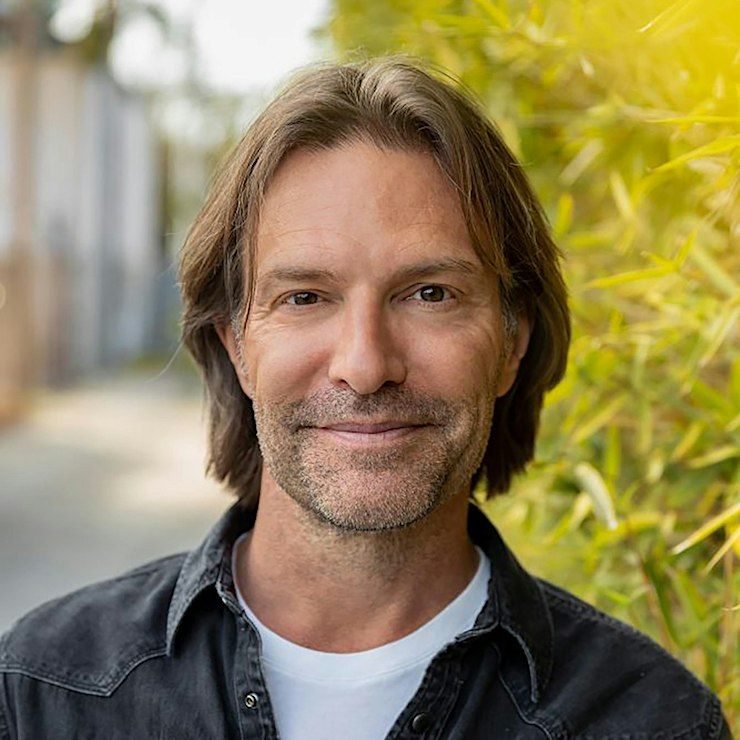
Composer Spotlight: Eric Whitacre
Eric Whitacre (b. 2 January 1970, Reno, Nev.) is an American composer, conductor, and lecturer.
About the Piece: October
We will be performing October. Whitacre said this about the work: " October is my favorite month. Something about the crisp autumn air and the subtle change in light always makes me a little sentimental, and as I started to sketch, I felt that same quiet beauty in the writing. The simple, pastoral melodies and subsequent harmonies are inspired by the great English Romantics (Vaughn Williams, Elgar), as I felt this style was also perfectly suited to capture the season's natural, pastoral soul. I'm quite happy with the end result, especially because I feel there just isn't enough lush, beautiful music written for winds. October was premiered on May 14th, 2000, and is dedicated to Brian Anderson, the man who brought it all together.
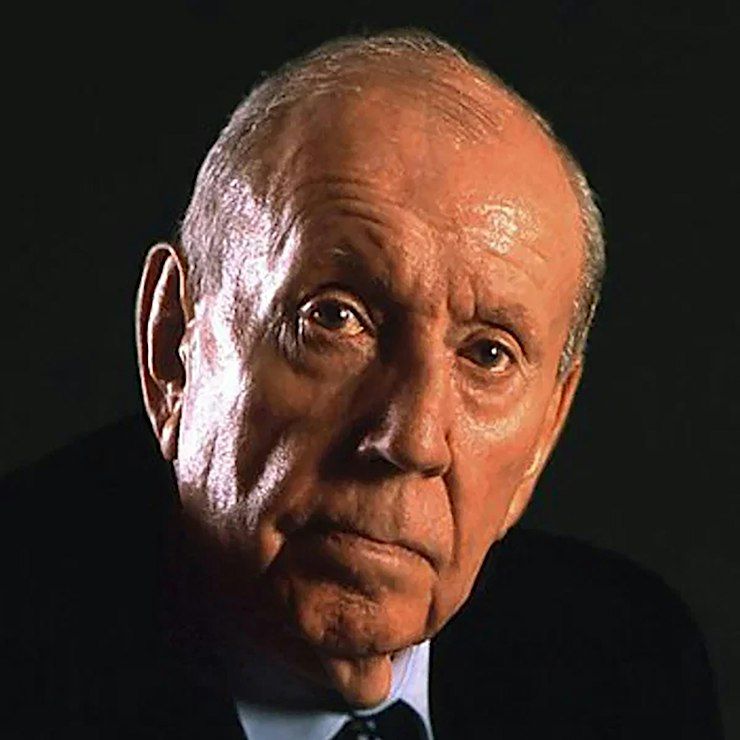
Composer Spotlight: Sir Malcolm Arnold
Sir Malcolm Arnold (October 21, 1921 – September 23, 2006) was an eminent British composer and professional trumpeter. Born in Northampton to a family of shoemakers, he was drawn to the creative freedom of jazz as a rebellious teenager. After attending a Louis Armstrong performance in Bournemouth, Arnold began playing the trumpet at age 12. Five years later, he won a scholarship to the Royal College of Music (RCM), where he studied composition underGordon Jacob and trumpet under Ernest Hall. In 1941, he joined the London Philharmonic Orchestra as second trumpet, advancing to principal trumpet in 1943.
During World War II, Arnold volunteered for military service in 1944. However, upon learning he was assigned to a military band, he intentionally shot himself in the foot to secure a discharge back to civilian life. Following a season as principal trumpet with the BBC Symphony Orchestra, he returned to the London Philharmonic in 1946 before retiring from orchestral performance in 1948 to focus exclusively on composition.
By age thirty, Arnold's career was entirely devoted to composing. Alongside Benjamin Britten and William Walton, he became one of the most sought-after British composers of his generation. Renowned for his rich melodic gift, he earned a standing as a master of light music, highlighted by his suites of English, Scottish, Irish, Welsh, and Cornish Dances, as well as his film scores for Hobson’s Choice and the St Trinian’s series. Though a relatively conservative tonal composer, he was exceptionally prolific and widely popular. He cited Hector Berlioz as a primary influence, and musicologists frequently draw comparisons between his work and that of Jean Sibelius.
Arnold was knighted in 1993 for his services to music. Over the course of his career, he was awarded honorary doctorates from several institutions, including the University of Exeter (1969), University of Durham (1982), University of Winchester (1983), University of Leicester (1984), Miami University of Ohio (1989), and the University of Northampton (2006).chester (1983), University of Leicester (1984), Miami University of Ohio (1989), and the University of Northampton (2006).
About the piece: Tam O'Shanter Overture
Overview
Completed in March 1955, Tam O'Shanter Overture was dedicated to Michael Diack, one of Sir Malcolm Arnold’s publishers. Arnold regarded Robert Burns as one of history's greatest poets and expressed hope that his own enjoyment of the Scotsman's work would inspire audiences to read Burns's poetry. While the overture follows a distinct narrative, it remains a vibrant, stand-alone work of program music—a distinction Arnold emphasized in comparison to his earlier, non-programmatic overture Beckus the Dandipratt.
Narrative Program
The work is based on Robert Burns’s 1790 narrative poem Tam o' Shanter. The legend follows Tam, a hard-drinking farmer who recklessly ignores his wife's warnings that his misdeeds will leave him "catch'd wi' warlocks."
After imbibing to excess in Ayr on market day, Tam mounts his mare, Meg (or Maggie), for a stormy, late-night ride home. Passing the haunted Kirk-Alloway, he sees the church illuminated and stops to watch a wild gathering of witches and warlocks dancing to bagpipes. Enthralled by a witch dancing in a short shirt (cutty-sark), Tam succumbs to excitement and shouts, "Weel done, Cutty-sark!"
Instantly, the church goes dark, and the hellish legion gives chase. Knowing that evil spirits cannot cross running water, Tam spurs Meg toward the bridge over the River Doon. The witches catch up just as they reach the bridge; one springs forward to grab Tam, but seizes only Meg's tail as horse and rider leap to safety across the water. Tam arrives home safely, though he faces one final peril: his wife's furious reaction to his wild account of the evening.
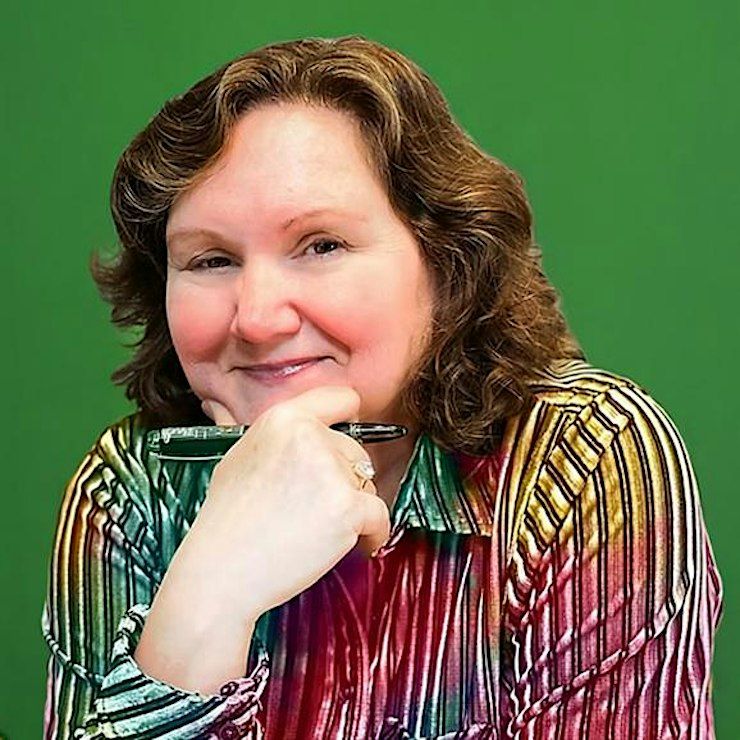
Composer Spotlight: Julie Giroux
Julie Ann Giroux (b. 1961) began playing piano at age three and composing at eight, publishing her first work for concert band by age 13. A graduate of Louisiana State University, she launched her commercial career in 1984 as an orchestrator for Oscar-winning composer Bill Conti on the television miniseries North & South.
With over 100 film, television, and video game credits, Giroux has collaborated with legendary composers and icons, including Clint Eastwood, Martin Scorsese, Madonna, Celine Dion, Michael Jackson, and Harry Connick Jr. Her work has earned nominations across Oscar, Emmy, Grammy, and Golden Globe awards. Notably, she is a three-time Emmy Award winner—becoming both the first woman and the youngest recipient of the Outstanding Individual Achievement in Music Direction award.
A trailblazer in a historically male-dominated field, Giroux became the first female composer inducted into the prestigious American Bandmasters Association in 2009. She is also a recipient of the Distinguished Service to Music Medal. Today, her original compositions for wind ensemble—published by Musica Propria—are performed at major music festivals worldwide. In June 2025, she was inducted into the Hall of Fame for Women Songwriters, Composers, Performers, and Producers.
About the Piece: Wonderfully Wicked
From the Composer: "In the mist-covered hills of 18th-century Transylvania, a humble chambermaid discovers a music box once belonging to her great-grandmother. Its haunting melody grants her beauty and awakens a hidden power. One evening, she dares to try on the princess's gown. The young prince enters, expecting his sister, and is instantly enchanted. Believing her to be nobility, he invites her to the royal ball.
That night, they dance beneath glittering chandeliers until a friend of the prince recognizes her—as a chambermaid. Laughter ripples through the hall. The prince, humiliated and furious, accuses her of witchcraft: 'Witch!' he cries. 'You made me see beauty where there was none!'
Thrown into the dungeon, tortured but unbroken, she waits for execution. Yet the whispers were true: she is a centuries-old witch, sustained by the dark magic of the music box. When the melody plays again, the castle burns. By dawn, only ashes remain—and the faint echo of her song."
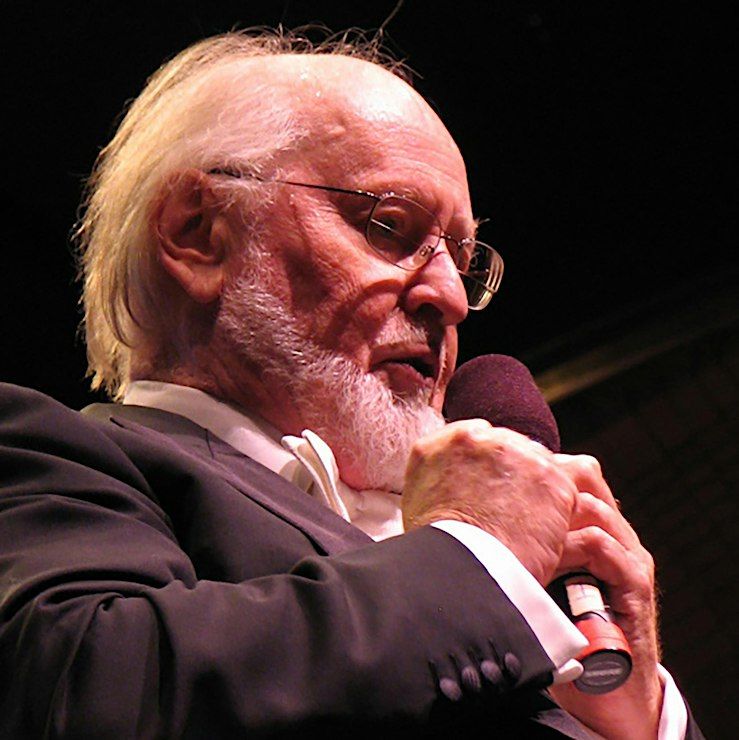
Composer Spotlight: John Williams
John Towner Williams (b. 8 February 1932, Floral Park, N.Y.) is an American composer, conductor, and pianist.
Born just one month before the death of John Philip Sousa, the son of a jazz drummer, Williams studied piano and composition at the University of California, Los Angeles, and The Juilliard School in New York City. By his late twenties, Williams was an active jazz and studio pianist and began composing music for television and film. In 1974, he met an ambitious young director named Steven Spielberg, and the two forged a friendship that would become one of the most successful partnerships in filmmaking history. That year, the pair worked together on a film called Sugarland Express starring Goldie Hawn, and a year later teamed up again for Jaws. Soon, Williams’ music garnered international attention unlike any American composer since Sousa.
In a career that spans six decades, Williams has composed many of the most famous film scores in Hollywood history, including Star Wars, Superman, Home Alone, the first three Harry Potter movies, and all but two of Steven Spielberg's feature films, including the Indiana Jones series, Schindler's List, E.T. the Extra-Terrestrial, Jurassic Park and Jaws. He also composed the soundtrack for the hit 1960s TV series Lost in Space.
Williams has composed theme music for four Olympic Games, the NBC Nightly News, the inauguration of Barack Obama, and numerous television series and concert pieces. He served as the principal conductor of the Boston Pops Orchestra from 1980 to 1993, and is now the orchestra's laureate conductor.
Williams is a five-time Academy Award winner. He has also won four Golden Globe Awards, seven BAFTA Awards and 21 Grammy Awards. With 45 Academy Award nominations, Williams is, along with composer Alfred Newman, the second most-nominated individual after Walt Disney. He was inducted into the Hollywood Bowl Hall of Fame in 2000 and received the Kennedy Center Honors in 2004.
About the piece: Harry’s Wonderous World from Harry Potter and the Sorcerer’s Stone
Harry Potter and the Philosopher's Stone (released in the United States as Harry Potter and the Sorcerer's Stone) is a 2001 fantasy film directed by Chris Columbus and distributed by Warner Bros. Pictures, based on J. K. Rowling's 1997 novel of the same name. Produced by David Heyman and written by Steve Kloves, it is the first installment of the Harry Potter film series. Daniel Radcliffe stars as Harry Potter, with Rupert Grint as Ron Weasley and Emma Watson as Hermione Granger. Its story follows Harry's first year at Hogwarts School of Witchcraft and Wizardry as he discovers that he is a famous wizard and begins his formal wizarding education.
From the Composer:
The success of J.K. Rowling’s Harry Potter series has been a heartwarming phenomenon to all those who love books. The worldwide reception that these works have received added greatly to the sense of privilege that I felt when I was given the honor of composing the music for the film version of Harry Potter and the Sorcerer’s Stone.
The story’s imaginative array of wizards flying on broomsticks and mail-delivering owls, all occupying a wondrous world of magic, offered a unique canvas for music, and the prospect of sharing it with some part of the great army of readers who love these books is a great joy to see.
Event venue & nearby stays
Rose Auditorium, South Salem High School, 700 HOWARD STREET, Salem, United States
 Concerts, fests, parties, meetups — all the happenings, one place.