
About this Event
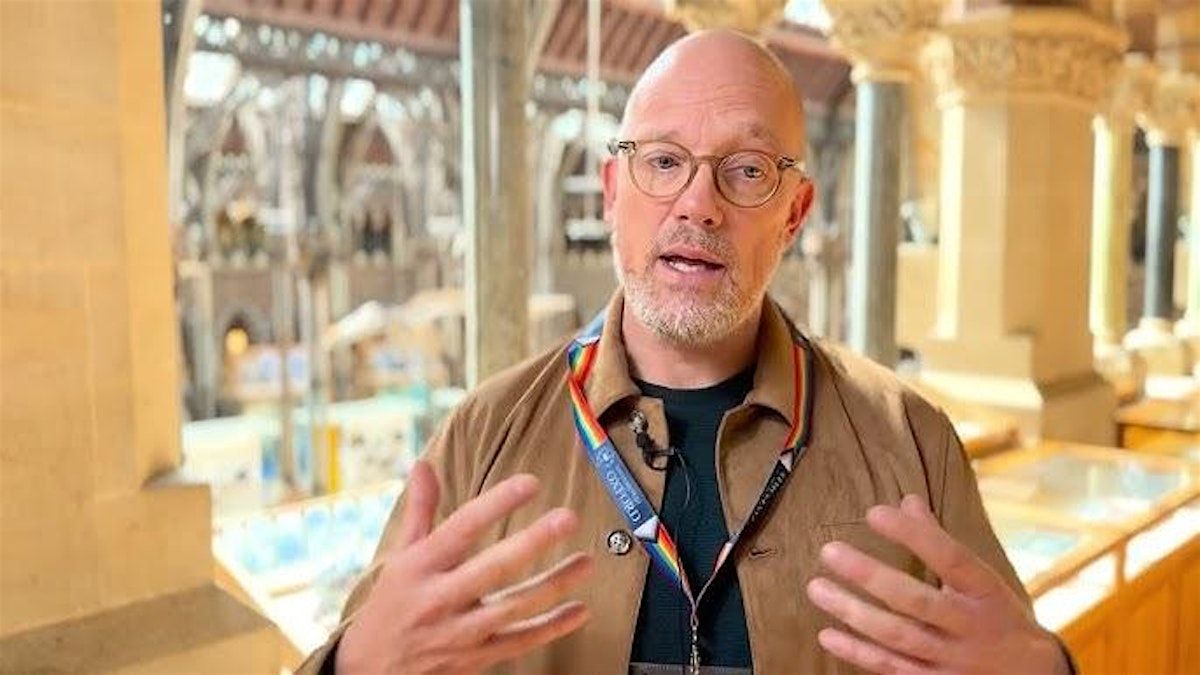
Matthew FS Rushworth
Department of Experimental Psychology, University of Oxford
Abstract: Before we decide what to do next, we assess how difficult it will be for us to do it. Recent behavioural analyses suggest that humans and macaques are able to assess how difficult it is likely to be to tackle a particular decision even before the decision is actually made. Using fMRI it is possible to show that arriving at an estimate of whether or not one can tackle a particular decision depends on an accumulating signal in the anterior lateral prefrontal cortex area 47 (alPFC47). The signal is proportional to the probability that the decision will be performed correctly. The faster the neural signal increases, the more likely a person is to take the decision. Different patterns of neural activity are associated with evaluating the probability that you yourself can perform a decision correctly and probabilities of external contingencies that do not depend on you. This process of metacognitive estimation of our own decision-making abilities can also be used to estimate how well some one else might perform a decision task. However, because these estimates are derived from projections of our own performance abilities, they are most helpful when we are estimating how well someone with similar or worse skills will perform as opposed to someone with better skills. A similar, albeit limited, ability is present in macaques and is associated with activity in a similar area. Disrupting the alPFC47 activity does not affect decision making per se but it does compromise the prospective metacognitive evaluation of decision making.
Event Venue & Nearby Stays
Kennedy Lecture Theatre - UCL GOSICH, 30 Guilford Street, London, United Kingdom
USD 0.00