

About this Event
We are excited to be back at the Hylton Performing Arts Center on the campus of George Mason University in Manassas, VA to record this episode of Mountain Stage!
Tickets: $40-$75
*Tickets go on sale to the public on Aug. 4
Subscriptions for the 2026–27 Season are on sale now
About Mountain Stage
Since 1983, Mountain Stage has been one of the most beloved programs in public radio history. Eclectic and authentic, the show’s varied guests have included iconic artists from John Prine and Townes Van Zandt to Wilco and Phish. Under the leadership of Grammy Award-winning country and bluegrass star Kathy Mattea since 2021, Mountain Stage continues to bring music discovery to parts known and unknown.
Produced by West Virginia Public Broadcasting and distributed by NPR Music, each two-hour episode is recorded in front of a live audience and can be heard every week on over 200 stations across America, and around the world via NPR Music and mountainstage.org.
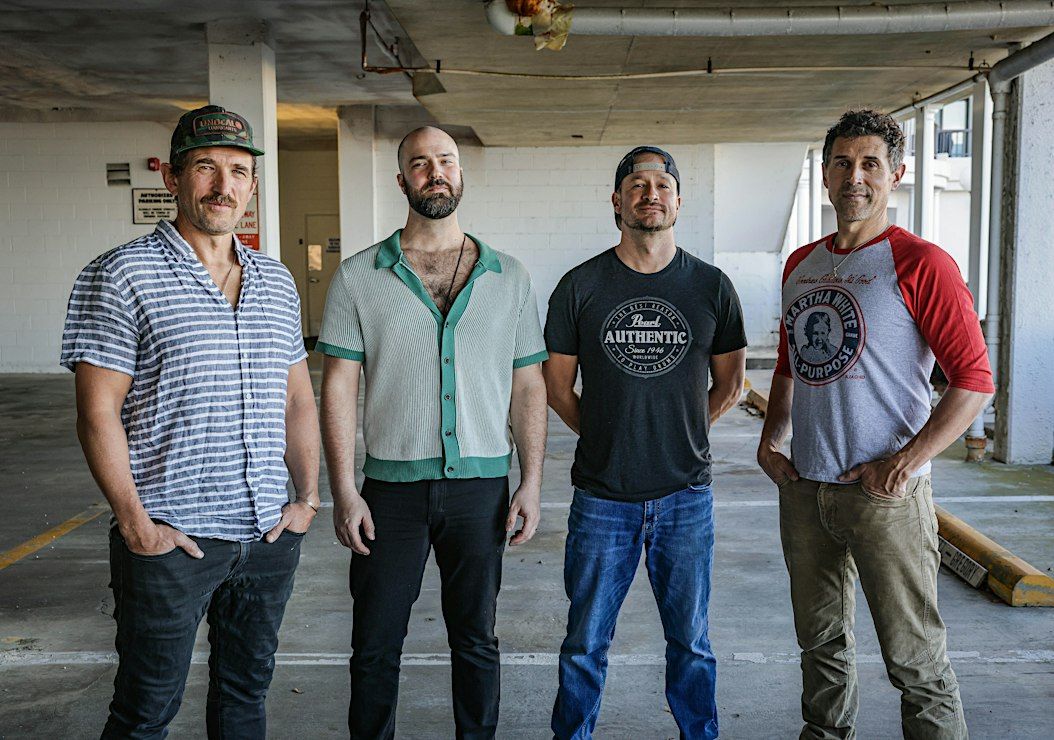
Named after Ukrainian nomads, Scythian (sith-ee-yin) plays roots music from Celtic, Eastern European and Appalachian traditions with thunderous energy, technical prowess, and storytelling songwriting, beckoning crowds into a barn-dance, rock concert experience. Nashville’s Music City Roots says Scythian is ‘what happens when rock star charisma meets Celtic dervish fiddling’, and the Washington Post claims “Scythian’s enthusiasm is contagious, and shows seem to end with everyone dancing, jumping around or hoisting glasses.” The foursome made up of Alexander Fedoryka (Vocals, Fiddle, Mandolin, Harmonica), Danylo Fedoryka (Vocals, Guitar, Accordion), Ethan Dean (Vocals, Upright and Electric Bass, Percussion, Guitar) and Johnny Rees (Vocals, Drums, Percussion) brings various influences together to create a conglomerate which is technically precise and steeped in various folk traditions: The classically trained Fedoryka brothers grew up on Ukrainian folk music and bluegrass, while Ethan Dean was raised on the greats of 60’s & 70’s folk-rock. Lafayette LA raised Johnny Rees brings a Cajun backbeat to the Celtic-Americana fusion giving Scythian yet another dimension which keeps audiences entertained and moving. Scythian is coming off its most prolific year in 2020 with over 1,000 hours of live streams during the Covid Lockdowns, release of two new albums (Roots & Stones and Quaranstream: The Album) and four new music videos. You have to catch the live show to understand why The Cammel City Dispatch said of their Merlefest performance: “[Scythian gives] no quarter in their quest to entertain and bring a joy to their music that gives it an irony-free, wide open feel of manic possibility. The playing is technically brilliant, but it is the energy that carries the day."
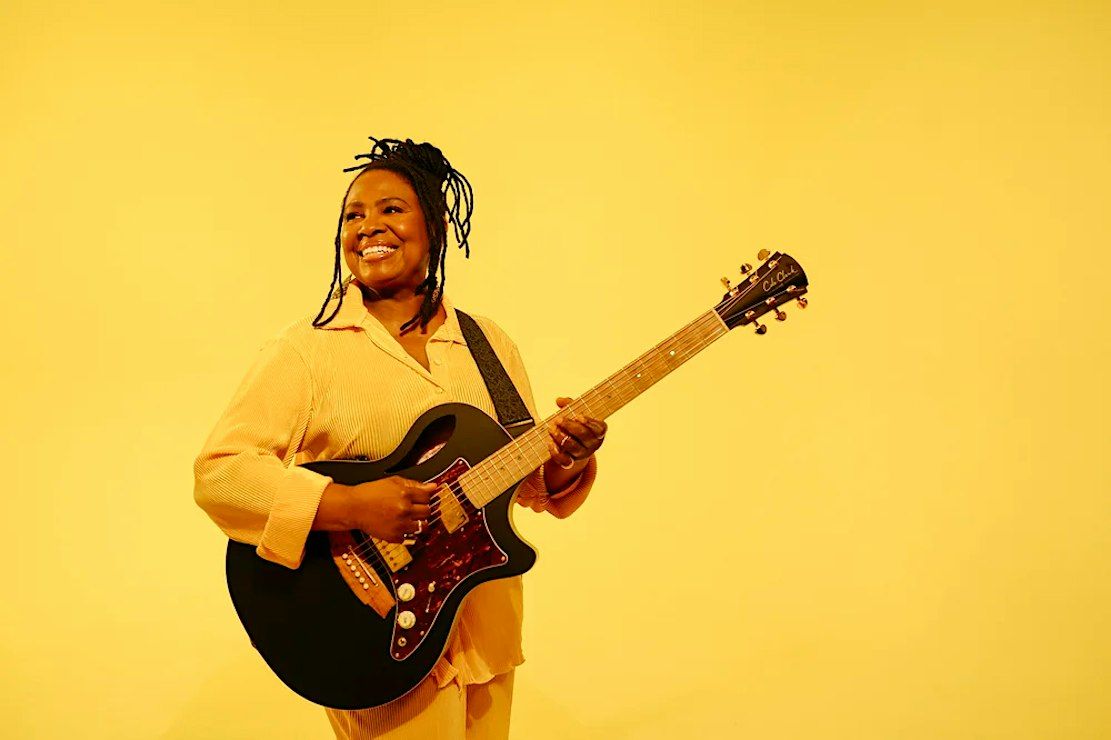
Ruthie Foster
Ruthie Foster still remembers sitting in front of the TV in the Seventies, trying to convince her brother and sister to watch the Grammy Awards. On the screen, formative heroes like Janis Ian and Roberta Flack would take the stage, teaching Foster what was possible.
“I’m amazed at how I got to this place,” Foster says. Just last year, the blues legend took home her first-ever Grammy, winning Best Contemporary Blues Album for her album Mileage. The award was a long time coming for the star, who has been hustling to make a life as an artist possible for over three decades. Foster was first signed to a major label after completing her tour of duty as part of the US Navy. She then abandoned music in 1993 to help take care of her mom who had fallen ill. Shortly after her mother’s death, the singer decided to find a path back to music as an independent artist.
“I wrote this thing on a sticky note and it just said ‘Just say yes,’” she recalls. That little note-to-self stuck with Foster as she re-pursued her dream. She has that sticky note to thank for all that’s come after, so she’s honoring it with her latest album Just Say Yes (out August 28 via Sun Records).
Just Say Yes follows Foster in another moment of transition. Last year, she blew out her meniscus while running to catch a flight and needed to get knee surgery in December. The injury and subsequent recovery have put much of Foster’s life into perspective; she’s made adjustments to her live show to make sure she doesn’t put too much strain on her body.
“It’s not just about age. It’s really about the miles I’ve put on,” she says. “Every step matters.”
Foster decided to take advantage of her winter break from touring by planning a week in Nashville to record before getting her knee surgery. She reunited with her Mileage collaborators Tyler Bryant and his wife Rebecca Lovell (of Larkin Poe) in Nashville, staying at an AirBnB near their house so she could work out of Bryant’s new studio.
“I consider them my people,” Foster says of the pair, beaming every time she talks about them. Foster first discovered Bryant through a random YouTube video of him giving a tour of his home studio. When she found out he was married to Lovell, whom Foster had met before, she decided to call them up. This time around, it became a larger family affair: Lovell’s sister and Larkin Poe collaborator Megan Lovell joined them in the studio as well as Megan’s husband Mike Seal.
“They take my memories, my words, my experiences and just lift it,” she says. “They put a cloud under it.”
Just Say Yes started the same way Mileage had: Foster talked through her life and experiences as Bryant listened. “I come from a family of preachers and talkers, so I was just talking about being on the road and how I got here and being amazed at how I got to this place,” she recalls.
Bryant would pace around the room with his guitar, grabbing ideas and bursts of musical inspiration the whole time.
“Every last one of these songs are about some aspect of my life,” Foster explains. She ruminated on the transitions of this moment, both physical and emotional. As she was enduring her injury, she was also going through a separation with her partner at the time. She felt like both her body and her defenses were breaking down simultaneously, forcing her to peel away the layers and re-discover herself at the core.
“This was my way of being true to who I am and knowing that I’m in yet another transition in my life, which is how these albums tend to happen,” she continues.
The discomfort Foster was enduring was softened by the warm energy of Bryant, the Lovell sisters and Seal. One day, after she had a difficult conversation with her partner at the time, Bryant cooked up something special for Foster – literally.
“He made a soup that made me feel so comforted,” she recalls. “We just sat, ate soup and wrote ‘Tangled Up.’ I didn’t know I needed that.”
On “Sitting Still,” the typically guitar-wielding Foster shows off her piano skills. The song directly addresses her knee injury but also about the type of life and tour adjustments she’s made that have forced her to slow down. “There’s something about being in the quiet that’s good for you,” she reflects.
Title track “Just Say Yes” reflects on her previous life transition. Inspired by the sticky note, Foster remembered how hungry she had been when she decided to give music another shot. She would take two hour trips from her home in Bryan-College Station, Texas to Austin to perform with any band that would have her. “It’s like this little spark and it grew from there,” she says.
The song “Thank You” was first written back in September when Foster was in Nashville for Americana Fest. She reflects on feeling of imposter syndrome and being questioned of her authenticity as a blues performer, even as she has racked up awards for said blues performances, including the Best Contemporary Blues Album Grammy in 2025 for Mileage. Foster has always seen herself as a mix of many genres and influencers, including folk, gospel and country. Many of those can be heard in the album.
“There’s a front door but there’s also a window and back door. There are ways to get in,” Foster says. “I never put any kind of constraints on myself. I’m showing up with all of this.”
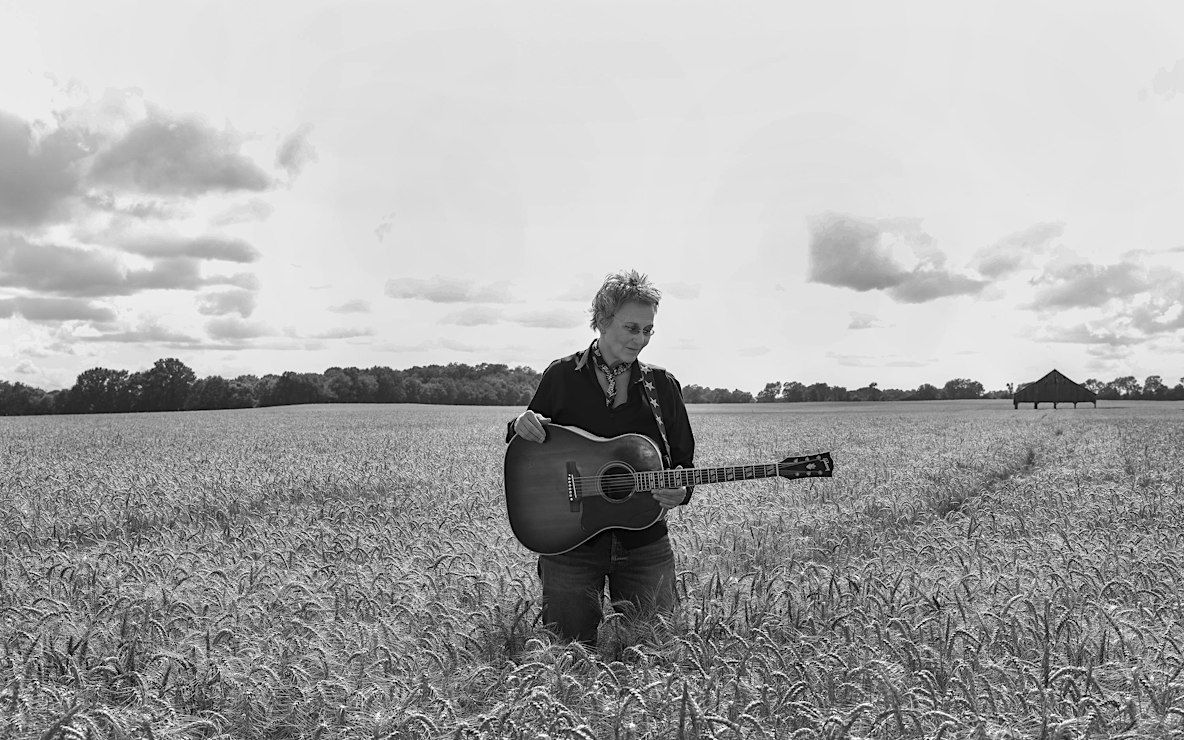
Mary Gauthier
Grammy-nominated artist, Mary Gauthier. Will release new album RECKONING on September 25th(Soundly/Thirty Tigers) ahead of the midterm elections.
As a highly acclaimed, award-winning artist, Mary Gauthier has never written songs from a safe distance. Whether she's exploring addiction, family, war, love, grief, humanity or redemption, she steps directly into the fire, and her listeners eagerly jump right in with her. As a person, she exudes empathy, integrity and shares her experiences to benefit others while inspiring people to do the same.
Reckoning reflects a hard-earned wisdom with a clear sense of urgency, yet without panic. It’s an album of vignettes with one common thread tying them all together. Each song’s character is coming to a figurative fork in the road, and regardless of which direction they choose, there will be some kind of reckoning. It truly stands as one of Gauthier’s finest works in a celebrated career as she shares these compelling stories inspired by personal experiences, historical reflection, political observation, and spiritual searching. The remarkable thing is that she does all of it without preaching or simplifying. The songs ask hard questions while still leaving room for grace.
The powerful title track, written with Aaron Lee Tasjan, encapsulates feelings that many people are carrying right now—the sense that something beneath the surface is brewing—while ultimately offering hope rather than despair. "Some Times," written with Vince Gill, grew from a simple statement from a legend that evolved into a heart tugging story of a life that we can all somehow relate to. "Soldier of Fortune," confronts reality of the modern day stormtrooper contextualized with the past. There’s so much more.
Mary's journey—from addiction and recovery to becoming one of America's most respected songwriters, from the Grammy-nominated Rifles & Rosary Beads to her acclaimed memoir Saved by a Song—has always informed her work. But this album feels especially distilled. Every breath, every string squeak, every imperfect moment remains intact. Mary has always believed that honesty matters more than polish, and these songs benefit from that approach.
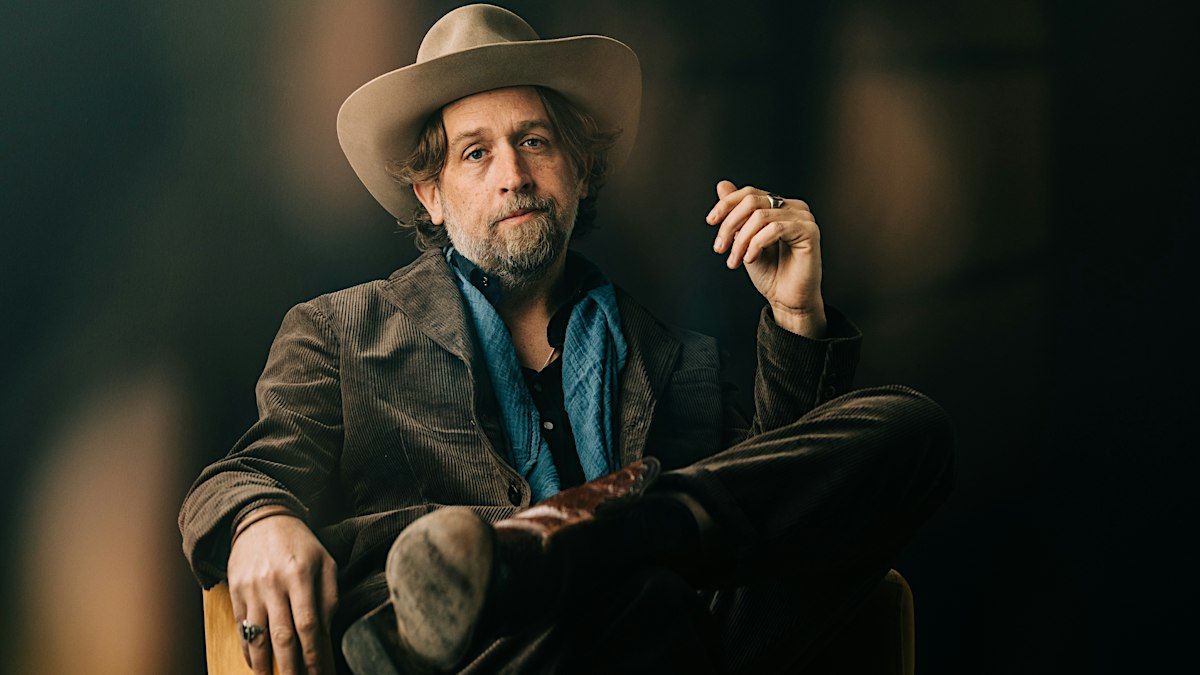
We’re Only Human
Hayes Carll isn’t preaching or teaching. He’s not interested in telling the rest of us what to do or think. But he is charting out a personal guide for his life, quieting the noise, and sitting with his real voice – the one that’s candid, consistent, and often inconvenient.
We’re Only Human is Carll’s tenth album. Like his best lyrics, it is also an understated masterpiece, an honest snapshot of one man’s confrontation and delight with humanity’s biggest and most intimate questions. Where do we find forgiveness for ourselves and grace for others? How do we hold on to peace of mind and stay present? What can we—and should we––trust? And how can we moor ourselves to, well, ourselves, in the midst of confusing, trying times? We’re Only Human offers audiences the chance to listen to Carll as he listens to himself.
“I’ve lived outside of myself for so long,” Carll admits. “Distractions, fear, anxiety, insecurity, and the complexity of being human in this world have so often pulled me away from being present or at peace.”
“I feel like there’s been a voice riding shotgun all my life, pushing me to do better, but I’ve struggled to listen to it,” Carll says. “The idea behind this record was to do the personal work I needed to do, then codify those lessons in song to serve as sort of breadcrumbs to get me back on the trail if, and inevitably when, I get lost again.”
Carll is more than two decades into a celebrated career. Praise from places such as Pitchfork and the New York Times––the latter of which yoked Carll’s ability to tackle tough issues with wry humor to Bob Dylan––punctuate a resume that includes Americana Music Awards and a Grammy nomination. His songs aren’t safe, but many of Nashville’s stars have recorded them, including Kenny Chesney, Lee Ann Womack, and Brothers Osborne. As a solo recording artist, Carll has long-since established himself as one of Americana’s most-played––and most loved––voices. His warm but crackling vocals, wit, and heart dance through wordplay that’s always clever, and never too precious. Through it all, whenever Carll points a finger, it’s most often at himself.
As We’re Only Human collects moments of Carll figuring out how to be with himself, the songs feel forthright, hopeful, and timely. In today’s onslaught of instant gratification, rage-baiting headlines, glorified intolerance, and falling empathy, the record is a startling outlier: an artist’s raw, real-life effort to live well—both with himself and others. Carll embraces private epiphanies, and shares them with the world, allowing them to unfold for all to see and share.
Of course, We’re Only Human is also art. So while appreciating the motivation and compelling themes driving it will underpin the listener’s experience, Carll’s album also matters because of the sheer brilliance of its execution. These are songs composed by a writer’s writer, wielding his considerable skill with precision and beauty.
The album’s title track unfolds with plaintive piano and a mantle of grace. Carll sings, with a calming sincerity, “We’ll do most anything to avoid the pain / Hiding our hearts and casting the blame / 6,000 tongues, but we’re all the same / Ain’t no need to carry that shame / ‘Cause we’re only human.”
Hard-won minutes of quiet clarity inspired some of the record’s most beautiful moments. Accented by bright mandolin and soft, simple percussion, “Stay Here a While” captures a peaceful reprieve from a racing mind. “I remember sitting on the couch, looking out the window, watching the birds do their thing,” Carll says with a laugh. “I got lost in their lives for a moment, and it was such a wonderful feeling because my mind is always going in circles, seeking excitement, and frankly, just thinking about myself. I enjoyed the peace I felt in that moment and I thought, this is lovely and I’d like to stay in this place.” Carll shared that takeaway with MC Taylor, aka Hiss Golden Messenger, who not only could relate, but helped finish the song.
“High” offers another invitation to stop and breathe. Opening with a solo horn, flute, and stripped down piano, the track is lovely and sincere, with Carll’s signature humor hovering comfortably nearby. There are also times when Carll’s sharp wit comes roaring to the foreground. “Progress of Man (Bitcoin and Cattle)” sends up society’s disorienting––and conflicting––forces, while “Good People (Thank Me)” is a masterclass in comedic timing, stubborn humanism, and the untapped potential of gratitude.
A dogged insistence on acceptance, both of one’s self and others, courses through the album— as does Carll’s determination to hold himself accountable. “If I’m judging others, then I’m not having to look at myself,” Carll says. “I’m flawed as hell, judgmental, and critical of myself and those around me. That’s a loop that feeds itself. But I figure If I can look at myself clear-eyed and acknowledge my own shortcomings, it might help me have some grace and acceptance for myself and others.”
It’s that sort of harmonious duality––embracing one’s self and confessing one’s own mistakes––that solidifies the record’s big-hearted honesty. “The creative process was in large part a self-therapy session. I don’t think that would work if I was only looking at everyone else’s issues,” Carll says.
A moving series of grounding vignettes, realizations, and self-love roll through “What I Will Be,” as Carll promises to not compromise himself to fit in. A slow-burning, blues-tinged standout, “I Got Away with It” is painful and gorgeous. Brimming with hope, “One Day” balances the work Carll sees as necessary with the certainty that satisfaction, contentment, and peace are reachable by trusting in yourself and the universe.
Featuring a parade of Carll’s longtime friends, album closer “May I Never” is a plea to himself. As Ray Wylie Hubbard, Shovels & Rope, Darrell Scott, Nicole Atkins, and The Band of Heathens’ Gordy Quist and Ed Jurdi each take verses, listeners are swept up in a resolute promise to keep after good. “It brings up a lot for me when I hear them singing those lines,” Carll says. Each of those people – whether they know it or not – have played a part in my story, and it’s gratifying and humbling to me to have them lend their voices to this song.”
In the end, Carll’s latest album is a lovingly and purposefully written collection of reminders. “I hope other people find something in it, too” Carll says. “Through it all, I am trying to stay appreciative, knowing that I did what I set out to do: write something that can help me navigate this journey with a little more grace and peace.”
Event venue
Hylton Performing Arts Center - Merchant Hall, 10960 George Mason Cir, Manassas, United States
 Concerts, fests, parties, meetups — all the happenings, one place.