

About this Event
Workshop Purpose
This one-day experiential workshop introduces a contemporary, trauma-informed approach to working with subpersonalities, rooted in the tradition of psychosynthesis and updated through current trauma theory and clinical practice.
Psychosynthesis was one of the first psychological models to recognise the multiplicity of the psyche and to offer a structured approach to working with subpersonalities. Assagioli described subpersonality theory as “one of the chief points” of his approach, highlighting the dynamic interplay between multiplicity and unity within the human psyche.
Today, parts-based approaches are central to many contemporary therapeutic models; however, the original contribution of Roberto Assagioli is often overlooked. This workshop seeks both to reclaim psychosynthesis as the original parts model and to evolve its clinical application through a trauma-informed lens.
Drawing from and integrating mindfulness- and parts-based relational models such as Trauma-Informed Stabilisation Treatment (TIST), Relational Life Therapy (RLT), and developments in neuroscience and attachment theory, the workshop explores how subpersonalities are formed in response to trauma and how they function as adaptive survival strategies.
At the heart of this approach is a trauma-informed understanding of the survival personality or adapted child as an overarching organisational structure within the psyche, rather than a single, unified part. From this perspective, the adapted child can be understood as an umbrella term encompassing a constellation of subpersonalities, each shaped in response to specific relational and environmental pressures.
Seen through this lens, behaviours are no longer understood as fixed traits or resistance, but as intelligent adaptations organised around core evolutionary defence responses. These include fight, flight, freeze, submit (also expressed as fawn, fix, please, or appease), attach, and collapse.
Each of these subpersonalities carries a distinct protective function: to preserve safety, maintain connection, or defend against overwhelming experiences such as abandonment, shame, or psychological annihilation. By working with these parts as differentiated yet interconnected aspects within the broader survival personality, clinicians are better able to recognise the intelligence of these adaptations and respond in ways that are both attuned and relationally grounded.
Through a combination of theory, experiential exploration, and clinical application, participants will develop the skills and confidence to work with subpersonalities in ways that are safe, relational, and grounded in nervous system awareness, supporting integration without overwhelm.
Who is it for?
Trainee and qualified therapists, counsellors, psychologists, coaches, and mental health professionals, as well as practitioners in related fields and anyone interested in deepening their understanding of subpersonalities and parts work within psychosynthesis.
Learning Outcomes
The workshop will offer an overview of:
- The lineage of subpersonality theory, positioning psychosynthesis as an original model of parts work and exploring its influence on contemporary approaches
- Multiplicity as a core theme across psychological models, including key foundational frameworks
- The evolution of trauma theory and its impact on contemporary psychotherapy
- The neurobiological foundations of trauma, including the brain’s response to threat and core survival responses (fight, flight, freeze, submit, attach)
- The formation of subpersonalities in response to trauma and early relational environments, including processes of splitting, dissociation, and adaptation
- The concept of the survival personality / adapted child and its role in maintaining attachment, safety, and relational survival
- A trauma-informed reworking of the Psychosynthesis model, including an updated understanding of the Egg Diagram
- Processes of identification, disidentification, and integration in subpersonality work
- An updated, trauma-informed model for working with subpersonalities (5-stage process)
- Practical ways of working with subpersonalities safely, relationally, and effectively in clinical practice
What to Expect
The workshop will be held in person at the Psychosynthesis Trust. Participants will:
- Explore the historical lineage of parts work and psychosynthesis’ contribution to the field
- Be introduced to a trauma-informed framework for working with subpersonalities
- Engage in experiential exercises to deepen awareness of inner parts, including processes of identification (blending) and disidentification (unblending)
- Develop an understanding of how trauma shapes internal systems and survival strategies
- Explore clinical applications through case material, discussion, and reflective practice
- Consider how to integrate this approach into their own therapeutic work
- Have space for questions, dialogue, and shared learning
Our Approach
Psychosynthesis offers a holistic and integrative approach to psychotherapy, encompassing both psychological and spiritual dimensions of human experience. At its core is the understanding that the psyche is inherently multiple, and that healing involves a process of synthesis, bringing different parts of the self into relationship and integration.
This workshop builds on Assagioli’s original work with subpersonalities and places it in dialogue with contemporary trauma theory, neuroscience, and relational approaches. Many of the concepts now widely used in parts-based therapies, including multiplicity, the observing self, and disidentification, have their roots in psychosynthesis.
By integrating these foundations with a trauma-informed understanding of the nervous system and attachment, the workshop offers a way of working that is both clinically grounded and deeply integrative. It supports therapists to work with parts in a way that honours their adaptive function while also supporting transformation and integration.
Ticket Pricing
At the Trust we appreciate that each person has their own unique situation, so we invite you to select the price point that feels like it represents a fair contribution for attending this event.
There are three options to choose from when purchasing tickets: £75; £100; £150
If you have any concerns around affordability, please email .
About the Trainer
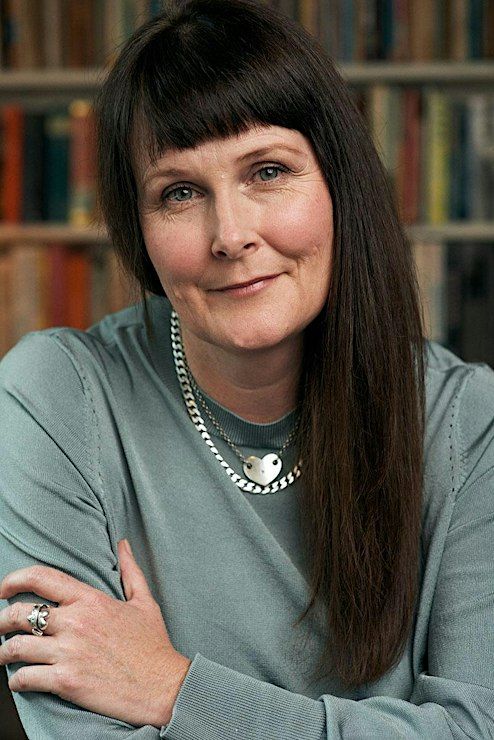
Dolma Beresford is a UKCP and BACP accredited psychotherapist with an MA in psychosynthesis psychology. She works in private practice in London with individuals and couples, offering an integrative, trauma-informed approach.
Her work brings together psychosynthesis, Trauma-Informed Stabilisation Treatment (TIST), Relational Life Therapy (RLT), and psychosexual therapy, grounded in contemporary neuroscience and attachment theory. She has a particular interest in how subpersonalities form in response to trauma and has developed a model that integrates psychosynthesis with modern trauma-informed approaches to parts work.
Dolma teaches and delivers workshops internationally, with a focus on evolving Psychosynthesis for contemporary psychotherapy. Her work emphasises both the reclamation of psychosynthesis as the original parts model and its integration into current clinical practice.
Event venue & nearby stays
Psychosynthesis Trust, 92-94 Tooley Street, London, United Kingdom
 Concerts, fests, parties, meetups — all the happenings, one place.