
About this Event
How do models and probability help us make sense of the cosmos, and what would it take for us to change our minds about the origin of the universe?
An award-winning astrophysicist looks at how the understanding of uncertainty and randomness has led to breakthroughs in our knowledge of the cosmos.
On Wednesday 18th March PubSci is delighted to welcome award-winning astrophysicist Professor Andrew Jaffe to cinsider "Is everything we know about the Big Bang wrong?"
In recent years, astronomers have built ever more sophisticated astronomical telescopes, deploying them on ever more ambitious satellites while constructing others in the darkest, quietest, most remote places on earth. These instruments have enabled the most precise measurements yet of the state of the cosmos, fleshing out the details of our Big Bang model which describes the history and evolution of the Universe itself.
But, as different teams – each employing different equipment and even more different methods – characterise key measurement of how the expansion of our Universe changes over time, something seems to be amiss: different teams are getting different results.
Does this mean that our models are wrong? Is it the measurements? Once we start pulling at one thread, might the whole tapestry of the Big Bang come apart?
Don't miss this unique opportunity to hear Andrew delve into this knottiest of problems and untangle the biggest question of all: How did it all begin, how did we get where we are today, and how can we know any of this?
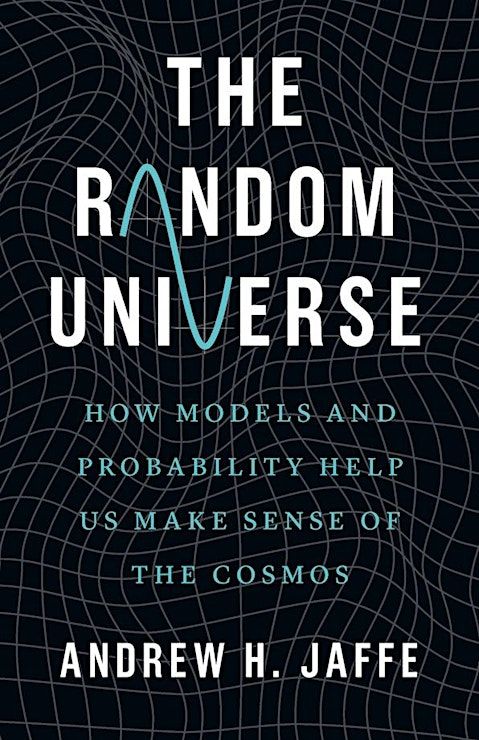
Copies of Andrew's latest book, , will be on sale in the break and after the talk.
The venue is PubSci's regular home, The Old King's Head near Borough Market, which offers a great range of drinks, has a happy hour before 7pm, and opens the kitchen serving classic pub grub especially for us.
See below for important booking details – please also check the FAQ.
Is PubSci for me...?
PubSci presents accessible science talks in the comfort of a pub meeting room so you can enjoy top quality talks with a drink in your hand. No specialist knowledge is needed.
Why you should come to this event
If you've ever wondered how and why we build models of the world – whether mental and instinctive or rigorous and mathematical – Andrew's book covers this and more, such as how maths can help us make sense of things that seem uncertain and unpredictable, which is something we all need in these challenging times. And in this talk Andrew looks at how scientists build models of the universe and how they – and we – deal with challenges to such models when that data seems to shouting seven different things at once.
Will the Big Bang survive the night?
Come to PubSci on Wednesday 18th March 2026 and find out the answer!
•••••••••••••••••••••••••••••••••••••••••
PubSci talks run for around 45 minutes, followed by a short break and a Q&A session. We aim to finish by 9pm. The Old King's Head has a happy hour before 7 and the kitchen serves traditional pub grub. The nearest tube is London Bridge (Borough High Street exit). See FAQs for more.
Reserve you place by booking with Eventbrite today. See below for ticketing options, to read about this month's speakers, and learn more about PubSci.
Tickets
Booking is on a pay-what-you-can-afford basis.
Unfortunately Eventbrite doesn't make this easy, so please read on to understand how booking works.
There are two ticket options:
Each ticket type has a separate allocation – please check both for availability.
- Book without donating (max 4 tickets) if you prefer to put cash in the pot on the night.
- Book for one + Support PubSci (max 1 ticket) if you'd like to contribute with your booking. You don't input a number of tickets, just the amount you wish to contribute which also reserves you one spot at the event.
If Book without donating is sold out, scroll to check Book for one + Support PubSci.
Multiple tickets
If you need multiple tickets, you could get one Support PubSci ticket for whatever amount you're comfortable with contributing for your group, then add the rest of your tickets for free as Book without donating. You can do this in one transaction, but how you book is up to you.
We normally also take a cash collection on the night for those who prefer to support PubSci that way but for January, we’ll be donating all cash to St. Mungo’s instead.
How much are tickets...?
There's no set 'price' – we trust you to contribute what you think is fair for an evening of great science. The precise amount is up to you, but the price of a pub drink is probably a good measure.
PubSci receives no other income. More information at the bottom of this page.
About our speaker
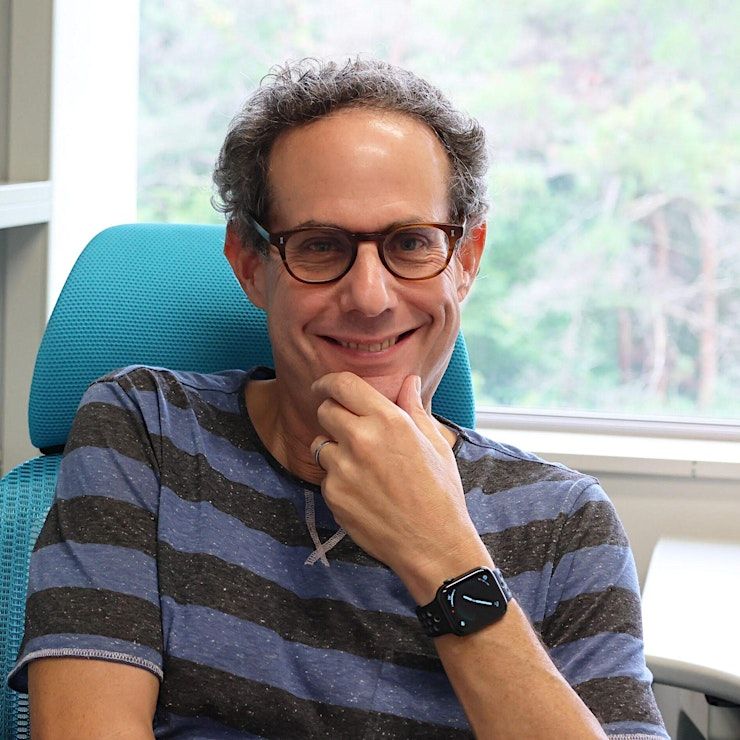
Andrew H. Jaffe is professor of astrophysics and cosmology at Imperial College London and director of the Imperial Centre for Inference and Cosmology.
Using data from the Planck Surveyor Satellite, Euclid, LISA, and The Simons Observatory, his research concentrates on employing powerful statistical techniques to determine the contents and evolution of the Cosmos from those telescopes and satellites surveying the Universe. He is especially interested in the interpretation and analysis of cosmological data using principled Bayesian statistical techniques.
His book, , explores how understanding both uncertainty and randomness has led to breakthroughs in our knowledge of the cosmos, demystifying the role they play in the scientific process.
In it, Prof. Jaffe explains how scientists create, test, and refine their models by applying those paired concepts. The book explores how this approach has guided our knowledge of both quantum mechanics and the birth of the universe, serving it up in a highly readable blend of philosophy, probability theory, and cosmology science.
The Random Universe was published by Yale University Press in November 2025 and will be available to buy at PubSci.
Andrew Jaffe was born in the USA and lives in London, UK with his family.
PubSci is delighted to welcome Andrew as our March speaker.
About PubSci
PubSci presents accessible science talks in the comfort of a pub meeting room so you can enjoy top quality science talks with a drink in your hand.
It is an independent initiative run by volunteers, is not-for-profit, and receives no funding other than attendee contributions.
We believe science is for everyone and we want everybody to be able to afford our events, so we run PubSci on a Pay-What-You-Can basis. To contribute via Eventbrite choose "Book for one + support PubSci". To contribute on the night, please bring cash.
By making a donation, you make it possible for PubSci to put on events like this. If you're not sure what's a reasonable amount, we suggest the same as you'd pay for a drink at the pub. If you want to support somebody attending who can't afford it, consider putting in the price of two drinks.
Note: We aim to keep PubSci accessible for all, but it is unsuitable for under 18s as we meet in the upstairs room of a pub. Regrettably, there is no wheelchair access.
Check out our Future Events page where you can also subscribe to our Google Calendar. PubSci events will then automatically appear in your own iCal compatible calendar.
You can learn more about PubSci via our LinkTree and download our events programme here.
Please see the below for all your FAQs
Agenda
🕑: 06:30 PM
Doors open to the public
Info: Order drinks and food at the downstairs bar, then join us upstairs.
🕑: 07:00 PM
Event begins
Info: Introduction followed by the main talk.
🕑: 08:00 PM - 08:20 PM
Break
Info: Stretch your legs, refill your glass, then come back for part 2. Timing is approximate.
🕑: 08:20 PM - 09:00 PM
Q&A
🕑: 09:00 PM
Event ends
Info: We aim to wrap up by 9pm.
🕑: 09:00 PM - 09:45 PM
Optional socialising
Info: Carry on the conversation. Northern Line trains stop running at 10pm until late Spring 2026
Event Venue & Nearby Stays
The Old King's Head, King's Head Yard, London, United Kingdom
GBP 0.00