
About this Event
Event description:
In the age of net zero objectives and incentives, recent conservation practice has been charged with a tendency to rely on Romantic notions of nature as “a homeostatic and self-organizing organism that always strives for balance and harmony” (Menely, 2023, p.307). However, within the fields of geography (Thurgill, 2020), green criminology (McClanahan, 2020) and ecocriticism (Bryant, 2024, Morton, 2016), attention has turned to alternative forms of ‘dark ecologies’, a term coined by Timothy Morton that encourages us to confront rather than ignore the dark aspects and uncertainties of ecological crisis while calling for an ethics for coexisting differently through transformative action. Drawing on the literary traditions of folk horror or/and the empirical encounters with resource extraction, these approaches recognise the role of enclosure and pollution in producing ‘weird’ natures, as well as the ecological functions which exacerbate ‘hostile’ environments, ultimately, inviting us to reflect on multispecies relations, where the non-human does not exist “as passive stuff awaiting animation by human or divine power, but as lively forces at work around and within us” (Jane Benett, System and Things). This workshop invites speakers and audience to consider the conceptual, empirical and methodological contributions of weird, monstrous or toxic ecologies. The session will consider what perspectives, or new shades of ecology, might emerge from disconnecting research and practice from the self-correcting inclination of ‘green ecology’.
- Sage Brice (Durham University) presenting ‘Eating (each other’s) (hearts) out: mycelial love and the forest as queer con/figuration’
- Phil Smith (University of Plymouth) presenting ‘Useful paranoias at an “edge of darkness”’
- Sam Le Butt (University of Bristol) presenting ‘Mycoremediation: toxicity, waste, and redistributive storytelling’
Speaker bios:
Sage Brice is an artist-geographer at Durham University, UK. She uses graphic and participatory methods to interrogate the politics of nature, ecology, and social difference. Her research asks how queer-trans readings of bodily plasticity, indeterminacy, and change can help to address the uncertainties of accelerated planetary change.
Phil Smith is a performance-maker and writer and an Honorary Associate Researcher at University of Plymouth. He is the author of Mythogeography (Triarchy Press), Albion's Eco-Eerie: Movies and TV of the Haunted Generations (Temporal Boundary Press), and, with Helen Billinghurst, the forthcoming Diagrammatical Performances (Routledge).
Sam Le Butt (she/her) is an SWW DTP funded PhD researcher in English Literature and Environmental Humanities at the University of Bristol and University of Southampton, who submitted her thesis on fungal monstrosity in October 2025. She was a 2023 Environmental Storytelling Greenhouse Fellow at the University of Stavanger and has publications in Matter and the Minnesota Review, and is editing the forthcoming volume Fungal Gothic. Her research focuses on ecoGothic storytelling, using feminist, queer, and decolonial methodologies to ask how monsters narrate ecological crisis in contemporary literature and film. Her debut fiction collection Curious Woman and other Creatures was published in 2022 by Radical Bookshop.
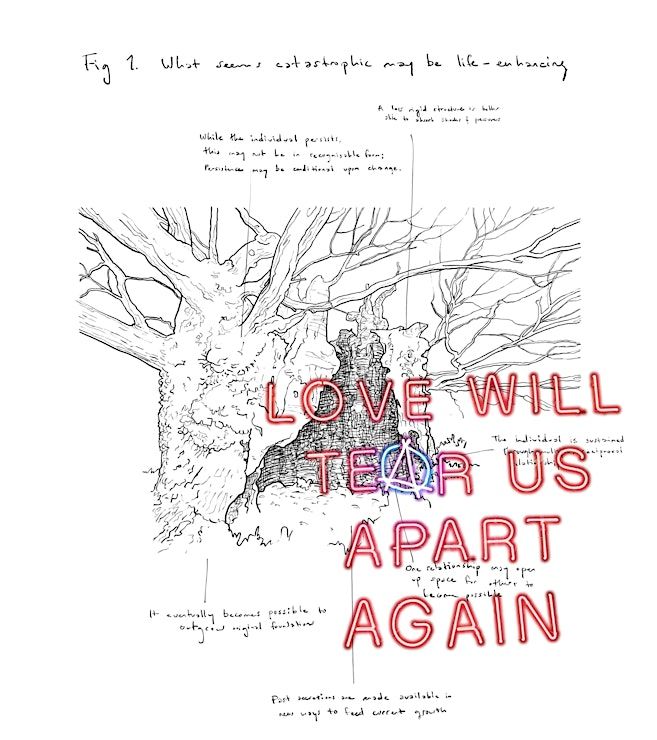
Provided by Sage Brice (credit: Sage Brice and Scarlet Hall)
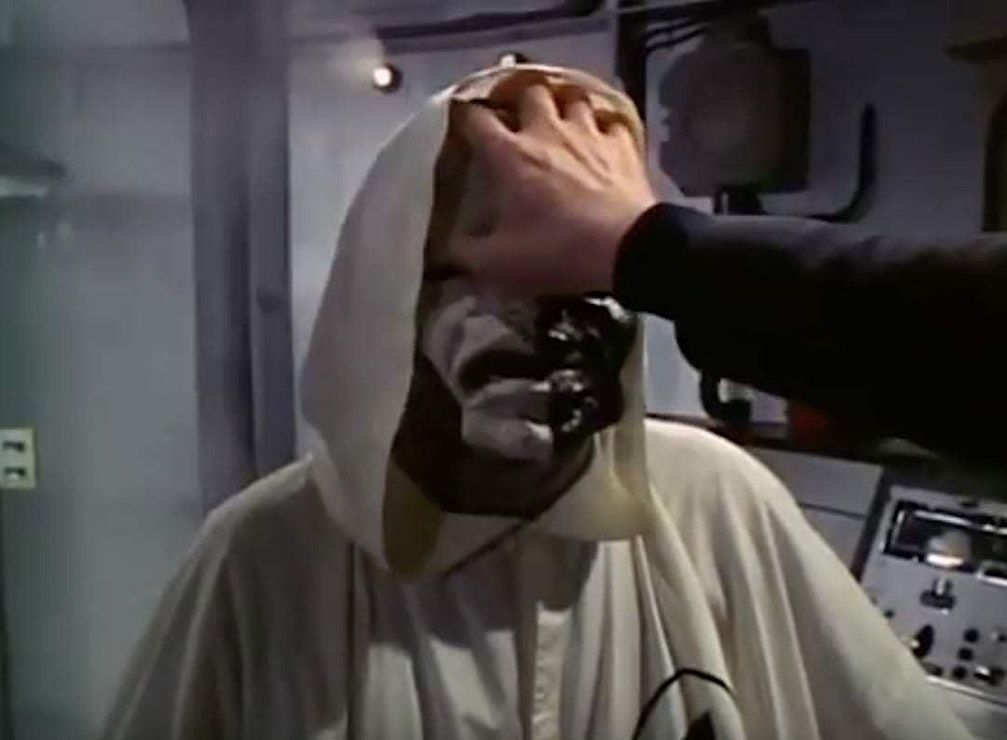
Provided by Phil Smith

Provided by Sam Le Butt
For more information or questions, please feel free to contact Sarah ([email protected]), Mingcan ([email protected]), Andy ([email protected]), Camille ([email protected]).
Agenda
🕑: 01:00 PM - 01:30 PM
Arrival and lunch
🕑: 01:30 PM - 02:20 PM
Eating each other's hearts out: mycelial love & forest as queer con/figuration
Host: Sage Brice
Info: The monstrous potential of transsexuality – and its speculative power – lie in its refutation of ‘Nature’: a foundation stone for cis-heteronormative configurations of love and reproduction. Queer/trans ecologies offer a way of rethinking love by questioning its implicit mobilisations of nature and the natural. Adopting a queer polyvocality appropriate to this project, and methods including collaborative graphic play, we bring together insights from queer nature education, mycology, and animist arts. We elaborate the proposition that heart-rot, an important fungal decay process in oaks and other trees, might offer a way of lovingly undoing cis-hetero-reproductive assumptions about the ‘nature’ of love. Instead, the chapter moves towards a theory of love grounded in the recognition that entities are not pre-individuated or fixed beings within an ordered system, but emergent constellations of relations that are constitutively vulnerable and entangled.
🕑: 02:20 PM - 03:05 PM
Useful paranoias at an 'edge of darkness'
Host: Phil Smith
Info: This presentation will consider how human responses to natural threats (fear, anxiety, anticipation, dread) are portrayed in ‘eco-horror’ films and literature including Algernon Blackwood’s ‘The Willows’ (1907), Neil Jordan’s ‘The Company Of Wolves’ (1984) and Mark Jenkin’s ‘Enys Men’ (2022). Using such examples as fictive lenses, I will examine changes of affect in response to the arrival or return of predators to landscapes from which humans have entirely or almost entirely removed them (specifically those predators that threaten, or are imagined to threaten, humans) and the emergence of landscapes that in themselves pose threats to humans. Note: as part of this presentation there will be a 10-15 minute practical sensitization exercise.
🕑: 03:05 PM - 03:25 PM
coffee break
🕑: 03:25 PM - 04:15 PM
Mycoremediation: toxicity, waste, and redistributive storytelling
Host: Sam Le Butt
Info: In this talk, I take inspiration from mycoremediation — the practice of using fungi to clean up pollutants from environments — to develop a redistributive storytelling practice that may help us navigate and draw nutrients from toxic socioecologies. In my doctoral research on monstrosity in contemporary speculative fiction, I posit fungi as a disruptive agency that decreates in order to recreate worlds, both material and discursive. I develop this idea here by exploring mycoremediation as powerful methodology for reading and retelling stories. I use Rivers Solomon’s Sorrowland (2021) as an example of literary mycoremediation, where the protagonist’s monstrous fungal transformation allows her to break down toxins from the past, drawing what nutrients she can and redistributing them for stories of resistance. My talk will end with a short experiment, where attendees will play the role of a mycoremedial fungus with a taste for toxic narratives.
🕑: 04:15 PM - 05:00 PM
Roundtable discussion
🕑: 05:00 PM - 06:00 PM
Drinks reception
Event Venue & Nearby Stays
Arts Complex, Humanities Research Space (ARTS – 1.H020), Bristol, United Kingdom
USD 0.00