This Fundamentals of SDLC training course will give you the knowledge you need to help you choose between methods, tools and artifacts.
About this Event
Bring your team and save:
1. Groups of three or more receive a 10% discount
2. Organizations hosting an in-house session with 10+ participants enjoy a 15% discount.
About This Course
Duration: 2 Days (9:00 AM – 5:00 PM)
Delivery Mode: Classroom / In-Person Workshop
Language: English
Credits: 16 PDUs / Training Hours
Certification: Course Completion Certificate Provided
Refreshments: Lunch, tea/coffee, and snacks included
Course Overview
Managing a modern Systems Development Lifecycle (SDLC) project requires a thorough understanding of the various roles that must come together in order to create a successful application. This understanding begins by recognizing the need to work within a multidisciplinary environment. Business Analysts, Project Managers and Software Testers each have multiple implementation options (such as Waterfall or Agile) available to them. Knowing which tool or technique to use in any particular situation is key to success. This Fundamentals of SDLC training course will give you the knowledge you need to help you choose between these methods, tools and artifacts so that you can quickly and efficiently take your SDLC project from concept to working implementation.
Learning Objectives
- Know how to identify, evaluate and document the many stakeholders of a project
- Be able to distinguish between the different types and levels of software testing
- Understand the reason for the various artifacts and the key features of each
- Write effective User Stories that can be used to identify requirements in an Agile project
- Learn how the differing life cycle models combine to create an SDLC implementation
- Be able to choose the proper project management methodology for your project based upon its own unique characteristics
- Understand the significance of different estimating methods and how they should be utilized for time and cost estimation
- Understand the significance of the Agile Manifesto and its relationship to the twelve (12) principles of Agile
- Use Earned Value Project Management to assess budget and schedule compliance
- Be able to use the Triple Constraints Triangle as a tool to help others understand the relationship of time, cost, and scope in any project
- Learn the fundamental tools and techniques of business analysis at each stage of a project
- Recognize the significance of risk management to the proper management of an SDLC project
- Be able to create the three major baselines (Scope, Schedule and Cost) necessary to properly control a project
- Understand how requirements are tracked and validated using a Requirements Traceability Matrix
- Know how to determine the Critical Path through a network of activities
- Assign relative estimate values using Planning Poker
- Know how to decompose Work Packages into Activities that are sized for proper managerial overview
- Create an Iteration (Sprint) Backlog from a prioritized Product Backlog
- Understand the key features of your project’s Test Plan
- Track and apply the concept of Velocity to your Release and Iteration plans
Target Audience
- Managers of Software Development organizations
- Project Managers
- Team Leads
- Business Analysis Managers
- Business Analysts
- Testing Managers
- Systems Testers
- Product Owners
- Program Managers
- Systems Architects
- QA Professionals
- Anyone wanting to enhance their business analysis or project management skills
Why choose this course?
This Fundamentals of SDLC two-day workshop provides a thorough understanding of multidisciplinary roles, life cycle models, tools, techniques, and artifacts required to successfully take an SDLC project from concept to working implementation.
©2026 MG Aussie Events. This content is protected by copyright law. Copy or Reproduction without permission is prohibited.
Want to train your entire team together?
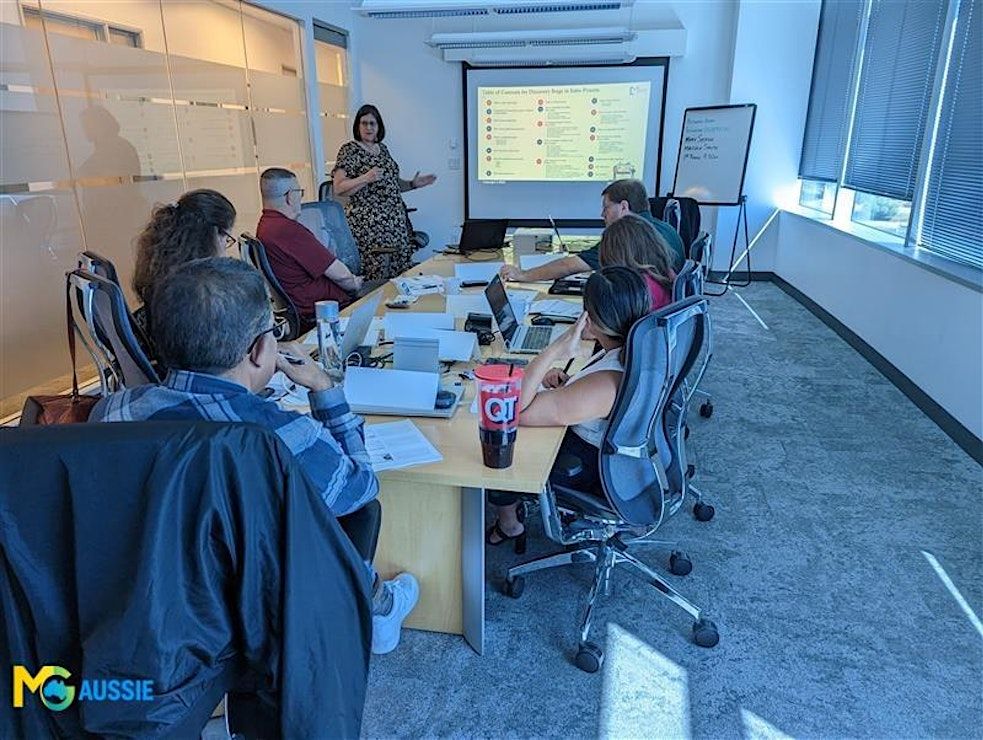
This two-day workshop can be delivered in Classroom or Virtual mode to support teams involved in planning, managing, and executing SDLC projects.
Contact us today to schedule a customized in-house, face-to-face session:
Agenda
Module 1: Introduction — What is a Project?
Info: • Projects as Opposed to Operational Management
• Projects as Part of Strategic Management
• Projects as Integral to Program Management
Module 2: The Project Life Cycle
Info: • Generic Project Life Cycle
• The Project Management Life Cycle
• The Process Groups
• SDLC Overview
• IIBA Knowledge Areas
Module 3: Project Management Concepts and Methodologies
Info: • Waterfall
• Agile
• Iterative
Module 4: Project Initiation — The BA Role
Info: • Stakeholder Analysis and the Stakeholder Register
• Initial Business Analysis Artifacts
• Documenting Requirements within a Requirements Gathering Approach
• Types and Sources of Requirements
Module 5: Initiation — The PM Role: Baselines
Info: • Develop Project Charter
• Collect Requirements
• Project Scope Statement
• Work Breakdown Structure
• Scope Baseline
• Define Activities
• Project Schedule Network Diagram (Dependency Network)
• Estimate Activity Resources
• Effort vs. Duration and Compensation
• Develop the Project Schedule
• Critical Path Method
• Schedule Compression
Module 6: Initiation — Important Subsidiary Management Plans
Info: • Test Plan
• Human Resource Plan
• Communications Management Plan
• Risk Management Plan
Module 7: Performing the Work — Project Execution
Info: • Cost Control
• Earned Value Management, CPI, SPI
• Scope Control
• Requirements Communication
• Solution Assessment and Validation
• Requirements Traceability Matrix
• Software Testing
• Levels of Testing
Module 8: Closing the Project
Info: • Project Closure — Product Acceptance
• Closing the Project — Things That Must Be Accomplished
Module 9: Agile Overview
Info: • What is Agile All About? The Agile Manifesto and Principles
• The Levels of Agile Planning
• Release Planning — The Product Backlog, Sprint Backlog
• Story Points and Velocity
• Iteration Planning
• Daily Scrums, Sprint Reviews, Demos and Retrospectives
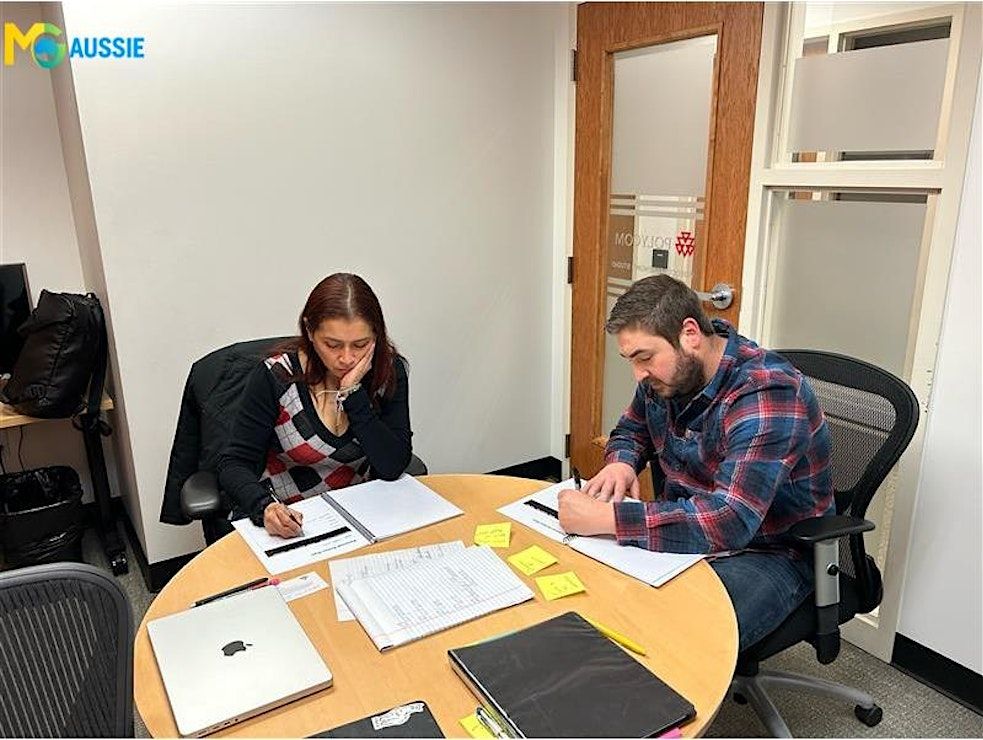
Module 10: Hands-On Exercises
Info: • Exercise 1 — Stakeholder Analysis
• Exercise 2 — Capturing High-Level Requirements
• Exercise 3 — Create a Work Breakdown Structure (WBS)
• Exercise 4 — Decompose Work Packages to Activities
• Exercise 5 — Develop a Dependency Network
• Exercise 6 — Estimate Activity Durations
• Exercise 7 — Compensate Effort to Duration
• Exercise 8 — Develop a Critical Path Network Diagram
• Exercise 9 — Perform Earned Value Calculations
• Exercise 10 — Write User Stories
• Exercise 11 — Perform Sprint Planning
Event Venue
Regus 120 Collins Street, 120 Collins Street#Levels 31 & 50, Melbourne, Australia
AUD 1191.45 to AUD 1535.58