About this Event
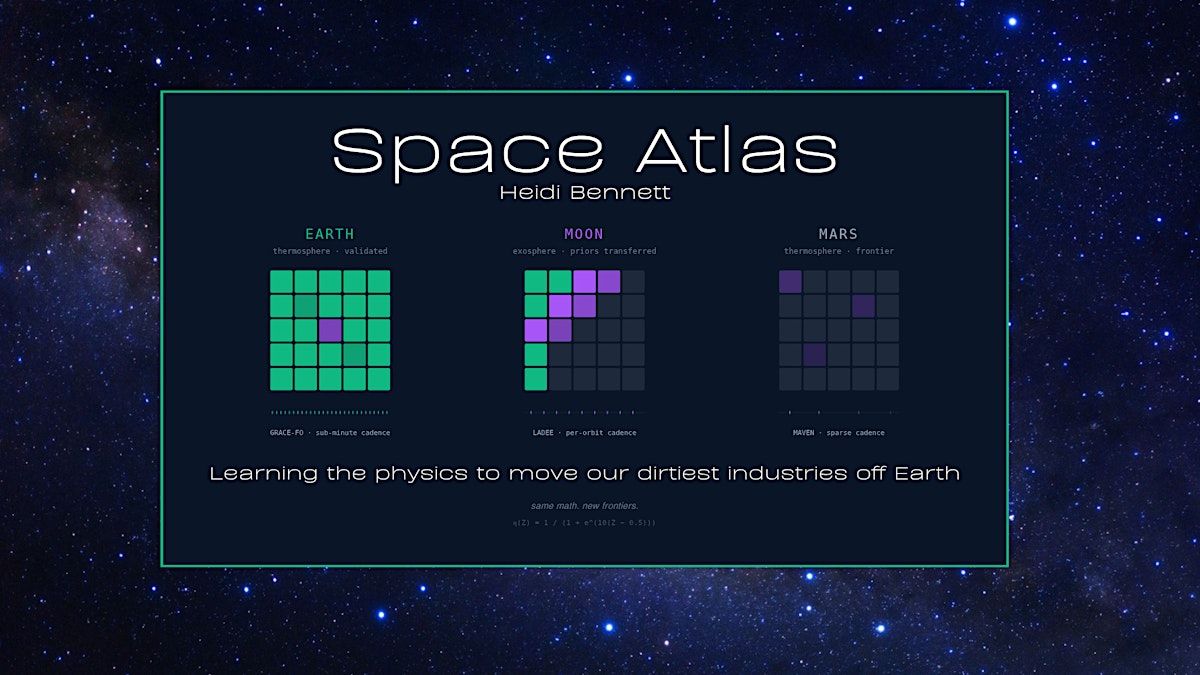
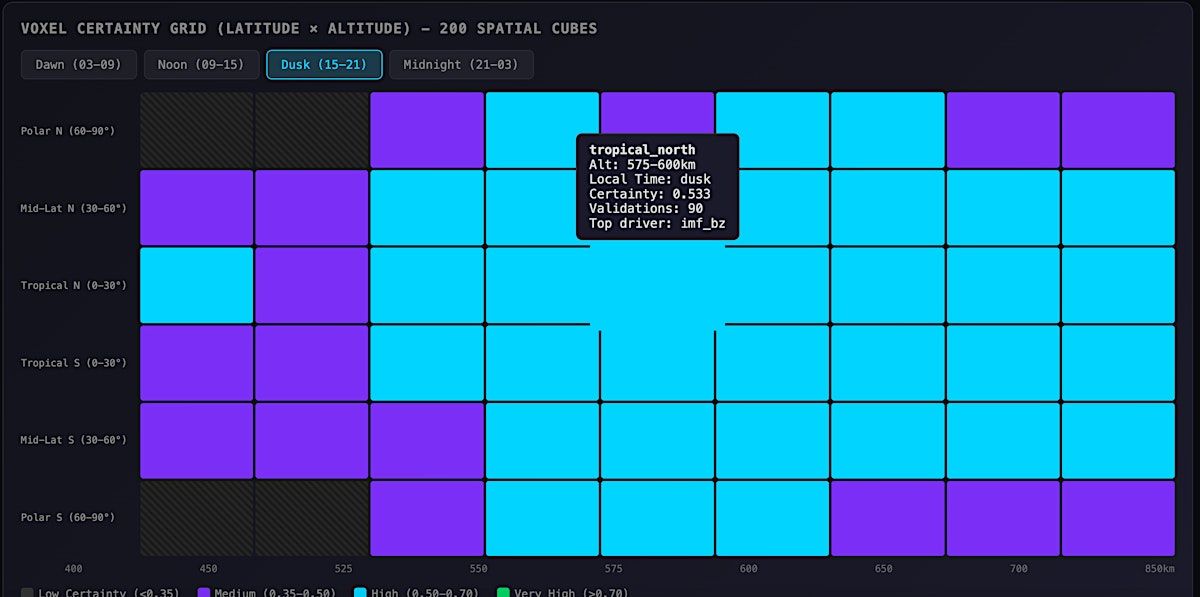
Today’s satellites will no longer meet the demands of an increasingly crowded and complex orbital environment. As we move toward a future with 20 times more spacecraft carrying advanced payloads like orbital data centers, microgravity manufacturing systems, mining operations, solar harvesting arrays, and even lunar infrastructure, the need for precision, efficiency, and collision mitigation becomes critical to the survival of the entire orbital ecosystem. This talk will introduce Space Atlas and its causal learning framework, which models thermospheric physics across 180 3D orbital voxels to predict satellite drag with up to five X greater accuracy than current space weather models during peak activity. We’ll also examine the broader context driving this innovation, including the argument that Earth may already be operating beyond sustainable population levels, making the relocation of heavy industry into space not just ambitious, but necessary, an endeavor that depends entirely on intelligent systems capable of learning and adapting to physical environments we have yet to fully explore.
Doors open at 6:30 pm
Lecture 7-8 pm followed by Q&A
Please arrive early. Seating is limited.
There will be addtional standing room available.
Event Venue & Nearby Stays
Hotspells Rocks and Minerals, 3018 North Coolidge Avenue, Los Angeles, United States
USD 0.00