About this Event
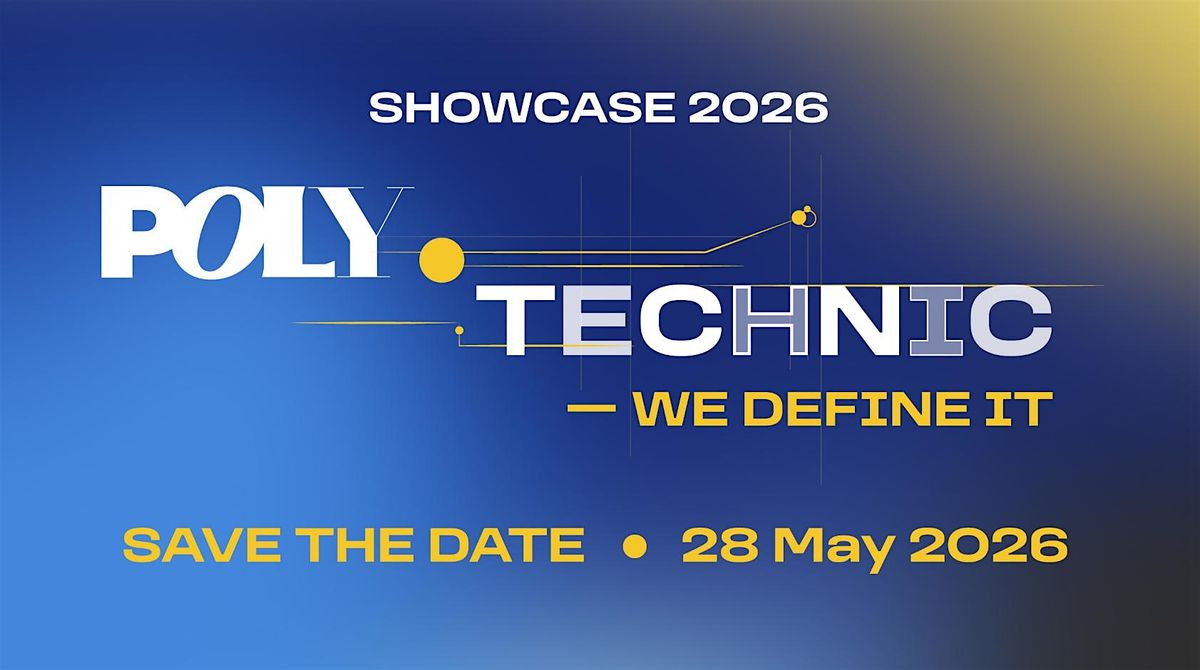
Join us as we bring poly.technic to life by highlighting the many stories, skills, perspectives, and pathways that shape Humber’s polytechnic identity. Poly reflects the richness of disciplines and experiences across the community, while technic captures the creativity, innovation, and hands‑on learning that turn potential into action. The dot between them represents the connection between identity and impact. This year’s Showcase focuses on the ideas, projects, and practices that demonstrate leadership in polytechnic education across the full learner journey, from early engagement to advanced credentials. Workshops will illustrate how exploration, inspiration, and forward‑thinking practice continue to shape what comes next.
Conference website: https://humber.ca/about/vision/reimagining-learning/events-workshops/showcase
Agenda
🕑: 09:00 AM - 09:30 AM
Registration
Host: E Concourse
🕑: 09:30 AM - 10:45 AM
Conference Opening and Keynote Panel
Host: Lecture Theatre, E135
🕑: 11:00 AM - 12:00 PM
Session Block 1
Host: Classrooms
🕑: 11:00 AM - 01:00 PM
Exhibits
Host: Barrett Centre, 1st Floor
🕑: 12:00 PM - 12:50 PM
Lunch
Host: Barrett Centre, 1st Floor
🕑: 01:00 PM - 02:00 PM
Session Block 2
Host: Classrooms
🕑: 02:00 PM - 03:30 PM
Poster Session
Host: E Concourse
🕑: 02:15 PM - 03:15 PM
Session Block 3
Host: Classrooms
🕑: 03:30 PM - 04:00 PM
Conference Closing
Host: E Concourse
Block 1 (11:00–12:00)
🕑: 11:00 AM - 12:00 PM
From Basic AI Use to Critical Gen‑AI Literacy in Polytechnic Contexts
Host: NO-F 233
Info: Generative artificial intelligence (gen‑AI) is increasingly embedded throughout students’ academic and professional journeys. While many learners have developed basic gen‑AI skills, research and classroom practice indicate that they often struggle to critically evaluate AI output, purposefully refine prompts, and effectively apply AI‑generated content within disciplinary contexts. Drawing on findings from a research project exploring gen‑AI supported, personalized communication skills development, the presenters will share practical insights into cultivating students’ critical gen‑AI literacy. Attendees will engage in hands‑on and reflective activities that model intentional, ethical, and discipline‑responsive uses of gen‑AI to support meaningful learning impact.
🕑: 11:00 AM - 12:00 PM
Self Advocacy as a Core Employability Skill
Host: NO-F 220
Info: The Self-Advocacy Learning (SAL) project was developed in response to the rapidly rising disability and mental-health-related needs among post-secondary learners, and the underemployment of Canadians with disabilities. With a growing gap between learners' capabilities and the accessibility of the labour market, SAL can prepare students to navigate workplace expectations with confidence and clarity. Grounded in Humber's polytechnic mandate, SAL positions self-advocacy as an essential employability skill directly aligned with the HLOs. The project integrates an online learning platform and a Self-Advocacy Toolkit, to support consistent application across advising, curriculum, and work‑integrated learning. SAL strengthens students' preparation for work, improves long-term career trajectories, and supports Humber's goal of expanding equitable pathways into meaningful employment for learners.
🕑: 11:00 AM - 12:00 PM
Wellness, Inclusion and Connection
Host: NO-F 229
Info: The power of polytechnic education is bridging together multi-disciplinary modes of effective teaching and engagement.
Reflecting on psychodynamic tools and community resources, participants can expect to leave feeling energized and equipped to implement wellness-and inclusion-focused strategies in their day-to-day interactions with both students and colleagues.
This session will be co-led with Humber alumna, Jessica Rotolo, who is an actor, model, dancer and self-advocate for her Down syndrome community.
🕑: 11:00 AM - 12:00 PM
Scalable and Adaptable Library-Led Approaches to AI Literacy
Host: NO-F 231
Info: In an increasingly AI-shaped world, academic libraries serve as what Hanegan and Rosser (2025) refer to as “centres of gravity” that “stabilize, connect, and energize” learning communities by anchoring our shared values and stewarding information and digital literacies. This session will showcase how the Library has taken steps to claim this role through practical, scalable AI-focused initiatives. Participants will be introduced to the Library’s AI, Algorithms & You module as a foundation for ethical AI awareness; explore library-built workshops on prompting and evaluating AI outputs that can be adapted for course use; and consider a peer-to-peer learning model inspired by the Library’s AI Power Hours. The session highlights adaptable approaches that faculties and staff can reuse and tailor to build AI readiness and strengthen teaching and learning grounded in everyday academic practice.
🕑: 11:00 AM - 12:00 PM
Bringing Sustainability to Life in the Classroom
Host: NO-F 232
Info: This interactive panel explores how Humber faculty are bringing sustainability to life through hands-on, applied learning in the classroom. Featuring real examples from across disciplines, panelists will share how they embed sustainability into curriculum in meaningful, practical ways.
This session reflects the poly.technic – We Define It theme by showcasing the diversity of disciplines and the creative, experiential approaches that turn learning into action. It highlights how faculty are shaping innovative, future-focused education that equips students with the skills and mindset to drive real-world impact.
🕑: 11:00 AM - 12:00 PM
The Entrepreneurial Edge: Entrepreneurship Education at Humber
Host: NO-F 212
Info: This panel aims to look both back and forward at entrepreneurial education within Humber. Through this we will explore the potential innovations in EE delivery throughout the polytechnic which enhance student outcomes, employability, and innovation overall. Connecting to the conference theme, we will also address how Humber has carved out a unique space for itself as a deliverer of EE within the Canadian polytechnic and college landscape, capitalizing on both internal/external reach and innovative approaches to EE delivery, such as in-class innovation challenges, work-integrated-learning opportunities in the entrepreneurship ecosystem and a staunchly cross-disciplinary approach to EE. Importantly, this panel will also explore what lies ahead, speaking to the broader goals and aspirations of EE here at Humber.
🕑: 11:00 AM - 12:00 PM
“Wait, You Do What?” Insights from a Cross‑Program Collaboration
Host: NO-F 235
Info: This session showcases a cross‑program collaboration between the Behavioural Science and Addictions and Mental Health degree programs, in which students learn with, from, and about each other through shared case‑based activities. Across four joint sessions, students work through a complex case, explore professional roles, make shared decisions, and reflect on their emerging professional identities. The experience mirrors real‑world practice, builds communication skills, and helps reduce discipline silos. The project aligns with the Showcase theme by blending applied practice, collaboration, and student engagement. The session includes a student panel, an interactive mini case activity, and guidance for developing collaborative partnerships. It highlights how diverse perspectives and hands‑on learning strengthen student confidence, readiness, and connection across their learning journey.
Block 2 (1:00–2:00)
🕑: 01:00 PM - 02:00 PM
Routes of Change: Equity, TTC, Humber & Systems
Host: NO-F 212
Info: What happens when students learn systems thinking by working on a real public system that shapes everyday life? This session shares a pilot collaboration between Humber Polytechnic & the TTC that brought systems thinking into direct engagement with the city’s transit network. Through the Systems Thinking degree course, students explored public transit as a complex system shaping accessibility, equity, and inclusion. Through a partnership with the TTC’s Equity & Accessibility Unit, students moved beyond theory. They conducted “research rides,” heard from TTC staff and transit advocates, and examined how policy, governance, and institutional decision-making shape rider experiences. Students then focused on Humber’s transit hubs, pitching ideas to Humber and the TTC to improve rider experience for diverse campus communities. This session shares the experiences and lessons learned.
🕑: 01:00 PM - 02:00 PM
Designing What Comes Next: Insights from the EDIB 101 Experience
Host: NO-F 220
Info: This workshop takes a behind the scenes look at the design process behind EDIB 101: the foundational learning module created to support a shared understanding of equity, diversity, inclusion, and belonging across Humber’s learning and teaching contexts. Designed as a scalable, cross institutional resource, EDIB 101 introduces core EDIB concepts while encouraging reflection, practical application, and meaningful action for faculty, staff, and learners.
The workshop explores how inclusive design principles, scenario based learning, and the EDIB 101 downloadable Action Plan were integrated to support learning that moves beyond awareness and into practice.
The session models an applied instructional design approach that participants can adapt to their own courses and learning environments. Participants are invited to consider how scenarios surface real world complexity, how design choices can honour diverse learner identities, and how action planning translates shared values into impact.
🕑: 01:00 PM - 02:00 PM
poly.technic Futures: From Classroom Promise to Student Success
Host: NO-F 229
Info: In a world shaped by AI, data, disruption, and changing workforce expectations, success demands more than technical ability alone. This session explores the future of skills students need to thrive, including AI and digital literacy, critical thinking, communication, adaptability, ethical judgment, and intercultural fluency. It connects to poly.technic – We Define It by showing how Humber’s polytechnic model brings together diverse disciplines, learner pathways, and applied, hands-on practice to prepare students for real-world impact. Through interactive polling, reflection, and discussion, attendees will explore emerging skills, compare teaching practice with workforce realities, and leave with practical ideas for embedding future-ready skills across the learner journey.
🕑: 01:00 PM - 02:00 PM
Reimagining Communications Courses for a Poly.technic Future
Host: NO-F 231
Info: What should communications courses make possible for today’s students? This panel shares the English department’s ongoing revamp of WRIT100 and WRIT200, Humber’s core communications courses. Panelists will discuss how the redesign reflects Humber’s polytechnic identity by emphasizing AI and digital literacies, personal voice, and disciplinary communication. Attendees will gain insight into what our new courses look like, why these changes matter for their own programs and students, and how communications courses help students develop and use communication skills in academic, professional, and personal contexts.
🕑: 01:00 PM - 02:00 PM
Applied AI for Health, Sustainability, and Scientific Discovery
Host: NO-F 232
Info: This integrated session showcases how applied artificial intelligence and data‑driven systems can address complex, real‑world challenges across healthcare, life sciences, and sustainable transportation. The session brings together three projects: an explainable and interoperable framework for proactive patient monitoring; a deep learning pipeline using graph neural networks to accelerate antibiotic drug discovery for multidrug‑resistant pathogens; and a machine learning approach to analyzing electric vehicle charging behavior and predicting energy use. Together, these initiatives highlight how explainable models, advanced analytics, and interoperable data frameworks can improve decision‑making, support trust and adoption, and drive innovation in high‑impact domains. Participants will engage with practical methodologies, real implementation considerations, and interactive discussion on ethics, scalability, and real‑world application.
Block 3 (2:15–3:15)
🕑: 02:15 PM - 03:15 PM
Play.Technic: Games for Active Learning in the Classroom
Host: Innovative Learning Hub (LRC)
Info: The Humber Library Board Game and Video Game Collection has enjoyed wide use in its first year of circulation while inviting possibilities for pedagogy through play via Librarian-Professor collaboration. In this interactive workshop, Faculty Librarians will describe how the Games Collection can support the rich diversity of programs at Humber and create new active learning opportunities that align with course learning outcomes. We will detail a recent FMCAD class collaboration where students exercised creativity and active engagement in learning about game mechanics to support designing and building their own games. In this interactive session, participants will play games to better recognize the potential of games-based learning. Participants will also discover the mechanics, themes, and domains of knowledge addressed in the selected games and how they can support various disciplines.
🕑: 02:15 PM - 03:15 PM
An AI-Powered Platform to Improve Accessibility for Autistic Learners
Host: NO-F 233
Info: This interactive workshop demonstrates how applied research, industry collaboration, and artificial intelligence bring Humber’s polytechnic identity to life by connecting learning with real-world impact. The session presents a sponsored faculty-led initiative where students work with an industry partner to develop an AI-powered tool that restructures content into formats better aligned with how autistic individuals process information. Participants will engage in a guided discussion exploring how content can be adapted using AI to support inclusive learning. The session highlights interdisciplinary practice, hands-on skill development, and workforce readiness, while encouraging attendees to reflect on how similar approaches can be integrated into their own teaching and program contexts.
🕑: 02:15 PM - 03:15 PM
Your Work Deserves a Home
Host: NO-F 220
Info: Many educators and academics have years of meaningful work scattered across CVs, LinkedIn profiles, conference talks, and institutional pages, with no owned online presence that actually feels like them. This session is designed to change that. Together, we will unpack and work through two interconnected areas:
What-to: Content strategy and personal branding. Participants leave with clarity on what they want to share, how to organize it, and a simple structure for a personal portfolio website.
How-to: The technical side, including platforms like WordPress, static vs. dynamic content types, blogging, and SEO basics. Participants leave with a realistic first step toward an online presence they can own and grow over time.
🕑: 02:15 PM - 03:15 PM
Introducing Humber's Student-Facing Labour Market Pulse Widget
Host: NO-F 229
Info: Humber Polytechnic is committed to ensuring students have the tools and resources they need to succeed in their careers. Student satisfaction and work-integrated learning outcomes remain strong, and as employability continues to be a top priority for students, there is a natural opportunity to further support them with access to timely and relevant labour market data and insights. In response, Humber (Institutional Research and Analysis and Student Success and Engagement) has partnered with Vicinity Jobs, now Signal49Research, to develop an interactive Labour Market Intelligence Widget, giving students direct access to employment trends, salary data, in-demand skills, and occupational pathways - including geography-specific insights - all linked to their specific academic program. This session will provide institutional context behind the initiative, a high-level overview of the development process, and a live demo of the Labour Market Pulse tool ahead of its public launch.
🕑: 02:15 PM - 03:15 PM
We Define It on Set: Sustainable Production at Humber
Host: NO-F 231
Info: What if students weren’t just learning the industry, but actively redefining it?
This session responds directly to poly.technic: We Define It. by demonstrating how students and faculty collaboratively shape Humber’s polytechnic identity through applied, production-based learning. Sustainability is positioned as a core competency within the Film and Television Production program, embedded through real-world, student-led projects.
Led by Professor Robyn Laliberte-Gray and FMTV student Olivia Dreschel, a Green Film School Alliance Ambassador, the session centers on this year's documentary project "Planting the Seed" as a case study. Together, we will unpack real production challenges, trade-offs, and learning moments.
Audience engagement will include guided prompts, live reflection, and a short scenario-based activity, encouraging reflection across all disciplines.
🕑: 02:15 PM - 03:15 PM
Learning on Air:Community & Student Voices in Broadcasting
Host: NO-F 232
Info: Community storytelling bridges learning and real-world experience. This session explores how youth participants share their voices through conversations on sustainability, creativity, and STEM on Rezonate 96.9FM, a campus radio platform amplifying youth, student, and community perspectives.
Student productions from the Humber Radio Broadcasting Diploma Program are showcased, highlighting how hands-on training in research, interviewing, recording, and editing creates engaging, sustainability-driven audio stories with real audience reach.
Participants will listen to broadcast excerpts and engage in discussion with youth, exploring how ideas move from inspiration to production to public impact.
The session reflects the poly.technic theme by connecting diverse voices with applied technical practice across the Humber Polytechnic community.
🕑: 02:15 PM - 03:15 PM
Polysoniks 2 Polytekniks: Hip-hop and Podcasting for Skillz
Host: NO-F 212
Info: This panel will explore how two professors are using sound-based pedagogies for polytechnic goals. Naveen Joshi engages students to collectively participate in songwriting exercises, using the template of a semi-freestyle hip-hop posse cut, while Prasad Bidaye guides students to self-record a podcast discussion focused on socially-relevant films. While both practices generate what appear to be pop culture-friendly products, their pedagogical significance lies in their use of collaborative process, critical thinking frameworks and oral (as well as aural) knowledge production. Both also aim to develop multiple skills at once, which is precisely what defines Joshi and Bidaye's approach to polytechnic education. This panel aims to explore but also expand these "polysonik-polyteknik" ideas further through dialogue, both between the panelists and with the audience.
Event Venue & Nearby Stays
Humber Polytechnic, 205 Humber College Boulevard, Toronto, Canada
CAD 0.00