About this Event
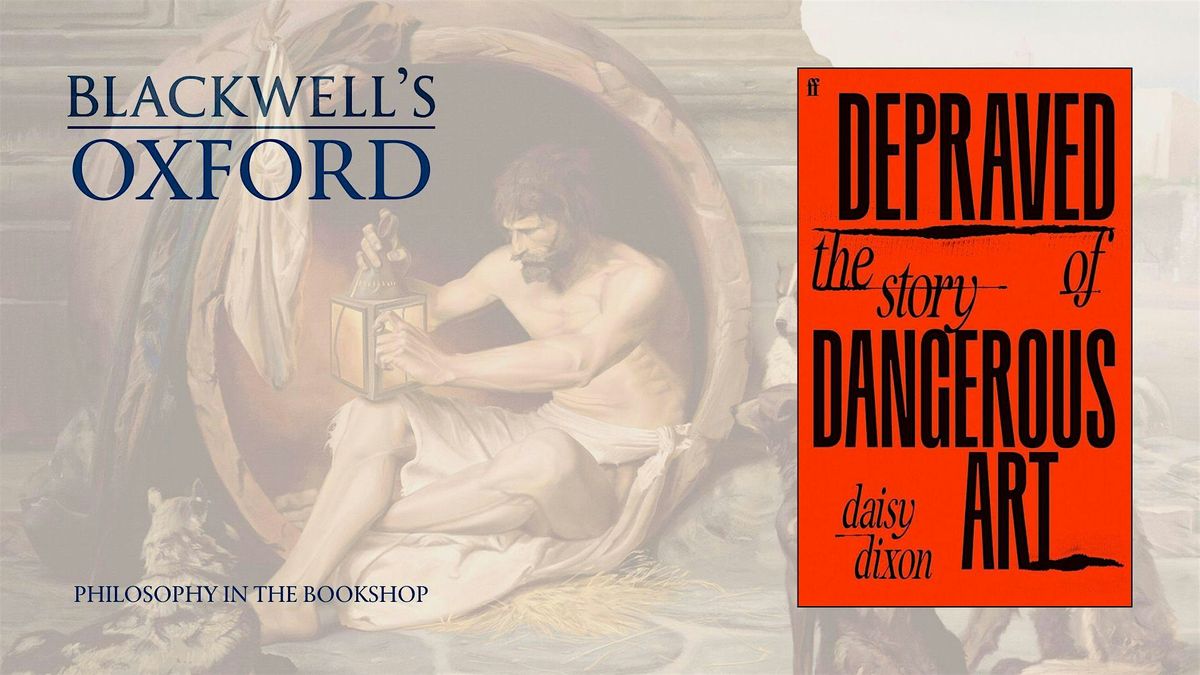
Depraved : The Story of Dangerous Art
A work of art is a strange thing. It can carry us to the soaring peaks of beauty or drag us all the way down to the burning depths of depravity. We often treat artworks as sacred, almost ethereal. But they are an intimate piece of this world - born from the hands of geniuses, and from the hands of monsters.
What makes an artwork immoral? Why do these troubling creations have such a hold on us? And how should we deal with them?
We live in a moment when the dangers of art seem more prevalent than ever: artists are 'cancelled' for their misdeeds, public statues are toppled, images of violence and obscenity await us at the touch of a button. But as this provocative new history demonstrates, we humans have always used art to make sense of the less innocent aspects of ourselves and the world around us.
In Depraved, philosopher of art Daisy Dixon takes the reader on a journey through some of the most volatile and contentious works ever produced - from prehistoric sculpture to extreme metal music, Renaissance paintings to videogames. She reveals how beautiful art can sometimes be the most insidious, and why the greatest threat might lie in our own judgements about the art we censor or condemn.
Above all, Dixon builds a powerful case for returning the terrible gaze of our disturbing creations, showing how we can confront them head-on and tame their toxic effects.
Daisy Dixon
Dr Daisy Dixon is a philosopher of art and an artist. She is now a Lecturer in Philosophy at Cardiff University, having been a postdoctoral Research Fellow at Peterhouse, University of Cambridge from 2018-2022. After receiving a First Class BA (Joint Honours) in Art & Philosophy from the University of Reading in 2013, she began graduate work at the University of Cambridge, gaining a Distinction for her MPhil in Philosophy in 2014. Her PhD was funded by a School of Arts and Humanities Full Doctoral Award at the University of Cambridge, and was awarded in May 2019.
Her research falls at the intersection of philosophy of art, philosophy of language, and political philosophy, and has been published in top-tier academic journals. In her work, she explores how visual art behaves like speech, and how curators can affect what an artwork communicates to its audience. Her current academic project concerns aesthetic injustice and unjust aesthetics: deception in art, artistic hate speech, and protest art. Her teaching interests span aesthetics, philosophy of language, ethics, feminist philosophy, and political philosophy.
Event Venue & Nearby Stays
Blackwell's Bookshop, 48-51 Broad Street, Oxford, United Kingdom
GBP 0.00