

About this Event
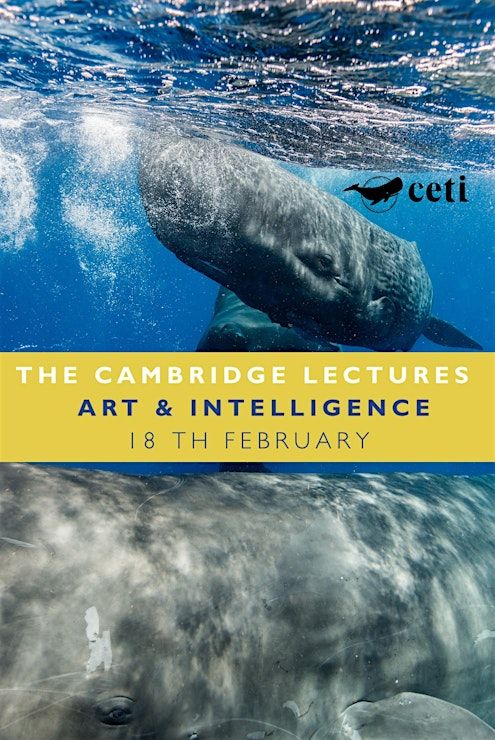
For The Cambridge Lectures on Art and Intelligence Project CETI functions as a living case study in interpretive intelligence. It sits at the intersection of science, technology, and perception, showing how machine learning can surface patterns, but cannot by itself determine significance, intention, or meaning. That interpretive gap, and the responsibility it places on human observers, mirrors the questions raised throughout the series about art, education, and the future of human thinking in an increasingly automated world.
Dr. Giovanni Petri, leads the ERC Consolidator Grant RUNES, aimed at a unified framework for higher-order information dynamics, and is Network Science Lead of Project CETI, where he studies sperm whale vocal behavior through network science and machine learning. He also works on interpretable AI, connecting representation geometry and information-theoretic constraints to generalization. Previously, he was Principal Researcher at CENTAI and at ISI Foundation, where he pioneered topological methods for brain networks. He holds a PhD from Imperial College London.
Dr. Giovanni’s Petri's research spans the analysis of neuroimaging data and AI systems with topological techniques; the formalization of cognitive control models with tools of statistical mechanisms and network theory; and the study of predictability of socio-technical systems.
Project CETI stands for Cetacean Translation Initiative. It is an interdisciplinary, non-profit scientific research project launched in 2020 that uses advanced artificial intelligence (AI), machine learning, and robotics to listen to, analyze, and translate the communication clicks of sperm whales.
Giovanni’s work is essential to Project CETI as it enables us to holistically model and analyze the intricate and dynamic interactions present in sperm whale communication, coordination and cooperation, providing a foundation for translating it.
Key details about Project CETI:
Project CETI’s research into sperm whale communication confronts a problem that sits at the centre of the lecture series: how meaning is inferred when conventional measures of intelligence, such as speech, text, or human-centred cognition, are unavailable. In doing so, the project exposes the limits of purely technical or data-driven approaches and highlights the continued role of human judgement, interpretation, and perceptual framing in making sense of complex systems.
- Goal: To decode the complex, rhythmic clicks (codas) of sperm whales, aiming to understand their language and social structure.
- Methodology: Researchers use underwater microphones and "gentle" robotic devices to record whale sounds and track their behavior in places like Dominica.
- Origin: The name is a direct, intentional play on SETI (Search for Extraterrestrial Intelligence), focusing on understanding intelligent life on Earth.
- Photo credits - Project CETI.
The Cambridge Lectures on Art & Intelligence is conceived as a multi-year public inquiry, with the series planned to continue over the next three to five years. Future programmes are expected to bring together a broad range of contributors spanning education leadership, research, cultural practice, and applied fields, building a sustained conversation rather than a one-off event.
The Cambridge Lectures on Art and Intelligence are rooted in the ideas that underpin David Hockney’s sustained inquiry into perception, perspective, and the cultural power of images. Across his work and writing, David Hockney has consistently challenged the assumption that there is a single, neutral way of seeing, arguing instead that technologies of vision, from painting and photography to film, television, and now digital systems, actively shape how reality is understood, shared, and governed.The Cambridge Lectures on Art & Intelligence extends this inquiry into a wider public conversation at a time when the continued public presence of his work will form a major exhibition at the Serpentine North.

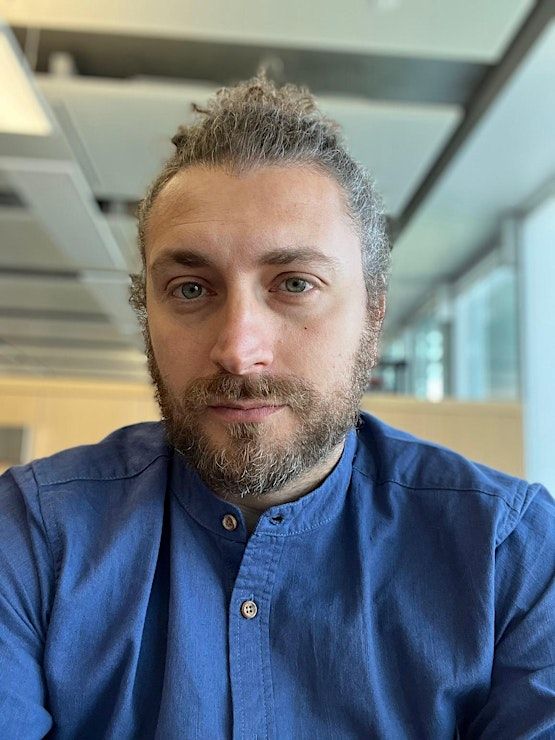
Dr. Giovanni Petri, Project CETI's Network Science Lead. Giovanni Petri is Professor of Network Science at Northeastern University London and core faculty at the Network Science Institute. He works on the mathematics of complex systems, focusing on higher-order interactions, information processing, and topological organization. His research develops tools at the intersection of statistical physics, algebraic topology, and information theory, applying them to learning systems, brain function, and collective behavior.
Project CETI's work provides a crucial foundation for the series’ broader inquiry into how human intelligence develops and varies, and how higher-order cognitive processes underpin learning, perception, innovation, and agency.
Giovanni Petri is Professor of Network Science at Northeastern University London. He builds mathematical and data-driven tools to understand how complex systems organize and process information—especially when interactions involve groups, feedback loops, and multiple scales. He leads the ERC Consolidator Grant RUNES and is Network Science Lead of Project CETI, applying AI and network science to decode sperm whale communication. His work spans AI, neuroscience, and collective behavior, with publications in Science, Nature Physics, and other leading venues.
(Photo Credits - Project CETI)
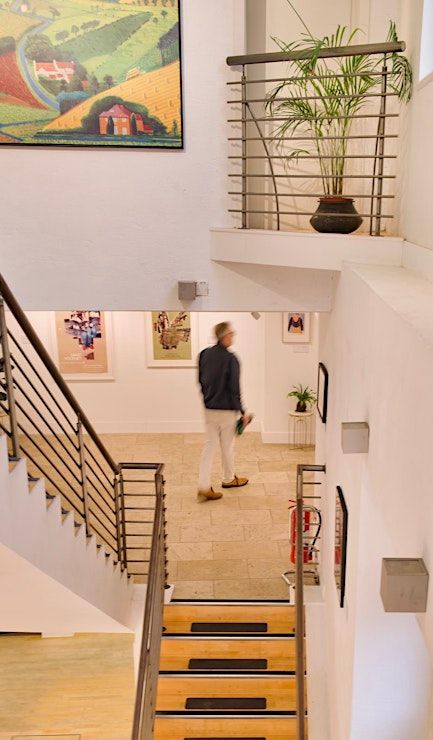
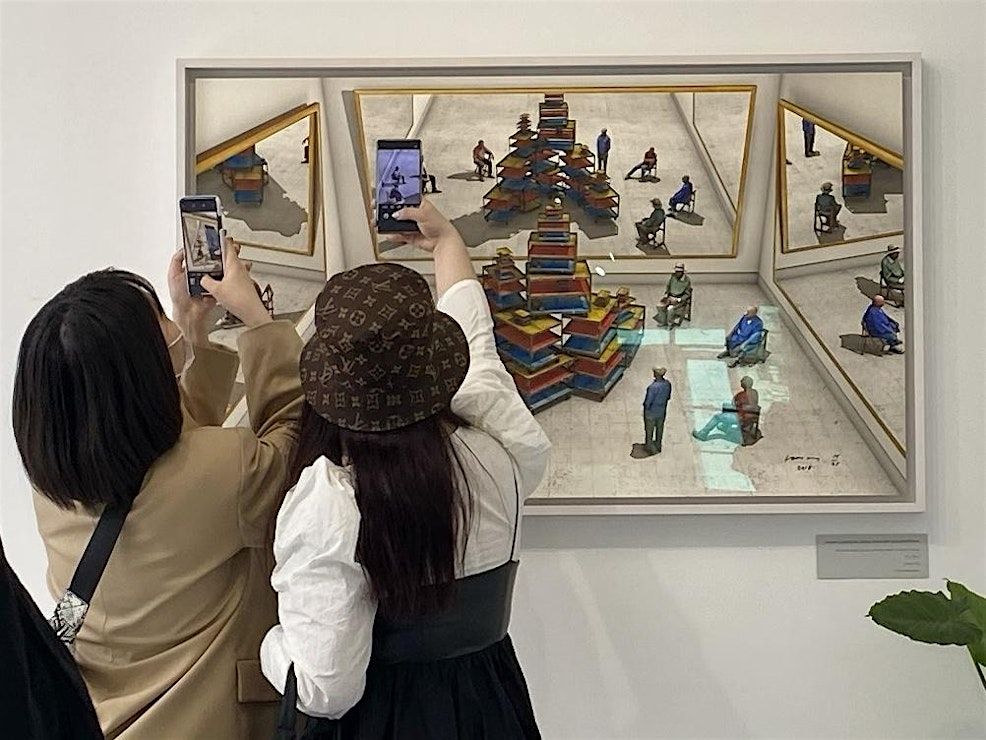
MODO, is the independent Cambridge gallery that specialises solely in the work of David Hockney, we have announced the launch of The Cambridge Lectures on Art & Intelligence, a new public lecture series developed in collaboration with Art and Culture Education CIC (ACE CIC).
Ticket sales from the series support ACE CIC, a not for profit organisation working to address the systemic marginalisation of the arts within education, and to strengthen the conditions in which inventive and expansive thinking can develop.
The lectures will take place again in Cambridge in 2027, with further programmes relating to the NOW! The already expansive 2027 Speakers list will be announced following this years series.
The support has been inspiring, thank you!!!!!
This event is delivered in support of Arts Festival Cambridge 2026. The festival highlights the city’s arts landscape, inviting residents and visitors to spend time with new work and ideas, while creating meaningful ways for local businesses to take part in Cambridge’s cultural life. Year on year, it continues to grow as a platform for the city’s artists, galleries, and cultural organisations.
Event Venue & Nearby Stays
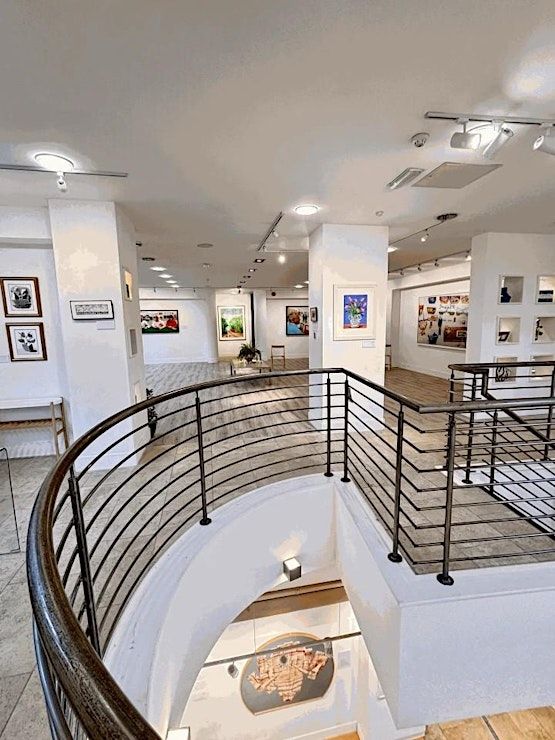
MODO, 62 Sidney Street, Cambridge, United Kingdom
GBP 27.80