
About this Event
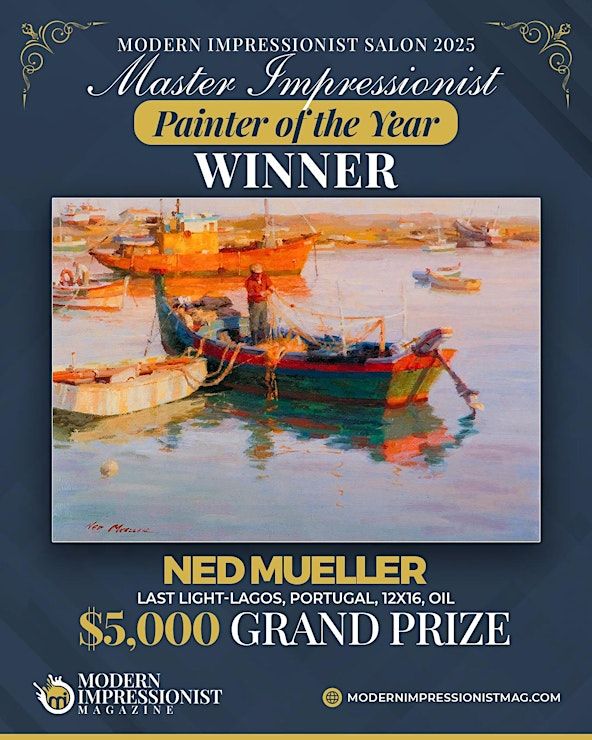
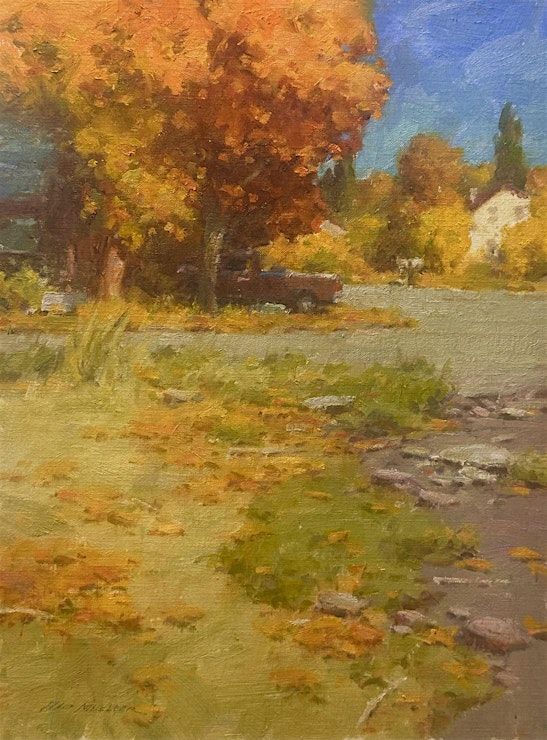
PAWA welcomes Ned Mueller to teach our Little Gems workshop this year.
WHERE and WHEN
Exact location to meet will be sent to registrants. Locations will be in the Snoqualmie Valley area.
Dates: August 1st-2nd 2026
Times: 9:30am -4:30pm
COST for WORKSHOP: $300 PAWA Members, $360 non-members. Non-members can sign up after June 1st 2026.
NO REFUNDS however registration can be transferred to another person. Lunch will be included daily.
Maximum 15 students.
PAWA WORKSHOP FACILITATOR -
Workshop Coordinator: Lorraine Goddard
phone:425-381-9146
email:Please use the contact form at https://lorrainegoddardart.com/contact
WORKSHOP DESCRIPTION:
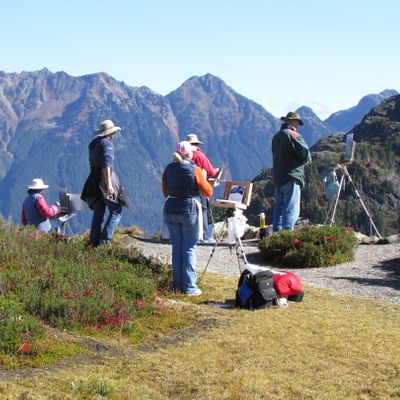
Ned Mueller- Plein Air Workshop. Beginners to Advanced
Media: Oils and acrylics.
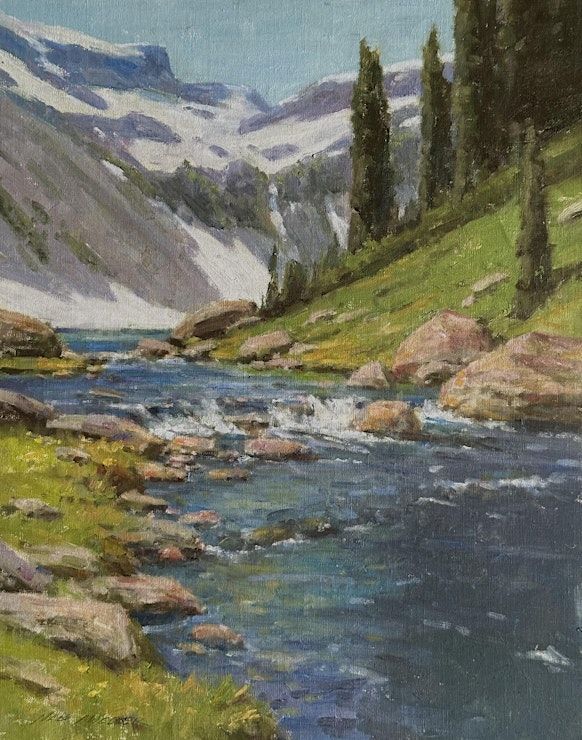
Landscape painting is mostly about learning how to see; how to interpret, compare and edit the shapes and colors of the scene we choose to paint. We will try to see things less literally, and in more of an "Abstract" way. In other words to not see literally the mountains, trees, grass, water, etc. but to see them as an interesting and beautiful arrangement of shapes and colors. This is to see them more as an artist and it then opens up a whole lot more possibilities for things to paint and I think also helps us find our own voice.
We will concentrate on the process of painting and not be so concerned with doing "finished" paintings. After all, we only have two days in understanding and trying to develop this process....design and color, is probably the most important aspect of not only Plein Air, but most painting processes. I also feel , doing studies, frees us up to learn with less pressure and our brains don't get all locked up.Some advanced students may want to work larger.
We will work on what makes a plein air painting work; the mood, rhythm and movement along with an interesting and compelling arrangement of values, masses and color. I will stress following and applying the "Principles of Design"- overlaps, uneven sizes and spacing, quiet areas and busy areas, etc.... as if we do apply them to our work...our paintings will be better!
I will do class demonstrations and will work with each individual as to their own personal needs. The class is open to beginners and I will have you taking on less difficult aspects of the process. We will have some group critiques. Bring a sense of humor, we will work hard and have a good time doing it.
SUPPLY LIST:
Most of you have been doing this for awhile and are pretty well happy with your own set up,, but for others, I recommend this following list for a guide:
Oil Paints: Titanium white, lemon yellow, cadmium yellow lite, cadmium orange, cadmium red lite, alizarin crimson, transparent brown oxide, chromium green oxide, viridian, cobalt blue, ultramarine blue, ivory black. Basically a warm and cool of each primary. Feel free to use a limited palette or to add some favorite colors.
Brushes: I mostly use bristle brushes, mainly filberts and brights #2,#4,#6,#8,#10. As we will be doing mostly small coIor studies, you probably will mostly use #2 thru #8. I will use some round sables for detail or to sign my name. I mostly use ready made oil primed linen panels to paint on, anywhere from 6'x8" to 9"x12", you could also take a 12"x16"and divide it into four 6"x8" to paint outside. Bring a variety of sizes including 8"x10",9"x12". to paint on. Some places to get panels are listed on line or go to Daniel Smith or Dick Blick in Seattle to get panels..linen are the best..but do the best you can. Have a good easel such as the French easel, backpack easel or one of the many good pochade paint boxes on the market. Some of them are: www.artworkessentials.com, www.openboxm Get a good brush cleaner can to clean your brushes with and a small cup for your medium. I use odorless turpentine or mineral spirits to clean brushes and for my medium. I usually use a glass or plexiglass palette, wood palettes are fine as are the fold out palette pals. Please, no paper palettes. I have a palette knife and/or a scraper to clean my palette and a roll of paper towels to clean my palette and brushes with. Don't wear bright shirts as they reflect into your canvas and affect the color. A wide brimmed hat is recommended and a nice firm umbrella is very helpful on a sunny day.
Equipment and paints do get expensive, and do the best you can, but cheap paints, brushes and panels can really keep a person from doing their best work. We will probably just be doing smaller studies in the 6"x8" to 9"x12" range, Bring a folding chair if you prefer to sit and paint or to relax on for watching critiques or eating lunch. Bring a good sense of humor and we will work hard and have a good time doing it!
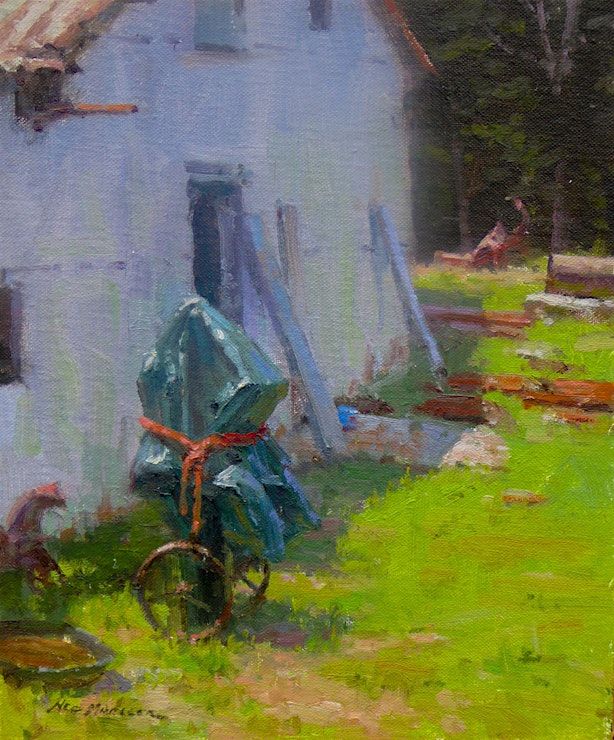
LOCATION: The plan is to have the workshop in the Snoqualmie Valley, just a few miles Northwest of Fall City. That whole area has great spots to paint..Mostly all farm country and the location of the "Pony Farm", that we plan on using both days. Has bathroom, water, shade, shelters, picnic tables, old tractors and other farm vehicles... variety of barns and old homes, Nice views looking towards Snoqualmie Pass. Horses, goats, chickens, dogs etc. Plenty of great shapes and colors to work with. One might find something that really strikes your fancy in the area, but you will have to bring it back to our main set up to get a critique when you are done.
LUNCH : Lunch is included in the workshop cost. Every day, one hour will be given to attendees to allow time for lunch. Bottled water will be available from the workshop coordinator.
SUGGESTED LODGING: Various lodging options are available in the Seattle area. Lodging is at your own choice and cost.
REFUND POLICY: There are no refunds if you cannot attend. For circumstances PAWA cannot control, PAWA reserves the right to cancel the workshop, in this case, a full refund will be issued.
The workshop will happen rain or shine.
Event Venue & Nearby Stays
H3PH+F2 Fall City, Washington, 2411 316th Ave SE, Fall City, United States
USD 300.00 to USD 360.00