About this Event
Admission Tickets are Required, but Free
Admission Tickets are FREE, but all wishing to attend are required to obtain "free-admission" tickets from EventBrite. Click the big "Reserve a Spot" button on this page to get one ticket per guest attending.
Event Parking
Pay parking is available onsite. There is also some street parking in the neighbourhood nearby.
Refreshments
This is the time to enjoy a bite and drink as you socialize with other guests and the speaker.
ARPICO and The Consulate General of Italy PRESENT:
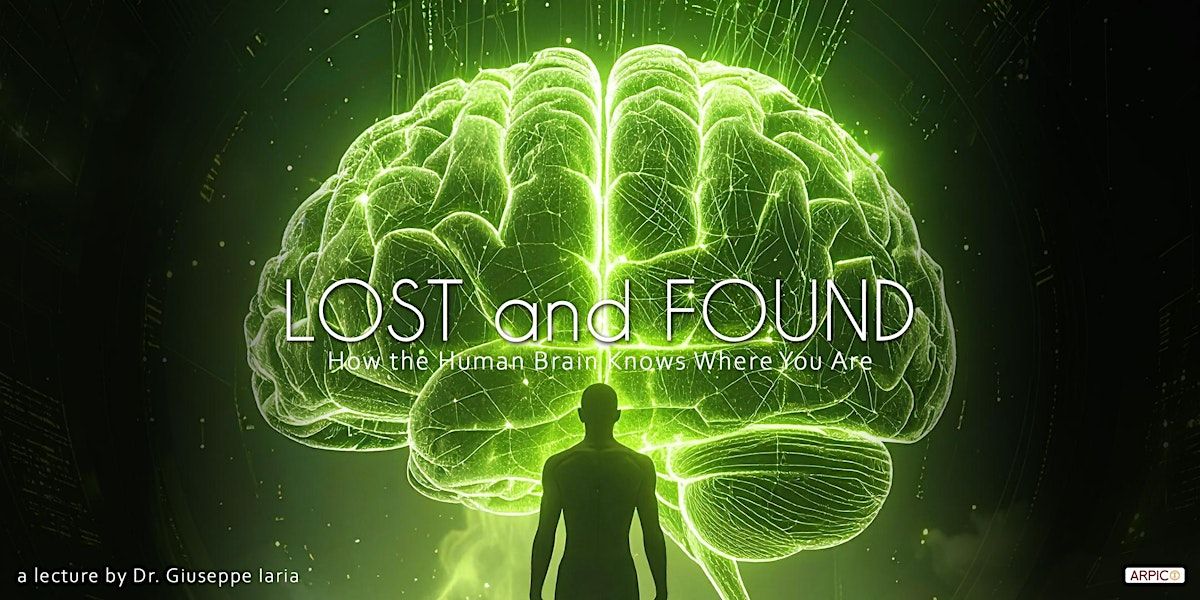
ITALIAN RESEARCH DAY IN THE WORLD
This event is a collaboration with the Consulate General of Italy in Vancouver to celebrate Italian Research Day in the World (normally held on April 15th), established in 2018 to recognize the quality and expertise of Italian researchers abroad. It aims to promote actions and investments that support Italian researchers in pursuing their careers both at home and abroad, while making Italy an attractive destination for international researchers.

LOST and FOUND:
HOW THE HUMAN BRAIN KNOWS WHERE YOU ARE
a talk by Dr. Giuseppe Iaria
In his talk, Dr. Iaria, will explain how spatial orientation allows us to move through the world, find our way in new places, and return home without getting lost. But how does the brain accomplish this remarkable ability? This talk explores the cognitive and neural mechanisms that allow humans to build internal "maps" of their surroundings, and why some people navigate effortlessly while others struggle to find their way. The talk will also introduce Developmental Topographical Disorientation (DTD), a condition in which otherwise healthy individuals get lost in even extremely familiar places.
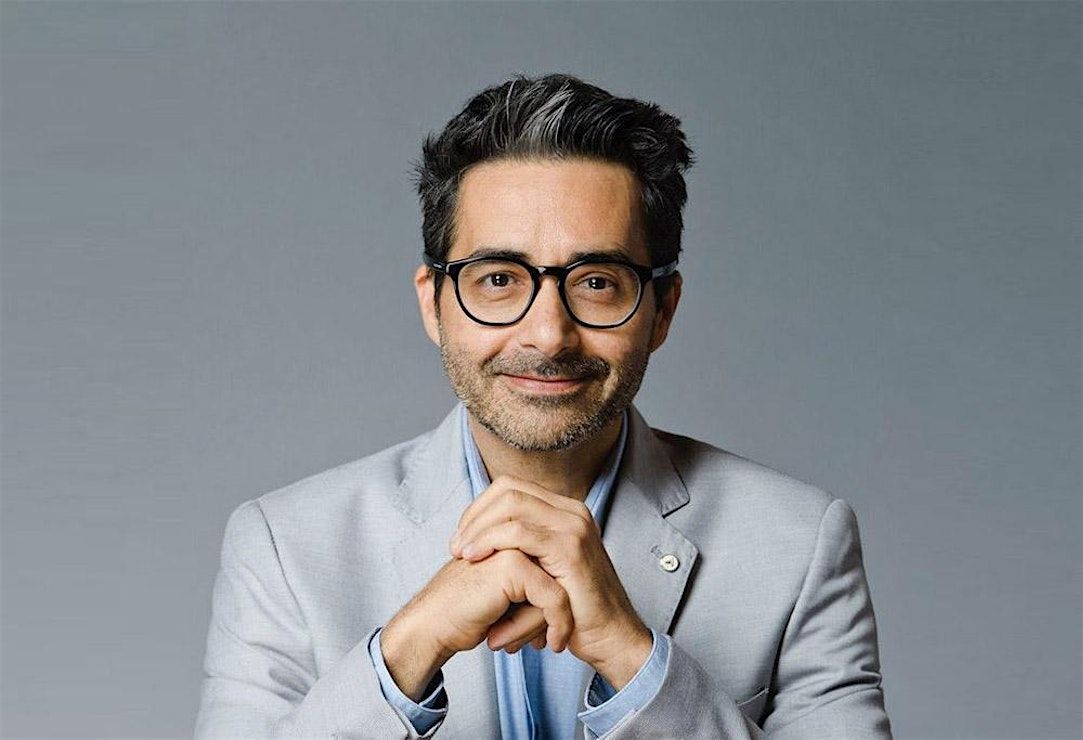
Dr. Giuseppe Iaria is a Director and Professor of Cognitive Neuroscience at the Department of Psychology and Clinical Neurosciences at the University of Calgary, as well as the Director and Founder of the of the non-for-profit organization Canadian Space Health Research Network.
Dr. Iaria is internationally renowned for his contributions to the investigation of human spatial cognition. His research aims to uncover the fundamental mechanisms underlying spatial cognition across the lifespan, from early development to old age, as well as in the context of clinical conditions that impact the central nervous system.
Among his many contributions is the discovery, in 2008, of a new developmental disorder that he termed Developmental Topographical Disorientation (DTD). Individuals with DTD are unable to orient themselves in any surroundings from childhood, despite having no brain injuries or cognitive deficits. Dr. Iaria and his team have been investigating the genetic, cognitive, and neurological mechanisms of DTD in thousands of affected individuals and developing training programs for them. Dr. Iaria is also the founder of gettinglost.ca, an online platform that he created in 2009. The platform was conceived to provide opportunities for testing and training of human spatial orientation skills, and quickly became an important online resource for both the general audience and researchers. To date, the platform is visited by millions of people every year and has been adopted by many scientists as a platform to collect data and investigate the mechanisms of human spatial orientation.
Another unique and significant contribution to science is Dr. Iaria’s pioneer research investigating the behavioral and neurological effects of space travel on astronauts. His research, conducted at NASA, has contributed to identifying how the structural and functional properties of the brain of astronauts are altered during a six-month space mission to the International Space Station. In addition to having an impact on the space industry, the findings of this research program are also relevant to the population on Earth affected by clinical conditions that are similar to the ones created on astronauts by exposure to microgravity, radiation, isolation and confinement.
Over the years, Dr. Iaria has received funding from numerous institutions, including the Natural Sciences and Engineering Research Council of Canada (NSERC), the Canadian Space Agency (CSA), the Canadian Institutes of Health Research (CIHR), the Social Sciences and Humanities Research Council (SSHRC), and the Department of National Defence (Canada).
EVENT DETAILS
6:30 PM - Check-in for all guests.
6:50 PM - Welcome remarks by ARPICO President, Valentina Marchetti
7:00 PM - Introduction by Italian Consul General in Vancouver, Paolo Miraglia Del Giudice and Prof. Costanza Conti, Scientific Attaché, Embassy of Italy in Ottawa
7:15 PM - Lost and Found: How the Human Brain Knows Where You Are, and Why It Sometimes Fails by Dr. Giuseppe Iaria
Q&A - Following the lecture.
Socializing - Refreshments will be serverd.
9:45 PM - Clean up and closure. Help is welcome from anyone willing.
ADMISSION TICKET IS MANDATORY
Please click the large "Reserve a Spot" button on this page to secure your admission ticket. Tickets are necessary to help organizers plan for room capacity, fire regulations, and refreshment needs.
Please be sure to supply the first name, surname and email of each person in your order.
1. Admission Cost? – We don’t charge for admission into the event.
A special thank you to the ARPICO members who generously cover the venue and equipment rentals, speaker travel, and thank-you costs for "regular" events throughout the year. Their support allows us to offer free admission to all attendees.
2. Donations to ARPICO's Scholarship Fund – Your donation helps ensure the continuation of our educational initiatives. If you enjoy attending ARPICO public lectures and appreciate the opportunity to engage with the speaker and fellow attendees, please consider donating to support our Scholarship Fund.
Not ready to donate at the moment? Take your time and decide after you have experienced the evening's full offering.
ARPICO is able to accept your donation at the venue whether cash, debit card or credit card.
EVENT PARKING
Pay parking is available onsite. There is also some street parking in the neighbourhood nearby.
Event Venue & Nearby Stays
Museum of Vancouver - History Room & Garden Patio, 1100 Chestnut Street, Vancouver, Canada
CAD 0.00