
Advertisement
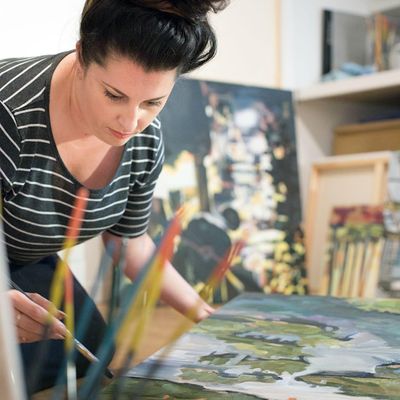
Mastering the soft edges of the marsh in oil paintAbout this Event
"By the end of this session, you’ll move beyond painting 'things' and start painting 'atmosphere.' You will leave with a piece that doesn’t just look like a marsh—it feels like a warm breeze at the end of a summer day."
Course Outline
Phase 1: The Toned Underpainting (The "Glow" Layer)
We begin by killing the white of the canvas.
- The Action: Applying a thin, transparent wash of warm pigment (like Indian Yellow or Transparent Gold Ochre).
- The Goal: Establishing the "temperature" of the painting from the very first stroke so that the golden hour light vibrates through the top layers.
Phase 2: Mapping the Mass (Not the Detail)
Students will learn to squint and see the marsh as large shapes of value rather than individual reeds.
- The Action: Blocking in the dark masses of the cattails and the bright reflection of the water using a large hog-hair brush.
- The Goal: Focusing on composition and "value" before getting distracted by the "tails."
Phase 3: The Art of the "Soft Edge" (Sfumato)
This is the core of the workshop.
- The Action: Using a clean, dry mop brush or a soft fan brush to gently "knit" the edges of the cattails into the sky and water.
- The Goal: Creating that humid, hazy atmosphere where objects seem to dissolve into the light.
Phase 4: Final Highlights & "Jewel" Tones
The finishing touches that make the painting "pop."
- The Action: add sharp, "loaded" highlights of pure light on the tips of the reeds and the ripple of the water.
- The Goal: Creating contrast between the soft, hazy background and the crisp, sun-drenched foreground.
Skills You Will Learn
- Atmospheric Perspective: How to use cooler, lighter tones to make the distant tree line "recede" into the mist.
- Edge Control: The ability to distinguish between Hard Edges (focal points), Soft Edges (movement), and Lost Edges (where the plant disappears into the shadow).
- Wet-on-Wet Blending (Alla Prima): Mastering the "Goldilocks" touch—how to blend two colors on the canvas without turning them into "mud."
- Color Temperature Manipulation: Learning how to contrast cool violets in the shadows with warm oranges in the highlights to simulate a realistic sunset.
- Transparent Glazing vs. Opaque Scumbling: When to let the paint be thin and "stained" and when to apply thick, "buttery" paint for texture.
Advertisement
Event Venue & Nearby Stays
Michelle's Studio, 36 Hatter Street, Kingston, Canada
Tickets
CAD 275.00

Concerts, fests, parties, meetups - all the happenings, one place.