
About this Event
Speaker: Professor Carl Mika, University of Canterbury, New Zealand
Chaired by: Dr Ima Jackson, Glasgow Caledonian University
Abstract
What happens to talk of sovereignty when it is made to include a Maori notion of the world? If we make a statement such as ‘the world is interconnected through whakapapa (genealogy)’, then we can reasonably expect to have to acknowledge the implications of that for self-organisation generally but, in particular, for the human realm. It might end up that the human being does not have a great degree of control even over their own expression: the more-than-human realm has composed what we will say, write, paint and so on. And it continues to constitute those things. If so, then in the wake of that statement about interconnection we would have to moderate our certainty about whatever is talked or written about or portrayed through art. This disturbance of certainty, which does place the human self as sovereign and then makes all talk of sovereignty about the human, becomes vital when we consider that it appears to have been introduced through colonisation.
We often encounter holistic talk of the order of ‘the world is interconnected through whakapapa’, and this talk will consider some of the finer possibilities and consequences of that sort of utterance. The sovereignty of the more-than-human world is especially important in this discussion (see e.g. Ahenakew et al., 2014). This makes immediate sense when we think about, for instance, the ocean, which dictates its own movement (and ours). However, there are also intangible entities – including the totality of all things – to consider, and these will be the main focus of this talk. Recentering the All – arguably one of the senses of ‘whakapapa’ and other Maori terms – may both encapsulate a Maori notion of sovereignty and, somewhat conveniently, itself be the most important sovereign act we can perform in response to its human-centered version.
Ahenakew, C., Andreotti, V., Cooper, G., & Hireme, H. (2014). Beyond epistemic provincialism: De-provincializing Indigenous resistance. AlterNative, 10(3), 216-231.
This event will take place in person at the University of Glasgow, Gilbert Scott Building, Room 466 Lecture Theatre. Please register in advance to attend.
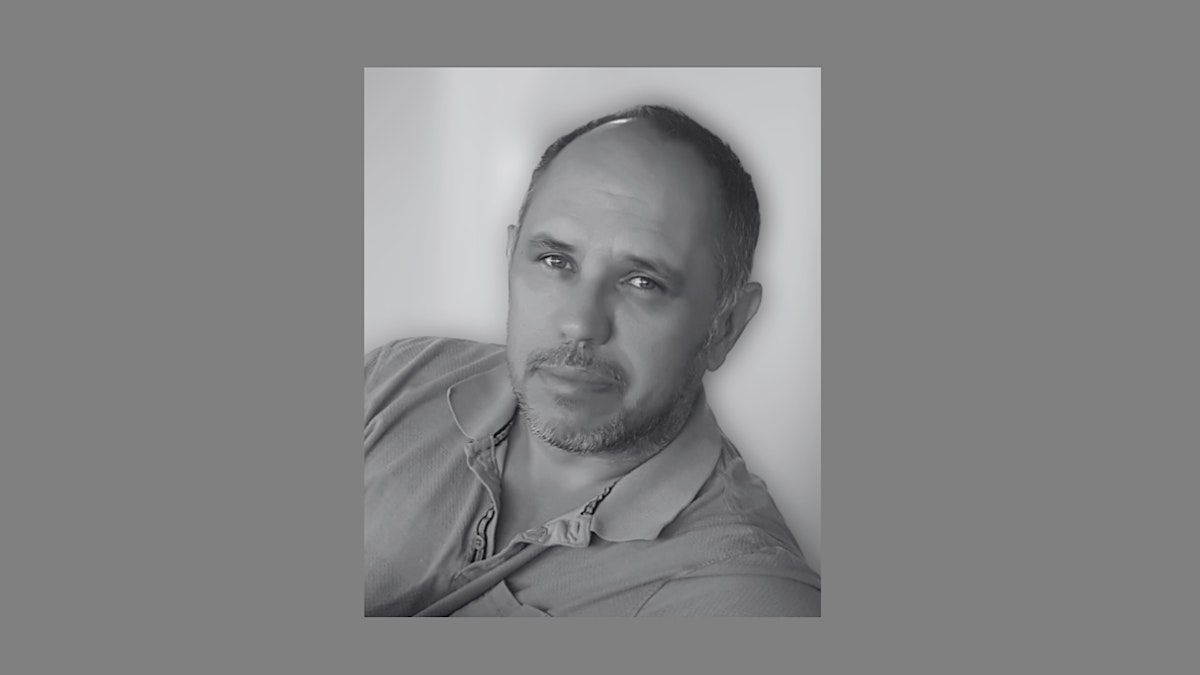
Professor Carl Mika (Tuhourangi, Ngati Whanaunga) is Head of School and Professor of Maori and Indigenous Studies in Aotahi, School of Maori and Indigenous Studies, University of Canterbury, New Zealand. His research has spanned law, philosophy, and Maori and Indigenous Studies, often focusing on their overlap. Currently, he is speculating on a Maori colonised existentialism in light of the idea that all things are interconnected.
He has written books and several articles and chapters relating to Maori and Indigenous philosophies (including in education-related contexts) as well as on German Romanticism, Martin Heidegger, and the overall ethics and methodological possibilities of working alongside non-Indigenous philosophies.
He has been adjunct professor at RMIT and investigator on international philosophy projects funded by the Swedish Research Council, and Social Sciences and Humanities Research Council, Canada. He has also been investigator for several New Zealand based funded research projects.
Event Venue & Nearby Stays
University of Glasgow, Gilbert Scott Building, Room 466 Lecture Theatre, University Avenue, Glasgow, United Kingdom
GBP 0.00