
About this Event
Join us in creating a community atlas as you learn various tecniques in papermaking to create your own Ecosystems in Memory. Join us for all five, one, or a few of this papermaking series:
Session 1: 4/2
a Trail of Seeds: Every seed carries stories of place and people. Join us in this beginning session of an ongoing series in which we will work with seeds and papermaking, learning about how these seeds are sown and stewarded, and how the seed is loved and used across places. Each person will choose one seed to build an ongoing relationship with throughout future sessions. Together, we'll learn how these seeds are sown and stewarded, and how each seed is uniquely loved and used across the world. Guided by reflection, you’ll select a word that resonates with both you and your seed, then create a trail on paper to map your own connection with this seed to inspire your papermaking journey over the next few sessions together. In this session, we'll learn about amate paper and its rich history in Mexican culture in resisting colonization and keeping culture alive through stories and recipes.
Session 2 and 3: 4/8 and 4/16
Ecosystems of Memory: Participants are invited to bring photos of land they relate to, are close to, where they migrated from or from printed images of landscapes that feel like home. Be guided by O to write your own reflection of this land, and turn those notes into recycled paper pulp to be mixed with fibers, dried grasses, leaves, and other various upcycled papers. In this session, learn how to add natural pigments to dye the papers.
Session 4: 4/23
A Feflection of Ourselves: Looking at our paper topography, we'll reflect, taking time to write a small letter on handmade paper to ourselves, answering the question, how do we make home for ourselves? We will place this at the center of our handmade paper topography, mounting both our seed of trails and our landscapes onto amate paper, finishing our final pieces for this Earth Day.
Session 5: 4/30
The Community Atlas, a celebration: We will lay our topographys in the greenhouse as an exhibit and invite community to come and discuss how we make home and live in an ecosystem together. Looking at photos from O's archive, we'll share and connect over ways to re-member the land and how we can heal together.
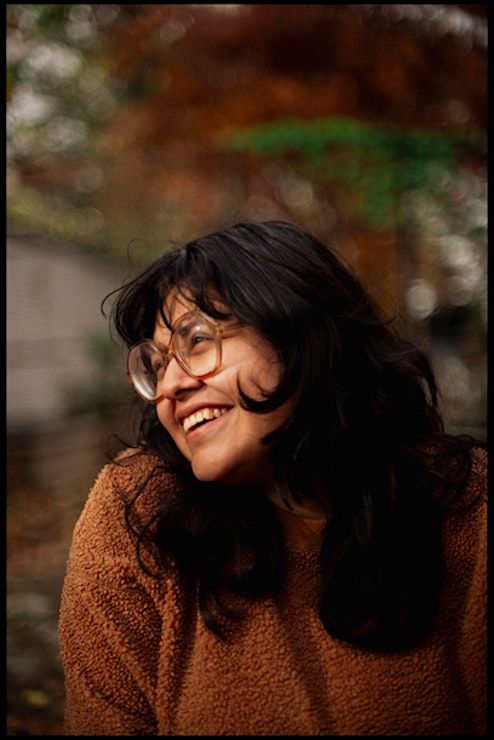
Your Facilitator: Odalys Burgoa
O is a Mexican artist from the Bronx with a focus in photography, storytelling and painting. They curate and facilitate workshops in green spaces.
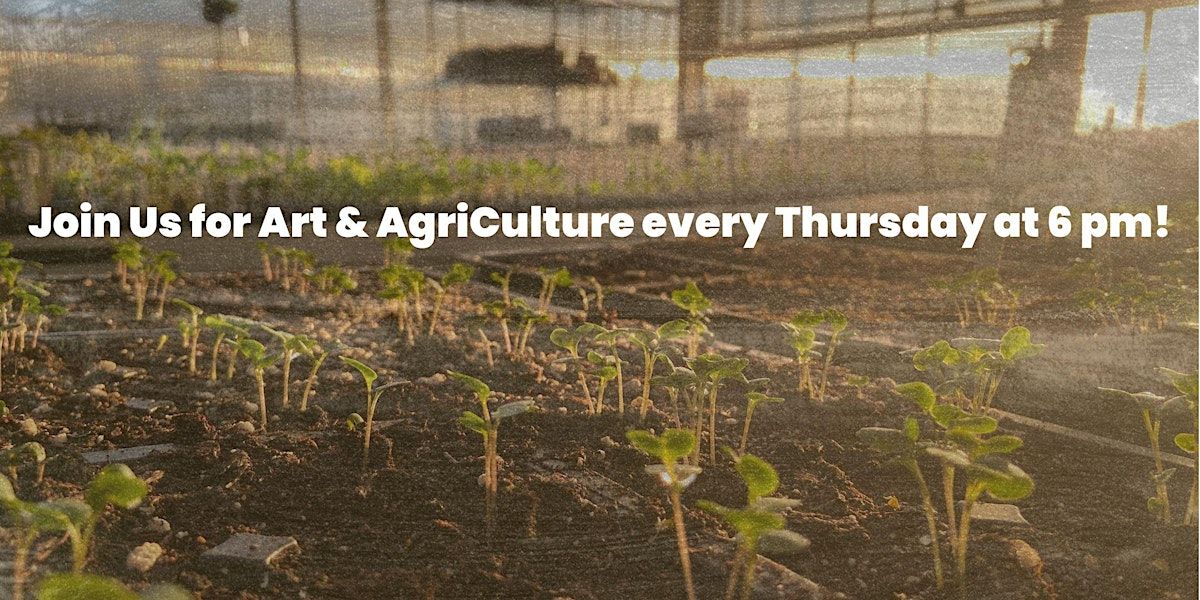
“Another thing we lost is culture. . . look at the word agriculture. We lost that connection. And so now it’s going back to the culture of agriculture. Why do we grow the food that we do?” - Karen Washington
Why do we grow the foods we do? How is culture tied to our local foodways and agricultural systems? What stories of nourishment are you hungry to tell? What creative acts are you being called to digest? In this weekly series, explore various techniques and practices introduced by visiting artists who will lead us in expressing our relationship to food, agriculture, and the histories and stories that shape how we connect with our foodways.
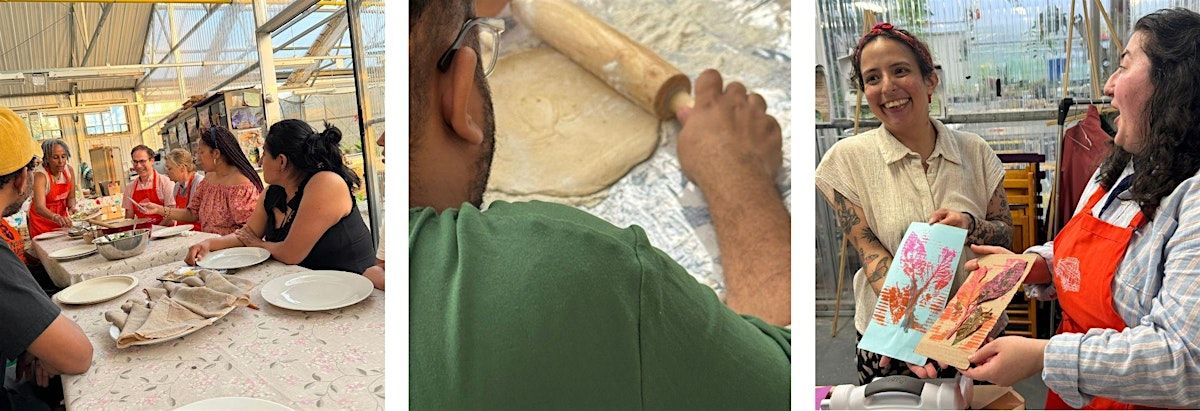
Through various artmaking techniques like bookmaking, printmaking, collage, sculpture, natural-pigment making and painting, alternative photography processes, participants will create artwork that begins to answer the question: Where is the culture in our agricultural system?
This is a free drop-in program. Come to every class to build on your skill or come to one or two that you are available for. Explore your relationship to food and agriculture and the ways our food systems can connect us more deeply to our local ecosystems and communities.
Workshops are rain or shine.
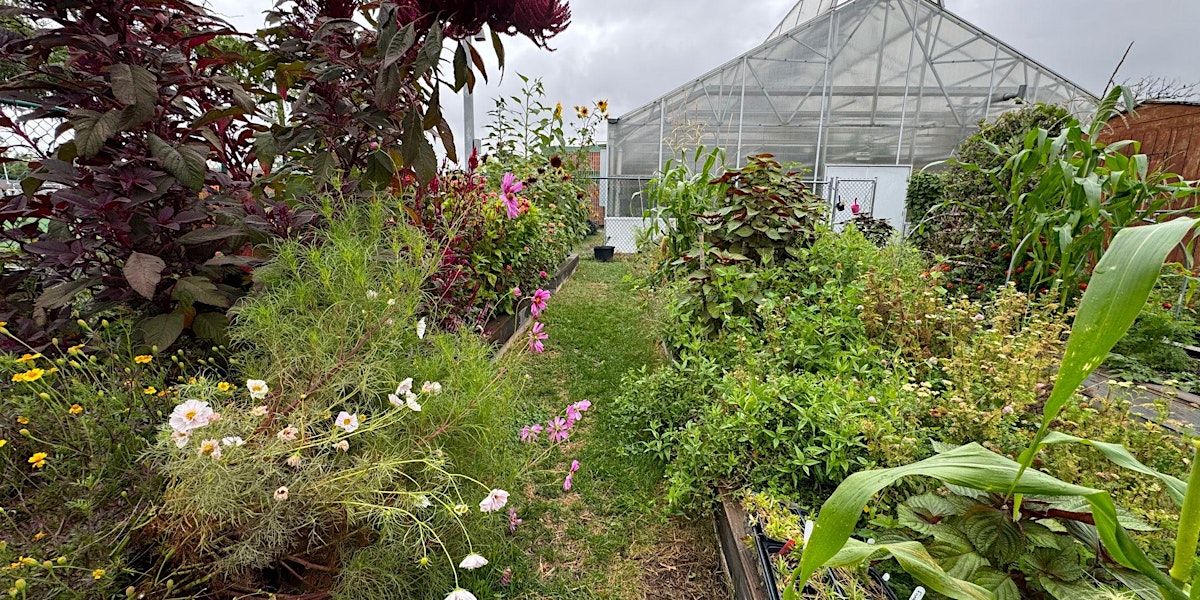
Accessibility: Our kitchen/classroom space is wheelchair accessible. With prior planning, we can add a few small mats onto the pebbled ground of greenhouse to make a small wheel-chair accessible path. Our learning garden has grass paths, and the entrance is through a gate with a small, raised entrance. Our tables can be lowered/raised, and we have several backless benches or stools. Our kitchen is in regular use, and while we try to cook without peanuts, much of our cookware is shared and we cannot guarantee a nut-free environment. We have a first aid kit, and the closest AED is in another building several yards away. Drinking water is made available in refillable pitchers.
When inside the greenhouse and kitchen we will open our double-doors and windows to vent the space and encourage masking and social distancing when in more closed-in spaces.
Our closest bathrooms are a building away, about a one-minute walk. A gender neutral bathroom is also available, and this is accessible by key which you can request from staff. We are not a scent-free zone, and because herbalism classes take place here, cannot guarantee that the site will be clear of any essential oil smells. If you have needs not addressed here, please reach out to Mallory Craig at [email protected].
Event Venue & Nearby Stays
The Greenhouse and Education Center at Denny Farrell Riverbank State Park, 679 Riverside Dr, New York, United States
USD 0.00