
About this Event
Come prepare your bodies for the holiday season by making a holiday herbalism survival kit to get through the busy season. From a soothing tea blend to a fortifying oxymel take sometime to pour into yourself to make the season extra bright.
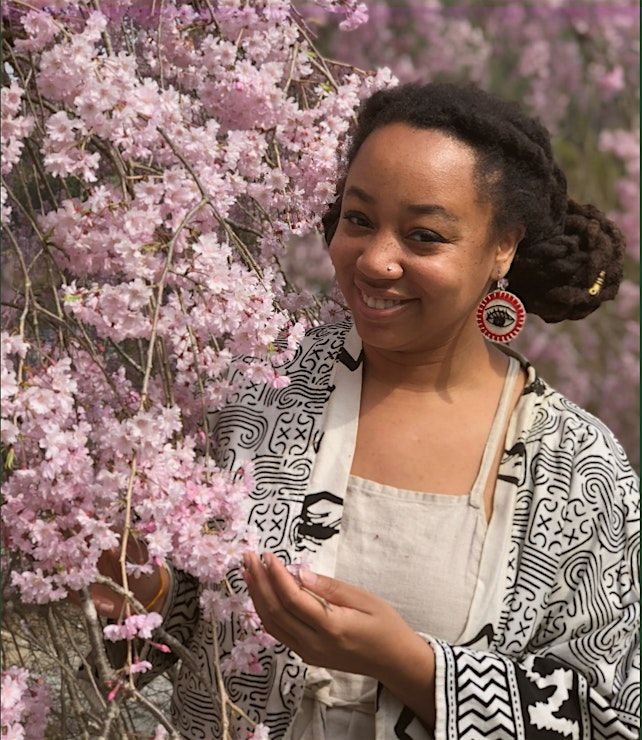
Your Facilitator: Arvolyn Hil
Arvolyn Hill (she/her) is a community herbalist, flower essence practitioner and outdoor educator with a never-ending curiosity about plants and the natural world. Raised on Schaghticoke land of rural Kent, CT, her love of herbalism grew after the passing of several family members due to preventable environmental illnesses. She studied at Twin Star Connecticut's School of Herbalism and Energetic Studies and in 2016 opened Gold Feather, an online apothecary and flower art shop. Arvolyn is passionate about reclaiming herbalism for Black, Indigenous and People of Color by using herbs to build ancestral connection. She’s the Associate Director of the Everett's Children’s Adventure Garden at the New York Botanical Gardens where she creates nature centered science exploration activities for kids. Arvolyn can be found enjoying growing herbs at her local community garden in Harlem, NY.
Find out more about her work: www.goldfeathershop.com and on Instagram @goldfeather_
“Another thing we lost is culture. . . look at the word agriculture. We lost that connection. And so now it’s going back to the culture of agriculture. Why do we grow the food that we do?” - Karen Washington
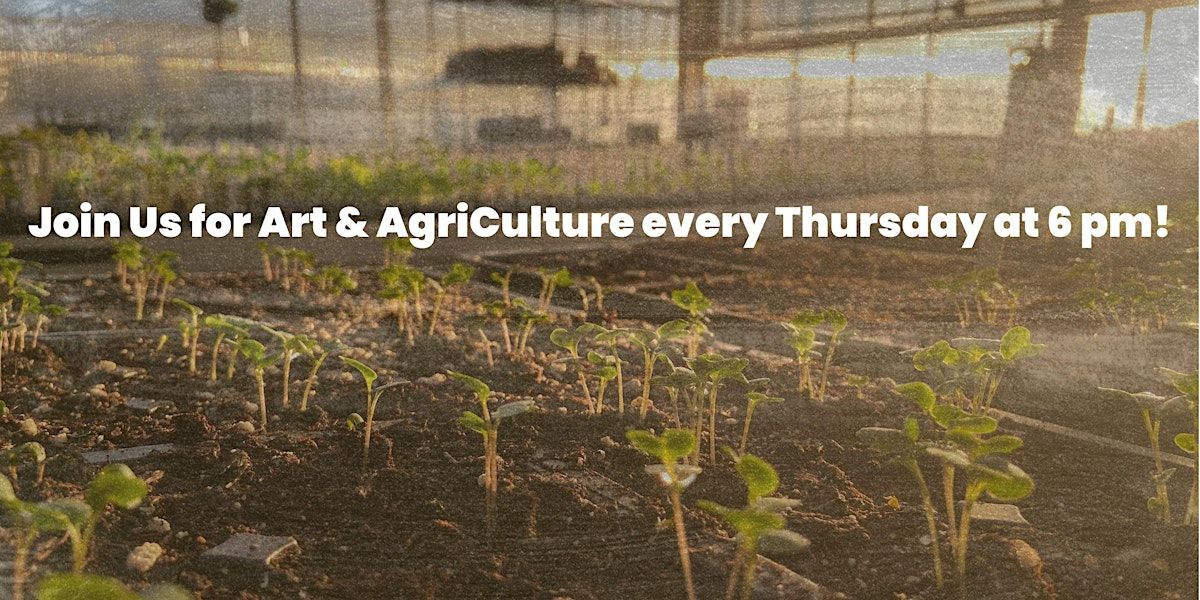
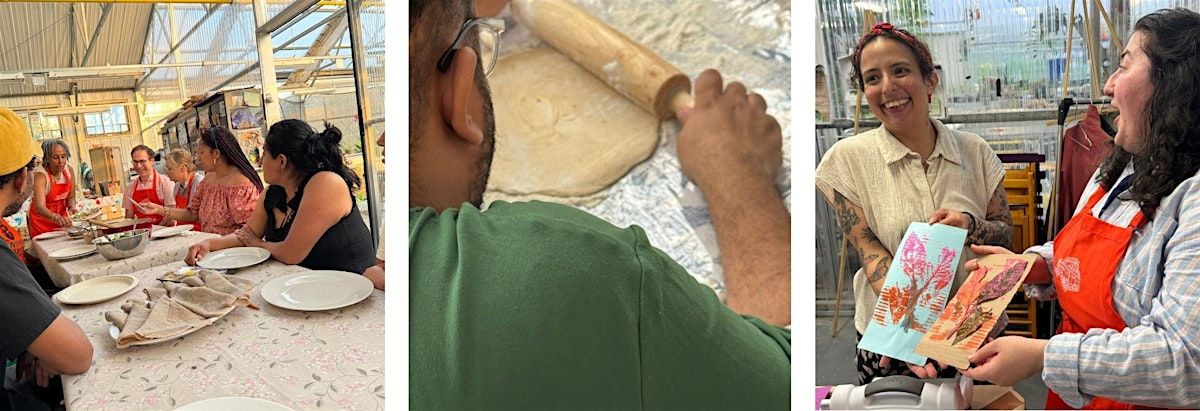
Why do we grow the foods we do? How is culture tied to our local foodways and agricultural systems? What stories of nourishment are you hungry to tell? What creative acts are you being called to digest? In this weekly series, explore various techniques and practices introduced by visiting artists who will lead us in expressing our relationship to food, agriculture, and the histories and stories that shape how we connect with our foodways.
Through various artmaking techniques like bookmaking, printmaking, collage, sculpture, natural-pigment making and painting, alternative photography processes, participants will create artwork that begins to answer the question: Where is the culture in our agricultural system?
This is a free drop-in program. Come to every class to build on your skill or come to one or two that you are available for. Explore your relationship to food and agriculture and the ways our food systems can connect us more deeply to our local ecosystems and communities.
Workshops are rain or shine.
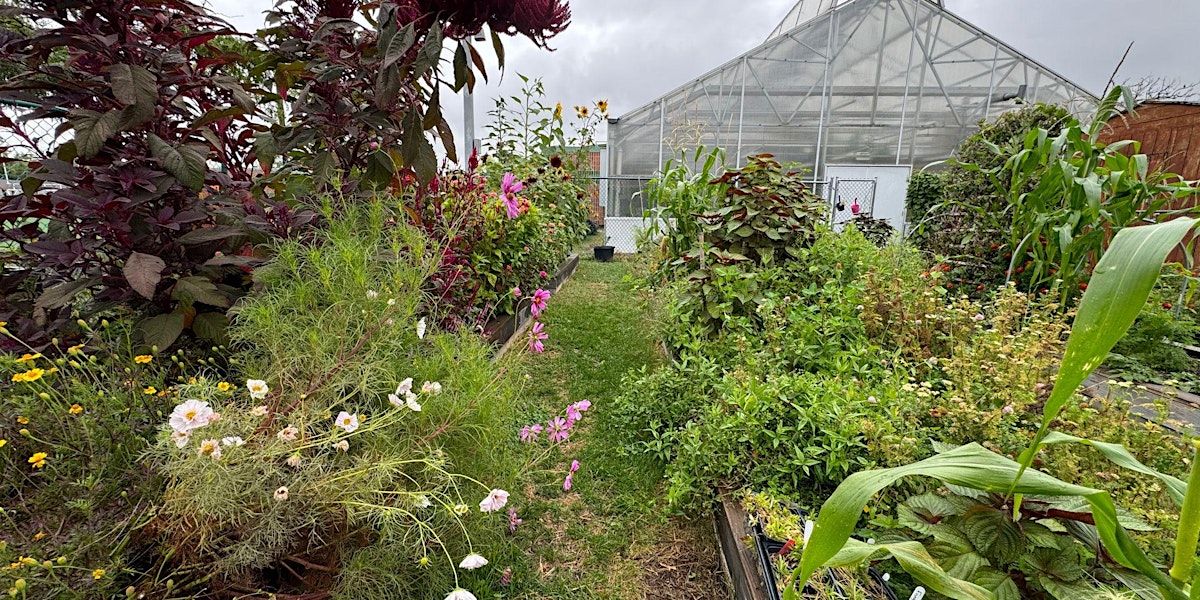
Accessibility: Our kitchen/classroom space is wheelchair accessible. With prior planning, we can add a few small mats onto the pebbled ground of greenhouse to make a small wheel-chair accessible path. Our learning garden has grass paths, and the entrance is through a gate with a small, raised entrance. Our tables can be lowered/raised, and we have several backless benches or stools. Our kitchen is in regular use, and while we try to cook without peanuts, much of our cookware is shared and we cannot guarantee a nut-free environment. We have a first aid kit, and the closest AED is in another building several yards away. Drinking water is made available in refillable pitchers.
When inside the greenhouse and kitchen we will open our double-doors and windows to vent the space and encourage masking and social distancing when in more closed-in spaces.
Our closest bathrooms are a building away, about a one-minute walk. A gender neutral bathroom is also available, and this is accessible by key which you can request from staff. We are not a scent-free zone, and because herbalism classes take place here, cannot guarantee that the site will be clear of any essential oil smells. If you have needs not addressed here, please reach out to Mallory Craig at [email protected].
Event Venue & Nearby Stays
The Greenhouse and Education Center at Denny Farrell Riverbank State Park, 679 Riverside Dr, New York, United States
USD 0.00