About this Event
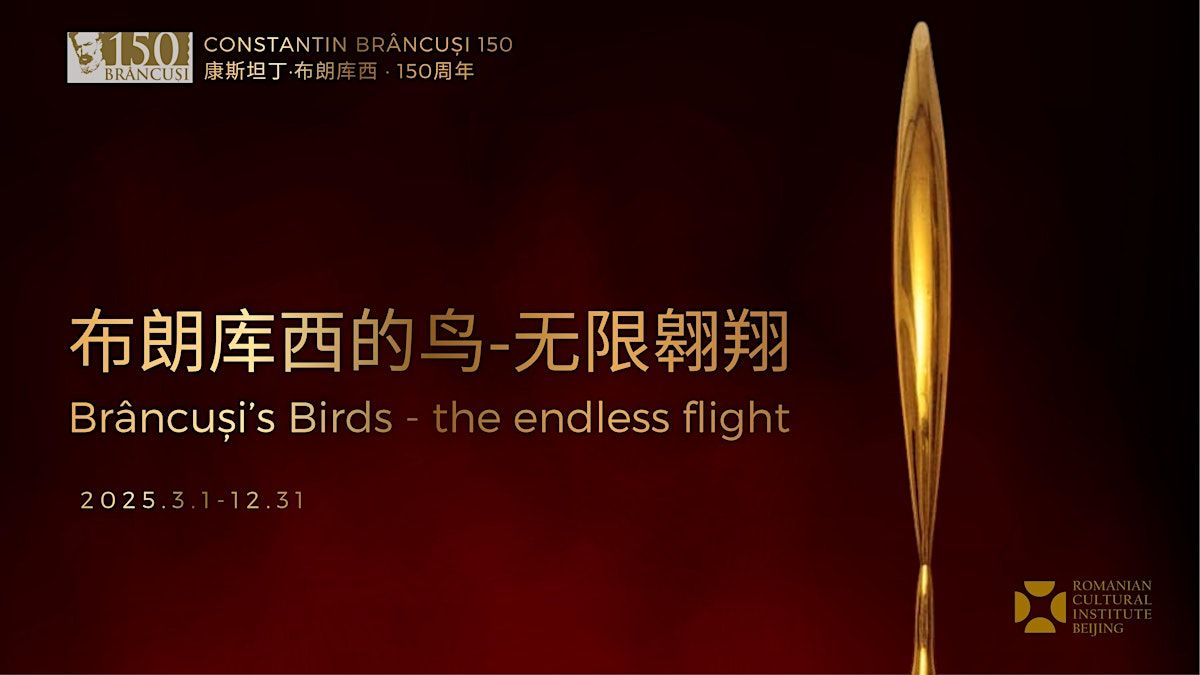
Constantin Brâncuși – 150 : Exhibition “Brâncuși’s Birds – Flight into Infinity” and the Concert Series “Brâncuși 150: The Sound of Forms,” performed by Diana Jipa and Ștefan Doniga
On the occasion of the 150th anniversary of the birth of Constantin Brâncuși, the Romanian Cultural Institute in Beijing is organizing a major commemorative program structured around two principal events: the exhibition “Brâncuși’s Birds – Flight into Infinity,” open from March 1 to December 31, 2026, at the ICR Beijing headquarters, and a series of three concerts entitled “Brâncuși 150: The Sound of Forms,” performed by violinist Diana Jipa and pianist Ștefan Doniga between March 1–6, 2026, at ICR Beijing, Beijing Dongtu Theater, and the Forlong Auditorium in Chongli.
The exhibition “Brâncuși’s Birds – Flight into Infinity” is dedicated to the motif of flight in Brâncuși’s oeuvre and evokes essential cycles such as Măiastra (1910–1918), Bird in Space (1919–1940), Bird in the Air, the autonomous Bird studies, and Golden Bird (1919–1920), works now housed in prestigious international museum collections. Conceived as a hermeneutic journey into the process of formal essentialization, the exhibition analyzes the constitutive structures of Brâncuși’s sculptural language: the reduction of form to archetype, verticality as an ontological axis, the relationship between surface and light, the unity between volume and pedestal, and flight as a conceptual figure of transcendence and continuity. The sculptural form is thus understood as an open dynamic, exceeding the limits of the object and symbolically extending “into the sky, into the pedestal, and into the earth,” as the artist himself stated.
The exhibition structure includes a bilingual (Chinese–English) documentary wall installation integrating: an aesthetic chronology of the artist’s biography; contextualization of the initiation of the “Birds” series within his oeuvre; an enumeration of major works and the museums that host them; an analysis of the legal episode at the Port of New York (the 1926–1928 trial concerning the status of Bird in Space, a defining moment in the recognition of modern sculpture in the United States); reproductions from period press and documentary images; sketches illustrating the process of formal essentialization; as well as references to the commission carried out in the 1930s for Maharajah Yeshwant Rao Holkar of Indore (India), for whom Brâncuși executed two marble versions of the Bird in Space cycle intended for his palace. The exhibition also addresses the materials favored by the artist (marble, polished bronze, wood), Romanian motifs, and the structural relationship between volume and pedestal.
The opening will take place on March 1, 2026, at 6:00 PM at the ICR Beijing headquarters, preceding the first concert of the anniversary series. The exhibition will remain open until the end of 2026. The project is realized with the support of the National Gallery of Art, Washington, DC, and museum specialist Peter Huestis.
The exhibition route is complemented by the screening of the documentary “Timi2023 – Brâncuși,” narrated by art historian and critic Doina Lemny, as well as by sculptural interventions created by students from the Faculty of Sculpture at Tsinghua University, a symbolic gesture marking the continuity of Romanian–Chinese artistic dialogue.
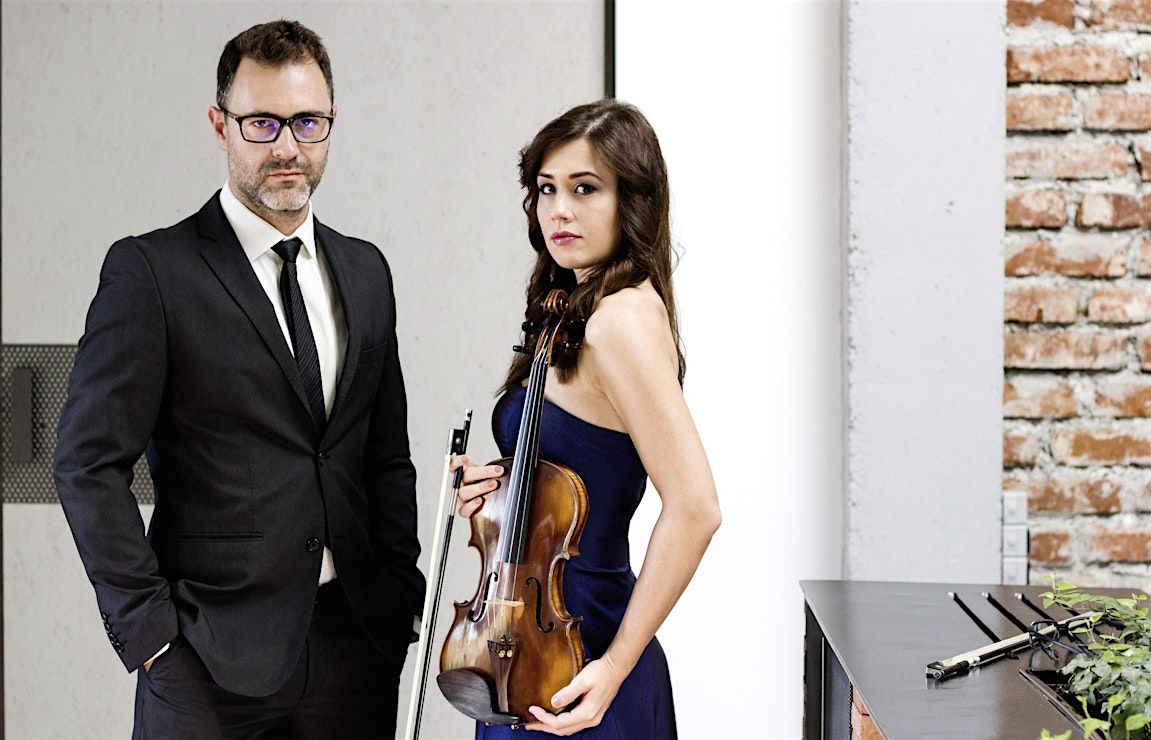
In resonance with this visual reflection, the three concerts entitled “Brâncuși 150: The Sound of Forms” propose a musical transposition of Brâncuși’s aesthetic principles, articulating a subtle relationship between sound, volume, and formal architecture. The concerts will be performed by renowned Romanian musicians, violinist Diana Jipa and pianist Ștefan Doniga, in three distinct venues in China: March 1, 2026 – ICR Beijing; March 4, 2026 – Beijing Dongtu Theater; and March 6, 2026 – Auditorium Hall, Forlong Ski Resort, Chongli.
Offering an unexpected perspective on the work of Romania’s most important sculptor, the chosen repertoire represents an original bridge between the visual arts and music, including works by contemporary Romanian composers alongside masterpieces of French and Spanish music. The central piece of the program is “Brâncuși’s Forge,” specially composed by Viorel Munteanu to celebrate the great Romanian modernist sculptor. The concert program also includes: Viorel Munteanu – Brâncuși’s Forge (special interpretation selected by Diana Jipa & Ștefan Doniga); Francis Poulenc – Suite Le travail du peintre (adaptation for violin and piano by Diana Jipa and Ștefan Doniga); Remus Georgescu – Interlude and Toccata from Suite No. II for solo piano; Roman Vlad – Blonde Negress for solo violin (dedicated to Diana Jipa); Jorge Grundman – Warhol in Springtime for violin and piano; Camille Saint-Saëns – Danse Macabre for violin and piano; Dan Dediu – Sphynx and Dragon for violin and piano.
Diana Jipa graduated from the National University of Music in Bucharest with Bachelor’s, Master’s, and Doctoral degrees. She made her debut as a soloist at the age of 10 and has since become a constant presence in philharmonic halls and concert stages in Romania and abroad (United Kingdom, Belgium, Czech Republic, South Korea, China, Cuba, Greece, Germany, Ireland, Italy, Mexico, Norway, the Netherlands, Poland, Russia). In 2005, she represented Romania at the concert in Brussels marking the signing of the Treaty of Accession of Romania and Bulgaria to the European Union. She has performed at major music festivals, including the XVIIIth edition of the George Enescu International Festival with the “Moldova” Philharmonic Orchestra of Iași. The VIIth edition of the “Paganiniana” Festival in Genoa explored the relationship between music, science, and cutting-edge technology, featuring Diana Jipa performing both on classical violin and the experimental instrument “iperviolino.”
Born in Galați in 1979, pianist Ștefan Doniga graduated from the National University of Music in Bucharest in 2002, studying under distinguished professors such as Constantin Ionescu-Vovu, Viorica Rădoi, Oxana Corjos, and Dan Grigore. Throughout his career, he has performed in Romania and in 25 other countries across all six continents. Together with violinist Diana Jipa, he is among the only Romanian musicians to have completed a world tour within a single concert tour. In 2000, he represented Romania at the First Balkan Festival of Young Pianists in Razgrad, Bulgaria, receiving the Festival Medal. He has participated in numerous live broadcasts by Romanian Radio and recorded alongside the Radio Chamber Orchestra. He is the only Romanian pianist to have recorded the complete mazurkas for piano by Alexander Scriabin, a live recording from the Romanian Athenaeum in 2005 broadcast repeatedly via the European Broadcasting Union by the German radio station WDR 3. He also recorded, in world premiere, Piano Concertos Nos. 2 and 3 by Sergei Bortkiewicz with the Janáček Philharmonic Orchestra of Ostrava, produced by the Netherlands Music Institute and released worldwide by Brilliant Classics on March 16, 2018. The recording received highly favorable reviews from Gramophone and American Record Guide and was named “Recording of the Month – May 2018” by MusicWeb International.
These anniversary events are organized by ICR Beijing to promote Romanian cultural values in China and to mark, through intercultural dialogue, the complex personality of Constantin Brâncuși, whose works revolutionized modern universal sculpture.
康斯坦丁·布朗库西诞辰150周年纪念活动
《布朗库西的鸟——飞向无限》展览
与音乐会系列《布朗库西150:形式之声》
演出:戴安娜·吉帕 与 斯特凡·多尼加
值此罗马尼亚伟大雕塑家康斯坦丁·布朗库西诞辰150周年之际,北京罗马尼亚文化中心特别策划大型纪念项目,由两项核心活动构成:摄影展《布朗库西的鸟——飞向无限》,将于2026年3月1日至12月31日在北京罗马尼亚文化中心展出;以及音乐会系列《布朗库西150:形式之声》,由小提琴家戴安娜·吉帕与钢琴家斯特凡·多尼加于2026年3月1日至6日期间在北京罗马尼亚文化中心、北京东图剧场及崇礼富龙滑雪度假区Auditorium音乐厅举行三场音乐会。
摄影展《布朗库西的鸟——飞向无限》聚焦布朗库西创作中“飞翔”这一核心主题,呈现其重要创作系列,包括《玛雅斯特拉》(1910–1918)、《空间中的鸟》(1919–1940)、《空中之鸟》、独立的“鸟”研究以及《金鸟》(1919–1920)等。这些作品现珍藏于世界多家重要国际博物馆。展览以诠释学路径展开,对布朗库西形式“本质化”过程进行深入分析,探讨其雕塑语言的结构原则:形式向原型的还原、作为存在论轴线的垂直性、表面与光之间的关系、体量与基座之间的统一,以及“飞翔”作为超越与连续性的观念性象征。雕塑形态因此被理解为一种开放的动态结构,它超越物体本身的界限,象征性地“延伸至天空、基座与大地之中”,正如艺术家所言。
展览结构包含双语(中英)文献墙装置,内容涵盖:艺术家生平与美学发展年表;“鸟”系列在其整体创作体系中的地位;主要作品及其收藏博物馆列表;1926–1928年纽约港“空间中的鸟”法律诉讼事件的分析(该案件成为现代雕塑在美国获得法律承认的重要历史节点);当时媒体报道与历史文献影像;展示形式本质化过程的草图;以及对1930年代为印度印多尔王公Yeshwant Rao Holkar所创作的两件大理石版本《空间中的鸟》的介绍。展览同时探讨布朗库西所偏爱的材料(大理石、抛光青铜、木材)、罗马尼亚民族文化动机,以及体量与基座之间的结构关系。
展览开幕式将于2026年3月1日18:00在北京罗马尼亚文化中心举行,并作为纪念音乐会系列首场演出的开场活动。展览将持续至2026年底。本项目得到美国华盛顿国家美术馆(National Gallery of Art, Washington, DC)及博物馆专家Peter Huestis的支持。
展览还将放映纪录片《Timi2023 – 布朗库西》,该片由艺术史学家兼评论家Doina Lemny担任旁白。此外,清华大学雕塑系学生将参与创作雕塑艺术介入作品,作为中罗艺术对话延续的象征性表达。
与视觉展览形成呼应,三场音乐会《布朗库西150:形式之声》以音乐形式转译布朗库西的美学原则,在声音、体量与形式结构之间建立微妙关联。音乐会由罗马尼亚著名音乐家——小提琴家戴安娜·吉帕与钢琴家斯特凡·多尼加——倾情演出,演出时间与地点如下:
2026年3月1日,北京罗马尼亚文化中心;
2026年3月4日,北京东图剧场;
2026年3月6日,崇礼富龙滑雪度假区Auditorium音乐厅。
本系列音乐会以独特视角诠释这位罗马尼亚最重要雕塑家的艺术世界,在视觉艺术与音乐之间搭建桥梁。曲目涵盖罗马尼亚当代作曲家作品,以及法国与西班牙音乐经典之作。音乐会核心曲目为维奥雷尔·蒙特亚努特别创作的《布朗库西的熔炉》,为纪念这位现代主义雕塑大师而作。音乐会曲目还包括:
维奥雷尔·蒙特亚努:《布朗库西的熔炉》(戴安娜·吉帕与斯特凡·多尼加特别演绎);
弗朗西斯·普朗克:《画家的工作》组曲(由戴安娜·吉帕与斯特凡·多尼加改编为小提琴与钢琴版本);
雷穆斯·乔治斯库:《第二钢琴组曲》中的《间奏曲》与《托卡塔》;
罗曼·弗拉德:《金发黑人女子》(小提琴独奏,题献戴安娜·吉帕);
豪尔赫·格伦德曼:《春日里的沃霍尔》(小提琴与钢琴);
卡米耶·圣-桑:《骷髅之舞》(小提琴与钢琴);
丹·德迪乌:《斯芬克斯与龙》(小提琴与钢琴)。
戴安娜·吉帕毕业于布加勒斯特国立音乐大学,获得学士、硕士及博士学位。她10岁即以独奏身份登台演出,随后活跃于罗马尼亚及世界各地音乐舞台(英国、比利时、捷克、韩国、中国、古巴、希腊、德国、爱尔兰、意大利、墨西哥、挪威、荷兰、波兰、俄罗斯等)。2005年,她代表罗马尼亚在布鲁塞尔参加罗马尼亚与保加利亚加入欧盟条约签署纪念音乐会。她曾参加多项重要国际音乐节,包括第十八届“乔治·埃内斯库国际音乐节”。在意大利热那亚“帕格尼尼亚纳”音乐节第七届活动中,她以古典小提琴与实验乐器“iperviolino”参与探索音乐、科学与高科技之间的关系。
钢琴家斯特凡·多尼加1979年出生于加拉茨,2002年毕业于布加勒斯特国立音乐大学,师从康斯坦丁·约内斯库-沃武、维奥丽卡·勒多伊、奥克萨娜·科尔若什及丹·格里戈雷等著名教授。其职业生涯遍及罗马尼亚及全球六大洲25个国家。他与戴安娜·吉帕共同完成了一次全球巡演,是少数在一次巡演中环绕地球演出的罗马尼亚音乐家之一。2000年,他代表罗马尼亚参加保加利亚拉兹格勒首届巴尔干青年钢琴家音乐节并获得音乐节奖章。他多次参与罗马尼亚国家广播电台现场直播演出,并与广播室内乐团合作录音。他是唯一录制亚历山大·斯克里亚宾钢琴玛祖卡全集的罗马尼亚钢琴家,该录音于2005年在布加勒斯特罗马尼亚雅典娜音乐厅现场录制,并通过欧洲广播联盟由德国WDR 3电台多次播出。此外,他首度录制谢尔盖·博特凯维奇第二与第三钢琴协奏曲,与奥斯特拉瓦雅纳切克爱乐乐团合作,由荷兰音乐研究所制作,Brilliant Classics于2018年3月16日全球发行。该唱片获得《Gramophone》与《American Record Guide》高度评价,并被MusicWeb International评为“2018年5月最佳录音”。
本次纪念活动由北京罗马尼亚文化中心主办,旨在通过跨文化对话,在中国推广罗马尼亚文化价值,纪念康斯坦丁·布朗库西这位以其作品革新现代雕塑艺术的世界级艺术大师。
Event Venue & Nearby Stays
Romanian Cultural Institute in Beijing, Galaxy SOHO, A building, 1F, 10125-27, Beijing, China
USD 0.00